
[Edaily Reporter Han Kwangbeom ] SamsungElectronics(005930)is accelerating its “AI Transformation (AX)” by fully integrating global Big Tech companies’ generative AI services into its operations. Breaking from its previous policy of being reluctant to use external AI due to security concerns—such as the potential for technology leaks—the company has decided to implement these services across the board to enhance employee efficiency and drive productivity innovation.
On the 12th, SamsungElectronics officially introduced three external generative AI services for its employees: OpenAI’s “ChatGPT Enterprise,” Google’s “Gemini Enterprise,” and Anthropic’s “Claude Enterprise.” Initial rollout is limited to the DX division, which oversees smartphones, TVs, and home appliances; employees will be able to select and use the most suitable tool based on the nature and purpose of their work, without being restricted to a specific AI service.
In particular, this adoption is drawing attention because it involves the simultaneous implementation of enterprise-specific models from the so-called “Big Three” companies leading the global AI market. This agreement is among the largest of its kind globally for each company’s enterprise contracts, and the services will be rolled out sequentially to all SamsungElectronics employees in South Korea and all DX division employees worldwide.
Previously, SamsungElectronics conducted a thorough effectiveness evaluation of potential external generative AI services involving approximately 2,500 employees. Rather than settling for a one-time implementation, the company ultimately selected three leading global big tech services to ensure that any employee can choose the tool best suited to their specific work needs. Through this initiative, the company aims to significantly accelerate decision-making and enhance organizational execution across all areas, including software development, marketing, product development, and manufacturing.
Concerns about data leaks, which have long hindered companies, have been addressed through robust enterprise-grade security features (such as data protection and user access rights management). Employees can search for information, draft documents, and even utilize these companies’ specialized programming tools—all within the company’s strict security policies. This is expected to bring about a fundamental innovation in the way work is done, enabling not only developers but also non-development staff to directly implement emerging ideas into business software or automated processes.
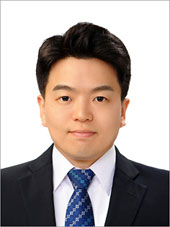
Noh Tae-moon, President and CEO of SamsungElectronics, emphasized, “The adoption of external generative AI is not merely about providing AI as a work tool; it is a starting point for fundamentally transforming the way we work and the speed at which we execute tasks.” He added, “By creating an environment where every employee can utilize the AI best suited to their work, we will enhance not only individual productivity but also the organization’s overall execution capabilities, thereby taking our business competitiveness to the next level.”
SamsungElectronics plans to continuously refine its services and operational policies to reflect the specific characteristics of each role and organization. Industry observers predict that, starting with this implementation, the use of generative AI will gradually expand to other SamsungElectronics business divisions, such as the Semiconductor (DS) division.


