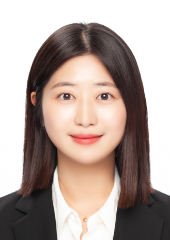
Ha Tae-ki, an analyst (Executive Director) at SANGSANGINVESTMENT&SECURITIES who has been analyzing the domestic pharmaceutical and biotech industry for nearly 40 years since 1987, offered this assessment of the current state of the domestic biotech industry in a recent interview with Edaily. Mr. Ha is a veteran analyst who began his career analyzing the pharmaceutical and biotech sectors at SKSecurities (then Pacific Securities) Research Center and has continued to cover the pharmaceutical, biotech, cosmetics, and healthcare sectors ever since.

◇“K-Bio Enters a Period of Fruition After Trial and Error”
Ha assessed that the Korean biotech industry has entered a stage where, after going through trial and error, it is developing the capabilities to create new drugs that can compete in the global market. He explained that the experience accumulated over the past 20 years or so has recently begun to bear fruit, one by one.
He said, “Until the 1990s, domestic pharmaceutical companies focused primarily on generics or the import and sale of overseas drugs, but after the introduction of the substance patent system in 1987, interest in new drug development and investment in research and development (R&D) began in earnest,” and “Since the 2000s, the entire market has paid a steep learning curve through the stages of compound development, preclinical trials, and early-phase clinical trials, and we are now in a period of reaping the rewards, with success stories emerging that are gaining traction in the global market,” he said.
He continued, “Although we are still in the early stages compared to world-leading nations in new drug development, Korea is clearly demonstrating the potential for new drug development,” and assessed, “Having observed the new drug development process for over 20 years, I feel that investors’ level of understanding has also significantly improved compared to the past.”
The common trait he identified among successful biotech companies is “strategically selecting fields with high commercialization potential.” Researcher Ha explained, “Companies deemed successful by the market selected targets with high potential for commercial success from the outset,” adding, “In particular, it was often the case that the company’s owner had a deep understanding of the technology and commercialization process and personally led decision-making.”
Conversely, regarding companies that have lost market trust, he pointed to communication issues rather than clinical failures themselves. “New drug development is, by its very nature, a field where the failure rate exceeds 90%,” he noted, emphasizing, “The failure itself is not the problem; what matters is how transparently the process was explained to the market and investors.”
Regarding platform technology-based biotech companies that have recently garnered market attention, he assessed them as a model well-suited to the reality of the Korean biotech industry, which suffers from a shortage of cash reserves. Researcher Ha stated, “Platform technologies allow for technology licensing (L/O) to global big pharma companies as early as the initial clinical stages, resulting in a lighter financial burden and relatively lower failure risk,” adding, “Another advantage is the ability to expand into follow-up pipelines once efficacy is verified.”
He continued, “In the future, we will likely see an increase in hybrid models where companies use funds secured through platform technology to directly develop new drugs,” but added, “For new drugs targeting chronic diseases that require large-scale Phase 3 clinical trials, the strategy of licensing out technology in the early clinical stages remains the most realistic approach.”
Researcher Ha believes that, above all, the Korean biotech industry must produce more “success stories” to enhance its global competitiveness. He predicted, “We need to see more cases of domestic companies achieving significant commercial success in the global market with blockbuster new drugs,” adding, “When such companies emerge, top talent will be drawn to the industry, creating a virtuous cycle where latecomers, inspired by their success, will take on the challenge themselves.”
◇“Invest in Industry Growth Rather Than Individual Stocks”
He advised individual investors to maintain a long-term interest in the biotech industry but to exercise caution in their investment strategies. Researcher Ha pointed out, “The final success rate for new drug development is effectively less than 1–2%, making it a high-risk field.”
He continued, “If you haven’t thoroughly researched the sector and don’t feel confident enough to concentrate your investments on a few select stocks, the wisest approach is to make a basket investment in a group of proven biotech companies or to utilize biotech funds or biotech exchange-traded funds (ETFs),” emphasizing that “it is necessary to adopt a perspective that invests in the industry’s growth potential rather than individual stocks.”
He cited disclosure issues and information asymmetry as the reasons behind the high difficulty of biotech investing. In particular, regarding the recent “ SAM CHUN DANG PHARM CO. LTD(000250) ” case, he assessed it not as a problem specific to a single company but as an example revealing structural limitations that have emerged during the growth of the domestic biotech industry. He explained, “Biotech companies lack sufficient internal cash generation capacity, so they heavily rely on raising funds through the stock market, which can lead to a tendency to focus on positive news.” He continued, “Our market has not yet seen many cases where the entire process of new drug development—leading up to FDA approval—has been fully experienced, so information distortion or misunderstandings can occur when interpreting issues related to clinical trials, approvals, and technology licensing agreements.” He added, “Companies must disclose information more transparently, and the market must also accumulate relevant expertise and experience.”
To reduce such controversies over information asymmetry, he believed it was necessary to consider a disclosure management system tailored specifically to the biotech industry. “If the government were to establish a group of credible experts to regularly review major disclosures and announcements, it would help reduce uncertainty,” he said.
He also emphasized that transparent communication is a prerequisite for an ecosystem that tolerates failure. Researcher Ha noted, “There are many global cases where, even if a single pipeline fails, companies have succeeded in other fields using their accumulated technology,” and concluded, “A healthy ecosystem is one where companies are given a chance if they can convince the market, and where they are naturally phased out if they fail to do so.”


