“Semiconductor Outlook = KOSPI Outlook… Super Cycle to Continue Through 2028”
Noh Geun-chang, Head of the Research Center at HYUNDAI MOTOR SECURITIES, Delivers a Lecture at E-Daily Gaonnuri
“AI Infrastructure Investment to Continue Through 2028… DRAM Demand to Quadruple Due to CPU Shortage”
“Equipment Bottlenecks Limit Supply Expansion… Samsung Electronics and Hanwha Q CELLS Profits Provide Downside Support for the Index”
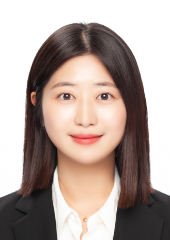
[Edaily Reporter Shin Ha-yeon ] “We are currently in a phase where semiconductor earnings are determining the direction of the overall index. For the time being, I believe the market outlook is synonymous with the semiconductor outlook. Semiconductors are playing an even greater role in the AI era, and since SamsungElectronics and SK hynix are the key drivers of profits, it will be difficult for the KOSPI to fall if these two companies continue to perform well.” Noh Geun-chang, Head of the Research Center at HYUNDAI MOTOR SECURITIES, made this assessment during an E-Daily Gaonnuri lecture on the 30th, stating that the direction of the domestic stock market hinges on the profit trends of major semiconductor stocks. His analysis suggests that as investment in artificial intelligence (AI) infrastructure expands from generative AI to agentic AI, demand for both CPUs and DRAM is increasing simultaneously; furthermore, supply shortages caused by bottlenecks in key semiconductor equipment are unlikely to be resolved in the short term. Noh Geun-chang, Head of the Research Center at HYUNDAI MOTOR SECURITIES. (Photo: E-Daily reporter Noh Jin-hwan)
◇“80% of KOSPI Earnings This Year
to Come from
Samsung and SK Hynix… AI Infrastructure Investment to Continue”
Director Noh stated, “While the net income of listed companies last year was approximately 236 trillion won, we expect it to rise to 750 trillion won this year and reach 970 trillion won next year,” adding, “This year alone, 80% of the net income of KOSPI-listed companies will come from SamsungElectronics(005930)and SK hynix(000660).” He pointed out that the market capitalization share of key semiconductor-related stocks—including SamsungElectronics, SK hynix, SKSQUARE(402340), SamsungElectronics(1P)(005935), and SAMSUNG C&T CORPORATION(028260) (which holds a stake in SamsungElectronics)—has already risen to an absolute level on the KOSPI, accounting for 65% of the total. Director Noh remarked, “If the profit trends for these two companies remain positive, it will be difficult for the KOSPI to decline,” adding, “Semiconductors will play a role in supporting the KOSPI’s downside rigidity.” Regarding the semiconductor industry, he assessed that it has entered a structural cycle different from the past. He explained that while the memory sector was previously viewed as a typical cyclical industry characterized by repeated price fluctuations, the demand base has now changed due to investments in AI data centers and the spread of agentic AI. Center Director Noh said, “You can view the Korean semiconductor industry as leveling up due to agentic AI,” adding, “While the chatbot era was limited to asking and answering questions, agentic AI must operate 24 hours a day without any latency.” He continued, “In the era of agentic AI, CPU demand will increase fourfold compared to the generative AI era, and if CPU demand quadruples, DRAM demand can be expected to quadruple as well.” On the demand side, he predicted that investments in data centers by global Big Tech and AI companies would continue at least through 2028. “This is no longer a matter of profit or loss, but a matter of survival,” he noted, pointing out that “investment in AI infrastructure is driven more by competition for hegemony than by macroeconomic variables or financial issues.”
◇“Supply Bottlenecks Support Strong Prices…Trading Strategies Leveraging Corrections Remain Valid”
On the supply side, he predicted that bottlenecks in semiconductor equipment would underpin the upward price trend. Center Director Noh explained, “While semiconductor companies around the world are building factories, simply constructing a factory doesn’t mean chips will be produced immediately,” adding, “Front-end equipment is required to turn wafers into chips, and for certain key pieces of equipment, a single company holds a market share of 90–100%.” He continued, “Bottlenecks are occurring with equipment from companies such as ASML, Lam Research, and Tokyo Electron,” adding, “No matter how much production capacity is expanded, the equipment shortage is likely to persist until 2028.” Consequently, the assessment is that the upward trend in memory prices may continue for the time being. Center Director Noh also pointed out that the structure of long-term supply contracts has changed from the past. He said, “In the past, when the growth rate of memory companies’ operating profits slowed, memory prices would fall a year later, but now, long-term contracts spanning four to five years are on the rise,” adding, “The current structure does not imply that a slowdown in operating profit growth will immediately lead to a price drop.” He also assessed that the valuation pressure on SamsungElectronics and SK hynix is relatively low. He explained that while stock prices have risen significantly, they remain attractive because earnings are growing even faster. “Aside from the sharp rise in their stock prices, there are no major issues with SamsungElectronics and SK hynix,” he said. “They may take a breather for the time being, but after gathering their strength, these two companies will once again lead the market.” However, he left open the possibility of increased volatility in the short term due to the sharp rise in stock prices. While the medium- to long-term outlook for the semiconductor industry is positive, given that stock prices have already risen significantly, he suggested that trading strategies that take advantage of correction periods would be more effective than blindly chasing the rally. Center Director Noh emphasized, “The current memory bottleneck is caused by CPUs, and in the near future, connectivity will become the bottleneck,” adding, “Because this is a bottleneck industry, stock prices have already risen significantly and earnings have been reported, but the trend is not over yet.” He continued, “It is still difficult to imagine just how much the range of industries seeking to adopt agentic AI will expand,” adding, “From a service perspective, AI adoption seems to have reached less than 10% so far.”
Amid a continued trend of net redemptions—where redemptions exceed new issuances—in the corporate bond market, Shinhan Investment Securities and GS Entec are set to conduct bookbuilding this week for …
I’ll try just about anything and report back to you. I’m interested in not only new products but also products making a comeback. I avoid simple reviews. I’ll also explain why a product is popular and…
SK Group has announced plans to invest an unprecedented amount of funds—totaling approximately 1,000 trillion won in total project costs alone—to develop South Korea into “Asia’s largest AI infrastruc…