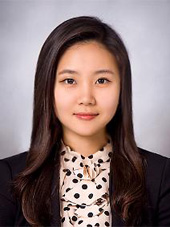
"After AI, It's Quantum"... Deputy Prime Minister Bae Kyung-hoon's Hopes for Quantum Technology
"AI Computing Faces Cost and Power Constraints"
Commitment to Fostering Quantum Computing, Cryptography, and Sensing Technologies
"Businesses and the Government to Expand Investment Together"
Efforts Underway to Establish a Quantum Alliance and Cluster
[Edaily Reporter Lee So-Hyun ] Deputy Prime Minister and Minister of Science and ICT Bae Kyung-hoon has identified quantum technology as a key area that will determine the nation’s technological competitiveness in the post-AI era.
As the government pushes forward with the “Three Major Mega-Projects for Korea’s Great Leap Forward”—centered on semiconductors, physical AI, and AI data centers—he emphasized the importance of quantum technology as a next-generation foundational technology that will overcome the cost and power limitations of AI computing.
Deputy Prime Minister and Minister of Science and ICT Bae Kyung-hoon emphasizes the importance of quantum technology during his opening remarks at “Quantum Korea 2026,” held at the DDP in Seoul on the 2nd. (Photo: ReporterLee So-Hyun )
In his opening remarks at “Quantum Korea 2026,” held at the Dongdaemun Design Plaza (DDP) in Seoul on the 2nd, Deputy Prime Minister Bae stated, “In fact, it seems that quantum technology is the next step after artificial intelligence,” adding, “We believe quantum technology will play a crucial role in shaping the future society.”
On the 29th of last month, the government held the “Public Briefing on the Three Major Mega-Projects for Korea’s Great Leap Forward” to discuss large-scale investment plans in three key areas—semiconductors, physical AI (including AI robots), and AI data centers—as well as measures to expand infrastructure such as power supply and site development. Through these efforts, the government aims to establish Korea as an irreplaceable powerhouse in the semiconductor industry, become one of the world’s top three in AI robotics and the global leader in physical AI, and foster the growth of AI data center-related industries while strengthening the ecosystem.
Deputy Prime Minister Bae’s emphasis on quantum technology that day stemmed from concerns about the limitations of current AI computing architectures. Referring to his extensive experience in AI research, he stated, “Current AI computing methods require enormous amounts of money and electricity,” adding, “We anticipate that they will reach a limit at some point.”
He went on to emphasize, “While current AI is racing toward general artificial intelligence (AGI) thanks to the development of large language models (LLMs), the advancement and commercialization of computing technology are ultimately essential for AGI to become an integral part of our daily lives.”
These remarks suggest that quantum technology should be viewed not as a future technology separate from AI, but as next-generation infrastructure that will ensure the sustainability of the government’s AI, semiconductor, and data center strategies. The point is that expanding AI data centers alone will not be sufficient to handle the surging demand for computing power and the resulting energy burden, so we must simultaneously prepare for new computing paradigms such as quantum computing.
Deputy Prime Minister Bae also noted that the scope of quantum technology extends beyond computing. “We are preparing for various fields, including not only computing but also sensing and encryption technologies,” he said, adding, “I understand we are achieving remarkable results in the field of encryption.”
To foster a quantum technology ecosystem, the government is also promoting collaboration among industry, academia, and research institutes, as well as the establishment of regional clusters. Deputy Prime Minister Bae emphasized, “Many startups and companies in Korea are participating, and the Korea Research Institute of Standards and Science (KRISS) and the Korea Advanced Institute of Science and Technology (KAIST) are also making significant efforts to advance quantum technology,” adding, “Businesses, academia, and the government must join forces to further deliberate on and develop large-scale investment and fostering plans for the quantum sector.”
He continued, “We are building a collaboration framework among industry, academia, and research institutions through the Quantum Alliance, and we are also preparing a project to establish quantum clusters,” adding, “We will create opportunities for many companies to gather in regional hubs.”
Meanwhile, “Quantum Korea 2026” is Korea’s premier international quantum technology event, bringing together domestic and international quantum science and technology researchers, companies, and government officials. This year’s exhibition featured global quantum computing companies such as IBM, IONQ, Qandel, Pascal, and IQM, as well as telecommunications and ICT companies including SKTelecom(017670), KTCorporation(030200), LG CNS (#LG CNS), and Megazone Cloud. Domestic quantum startups and SMEs—including SDT, QSimPlus, Korea Quantum Computing, ICTK Co., Ltd., Norma, Orientum, and Qnova—as well as research and public institutions such as KRISS, ETRI, KAIST, KISTI, NRF, and IITP also showcased their quantum computing, communications, sensing, and security technologies.
Amid a continued trend of net redemptions—where redemptions exceed new issuances—in the corporate bond market, Shinhan Investment Securities and GS Entec are set to conduct bookbuilding this week for …
Concerns about “tax risks” have been raised in some quarters of the financial investment, pharmaceutical, and biotech markets regarding Genosco, a subsidiary of OSCOTEC Inc.(039200)specializing in new…
Naver (NAVER(035420)) is expanding its search service into an agent-based service that bridges the gap from information discovery to action, spearheaded by its next-generation “AI Tab.” Rather than co…