[E-Daily Reporter YU JIN-HEE ] DOP, a company specializing in decellularized human tissue, is accelerating its expansion into the global market by signing a series of Letters of Intent (LOIs) with global tissue banks, leveraging its proprietary supercritical technology. Building on its strong global partnerships and a full-cycle intellectual property (IP) portfolio, DOP plans to secure annual sales of 50 billion won next year and successfully list on the KOSDAQ market.
(Photo courtesy of DOPH)
Successive LOIs with Tissue Banks in the U.S., Australia, and Europe... Building a Global Ecosystem
According to industry sources on the 6th, DOP recently signed Letters of Intent (LOIs) in quick succession with U.S.-based “MTF Biologics” and Australia’s “Osbiotech.”
These two LOIs go beyond the preliminary stage of a simple finished product export agreement. They represent a strategic move to launch a “full-chain global business model” centered on DOPH’s proprietary supercritical carbon dioxide decellularization technology (SCC02), covering everything from raw material procurement to local processing, co-branded distribution, technology transfer, and royalty collection.
Under the agreement with MTF, the two companies will pursue the international joint commercialization of similar nerve grafts as their primary goal. MTF, which has a network in the United States, will supply native nerve tissue locally, while DOF will process it domestically using its proprietary SCC02 process and peracetic acid treatment method. The product will then be packaged under the “MTF-DOF Global Brand” co-label and distributed to overseas markets.
Target markets are categorized into three phases based on the timeline. South Korea, Vietnam, Hong Kong, and Taiwan—where the South Korean Ministry of Food and Drug Safety (MFDS) is recognized as the official regulatory authority—are short-term targets that can be entered within 0 to 12 months. The plan is to rapidly secure a market presence by leveraging the approval DOF has already obtained (for the SC Connect nerve graft). Japan, Thailand, Malaysia, India, and the Gulf Cooperation Council (GCC) countries are medium-term targets to be addressed within 12–24 months. The United States, the European Union (EU), China, and Australia have been designated as long-term objectives with a 3–5-year timeline, requiring independent regulatory pathways.
Furthermore, the agreement lays the foundation for a comprehensive, long-term partnership, covering items such as MTF’s evaluation of the potential to adopt DOF’s SCC02 technology, the operation of the DOF Key User Panel for global evidence development, and the potential to expand cooperation to additional allografts.
The LOI with OsBioTech is even more multifaceted. Unlike the MTF agreement, which focuses on product distribution cooperation, it encompasses △technology transfer △royalty collection △sale of dedicated manufacturing equipment △mutual supply of human tissue △and joint entry into the Southeast Asian market.
First, the parties will negotiate the transfer of licenses for DOF’s decellularization technology, standard operating procedures (SOPs), sterilization protocols, manufacturing procedures, and all related technical documentation. Based on this, OsBioTech will pay DOF quarterly royalties linked to net sales of products commercialized by OsBioTech within Australia. In parallel, an equipment supply contract will be pursued, under which OsBioTech will purchase, install, and validate all decellularization-specific manufacturing equipment manufactured by DOP.
In particular, the agreement includes a provision for OsBioTech to resupply unprocessed human tissue to DOP by leveraging its procurement network in Australia. This is significant as it expands DOP’s raw material supply channels from the United States to the Oceania region. Following the signing of the LOI, the two companies plan to conduct technical and regulatory reviews (including compliance with the Australian Therapeutic Goods Administration (TGA)) within three months, negotiate commercial terms within five months, and sign a definitive agreement regarding technology transfer and equipment supply within six months.
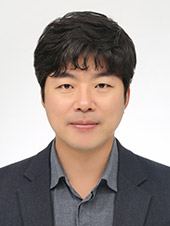
Shin Yong-woo, CEO of DOP. (Photo courtesy of DOP)
Partnership with Dutch company Vis Life Secures Foothold in European Regenerative Medicine Market
Safeguards for entering the European market have also been put in place. DOP has also completed a Letter of Intent (LOI) to establish a strategic partnership with “Vis Life,” a European tissue bank certification body headquartered in the Netherlands. Vis Life serves as a hub that oversees the collection, processing, storage, and distribution of human tissues in accordance with European Union regulations and international guidelines. Through this partnership, DOP has simultaneously secured the certifications and a stable supply base essential for entering the European market.
These comprehensive achievements are clearly reflected in the company’s financial performance. Driven by business diversification and expanded exports, DOP is on a steep upward trajectory. Revenue, which stood at just 1.5 billion won in 2022, surpassed 20 billion won for the first time last year, marking a clear growth trend. This year, with the full impact of its European expansion set to take effect, the company is on track to achieve sales of over 30 billion won. Furthermore, with its global business model set to be fully operational next year, DOP has set a goal of comfortably securing sales of over 50 billion won.
Building on this robust revenue growth, Dope is currently proceeding with the KOSDAQ Technology Special Listing process in collaboration with its lead underwriter, Mirae Asset Securities. The company has completed its preliminary technology evaluation, and its current market valuation in the over-the-counter market stands at approximately 130 billion won. The company plans to invest all funds raised through the public offering into upgrading its Good Manufacturing Practice (GMP) and Good Testing Practice (GTP) facilities and building the infrastructure necessary to become a global leader in regenerative medicine.
Hong Soon-jae, CEO of Biobook, stated, “There is great anticipation within the industry for our model, which involves sourcing raw materials from the U.S., processing them in Korea using state-of-the-art processes, and simultaneously supplying them to Asia, the Middle East, Europe, and Oceania,” adding, “This could serve as a textbook example of integration into the global value chain, a goal that K-Biotech has long pursued.”
The "Korea Expo," a comprehensive consumer goods trade show, opened on the 22nd at Magic Box in downtown Los Angeles and will run through the 24th. This marks the first time the Korea Expo—which debut…
During seasonal transitions, when the temperature difference between morning and evening widens, more people complain of sneezing, a clear runny nose, and itchy noses and eyes. While it’s easy to mist…
Korean small-cap pharma, biotech, and healthcare stocks moved in opposite directions on Oct. 22, as large-cap chipmakers weakened. Rokit Healthcare posted the steepest decline on the KOSDAQ, while in-…