[Edaily Reporter Kim Seung-kwon ] The brain is like the most sophisticated electronic circuit in the human body. Imbalances in minute electrical signals can lead to life-threatening and severe diseases such as stroke, dementia, and depression. NEUROPHET Inc. is a homegrown “K-Medical AI” company founded to unravel these mysteries of the brain. Its company name, a portmanteau of “Neuro” and “Prophet,” embodies a pioneering philosophy aimed at overcoming the limitations of brain disease treatment.
Bin Jun-gil, CEO of #NEUROPHET Inc., whom I met recently, was brimming with confidence. This is because, unlike the medical AI industry—which is experiencing stagnation due to barriers to market entry and budget constraints—NEUROPHET Inc. has found a clear commercial breakthrough in the treatment sector.
CEO Bin Jun-gil emphasized, “While diagnostic AI serves as a ‘plus-alpha’ concept that assists medical staff, treatment devices make new medical procedures impossible without the corresponding solution,” adding, “This intuitive business model satisfies both hospitals and patients while driving revenue growth.”
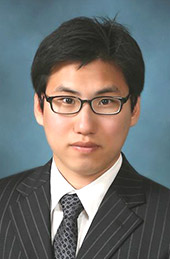
NEUROPHET Inc. CEO Bin Jun-gil explaining the company’s products during an interview (Photo: NEUROPHET Inc.)
NEUROPHET Inc.: 10 Years of Electronic Drug Clinical Trials... Revenue Has Begun
According to the company on the 9th, full-scale revenue has recently begun to flow in the “digital therapeutics” market. This marks the culmination, after 10 years, of the brain electrical stimulation therapy technology the company has been developing since its inception. Although revenue is currently in the hundreds of millions of won range, CEO Bin Jun-gil explained that the future potential is significant.
Bin Jun-gil, CEO of NEUROPHET Inc., said, “This isn’t a new venture we’ve recently expanded into; it’s a business we’ve been pursuing since our founding,” adding, “It took 10 years—from the release of our research software in 2018, to obtaining Class 3 approval for our tDCS device in 2021, and finally to our designation as an innovative medical technology last year.”
NEUROPHET Inc.’s personalized transcranial direct current stimulation (tDCS) solution was designated as an innovative medical technology last year. It was recognized for its ability to aid in the recovery of patients who have lost motor function in their fingers due to stroke. As a result, it will be available for exclusive use in clinical settings from July 2025 through June 2028.
This solution consists of “NEUROPHET Inc. TesLab,” a brain imaging treatment planning software, and “NEUROPHET Ink,” an electrical stimulation device. It analyzes the patient’s MRI to create a 3D brain model and automatically designs the optimal stimulation location and intensity. Conventional tDCS showed significant variations in effectiveness due to differences in brain structure among patients, but this solution is evaluated to have precisely overcome that limitation.
CEO Bin emphasized, “Only our personalized stimulation showed statistically significant results,” adding, “On the Modified Barthel Index, which evaluates rehabilitation outcomes, we recorded a score of 11.25, exceeding the target score of 9.25.” He further noted, “While sham stimulation and standard coordinate-based stimulation produced random effects, only personalized stimulation—which takes the patient’s brain structure into account—demonstrated clear improvement.”
NEUROPHET Inc. has been building a body of clinical evidence for patients undergoing stroke rehabilitation, those with finger motor paralysis, and those with impaired consciousness. Recently, the company expanded its indications to include dysphagia (swallowing disorders). This decision was based on the fact that dysphagia occurs in 50–73% of stroke patients, and for half of them, it leads to complications such as aspiration pneumonia, making it a major cause of death.
Actual revenue began to materialize in earnest starting this past March, following the commencement of clinical use in July of last year. CEO Bin said, “We estimated that it would take at least one year for hospitals to adopt a new medical device, and that’s exactly how it played out.” Currently, more than 15 hospitals have adopted the device; half are tertiary general hospitals, such as university hospitals, and the other half are specialized rehabilitation hospitals. Samsung Seoul Hospital is reportedly the first to have adopted it.
Treatment costs vary by hospital. CEO Bin explained, “We break even with just three patients,” adding, “Unlike conventional occupational therapy, this treatment is impossible without our device, so the decision to adopt it is intuitive from the hospital’s perspective.”
Image of NEUROPHET Inc.’s personalized transcranial direct current stimulation (tDCS) solution (Photo: NEUROPHET Inc.)
The Only Digital Therapeutic for Stroke in Korea... Strengths Compared to Competitors
NEUROPHET Inc. made it clear that it is not in direct competition with established leaders in the stroke field, such as the U.S.-based Rapid and JLK, Inc. While those companies focus on diagnosis, NEUROPHET Inc. emphasizes rehabilitation therapy. CEO Bin drew a clear distinction, stating, “We’re different because our imaging is for treatment, not diagnosis,” and added, “It’s appropriate to focus on treatment for stroke at this time.”
The biggest difference between NeuroFit and its domestic competitors, REMED CO.,LTD. and YBrain (MindStream), is the presence or absence of navigation software. CEO Bin said, “As far as I know, they are not yet engaged in stroke rehabilitation, and we are the only ones doing so.” He added, “Our differentiation strategy is to target severe diseases first, where treatment efficacy can only be proven with navigation software.” Regarding ZBrain, which develops digital therapeutics for Parkinson’s disease, he noted, “Brain disorders differ in terms of affected regions and electrical stimulation mechanisms,” and therefore did not view them as direct competitors.
Comparing the company to a Spanish firm with similar technology, he emphasized, “They remain in the research phase, charging $500 per case to create personalized models based on MRI scans,” while noting, “Our system is fully automated, allowing medical staff to use it immediately on-site.”
The company is also preparing to enter the U.S. market. CEO Bin noted, “Since this is a new medical device in the U.S. as well, we are preparing through the de novo track,” adding, “It took 10 years in Korea because we were the first in the world, but we expect to shorten that timeline somewhat in the U.S.” Reimbursement is expected to take at least 4–6 years, as the technology must undergo a three-year evaluation period for innovative medical technologies followed by a new medical technology assessment after 2028.
Regarding existing diagnostic AI products, collaboration with big pharma is ongoing. The company has completed technical validation with Eli Lilly and has entered the stage of reviewing actual clinical data, aiming to submit a joint paper by the end of this year. It is also collaborating with Eisai Korea to quickly identify patients eligible for early-stage treatment.
Regarding the downward trend in the stock price, the company believes there is significant upside potential given its strong earnings performance. CEO Bin stated, “The macroeconomic impact, which has caused the entire KOSDAQ market to decline significantly, is a major factor,” adding, “Ultimately, we must let our earnings speak for themselves.” He continued, “We are on the verge of signing a contract. We expect to announce a commercialization agreement with a global medtech company within this year.”
IlyangPharmaceutical(007570)has finalized the liquidation process for Daebang Planning, a family-owned company of the controlling family. The company plans to completely eliminate risks associated wit…
As medical technology advances, the treatment of human diseases is rapidly evolving into the era of “personalized medicine” and “precision medicine.” This shift is now spreading to the field of veteri…
Key executives from Naver (NAVER(035420)), including Chairman Lee Hae-jin—the company’s founder—and CEO Choi Soo-yeon, are visiting Canada to meet with global alternative asset manager Brookfield and …