Historian Shim Yong-hwan: "Ha Young's Great-Grandfather Is Not Someone to Be Respected, but Labeling Him a Pro-Japanese Collaborator Is Dangerous"
Posted on social media on the 11th
"Rumors of King Gojong's Poisoning Are Just That—Not Historical Fact"
"Ha Young Was Wrong to Show No Remorse Over the Truth About Her Family's History"
"We Must Recognize History Itself Based on Accurate Criteria"
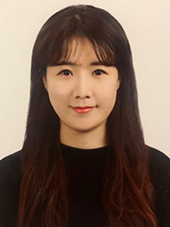
[Edaily Starin Gim Ga Yeong Reporter] Historian Shim Yong-hwan, director of the History N Education Research Institute, shared his thoughts on the criticism actress Ha Young is facing over allegations that her great-grandfather, Ahn Sang-ho, collaborated with Japan. Ha Young (Photo = News1)On the 11th, Director Shim Yong-hwan posted on social media (SNS), stating, “Suddenly, an issue involving a certain actress’s great-grandfather is heating up the internet. Furthermore, articles have even appeared claiming that the historical community has determined that her great-grandfather was indeed a ‘pro-Japanese collaborator.’” He added, “It seems this controversy will not be resolved through any rational mediation and will ultimately be a matter for time to resolve.” Director Shim added, “Nevertheless, there are a few points I must address.” He explained, “The theory that Emperor Gojong was poisoned is an ‘assassination theory,’ and while it is true that it served as a catalyst for the March 1st Movement, it is considered mere rumor and not a historical fact. It is wrong to label him a pro-Japanese collaborator simply because he was the attending physician at the time.” He continued, “It is true that he was an elite of his time, belonged to organizations such as the Daejeong Friendship Society—in which many pro-Japanese collaborators were active—and that the Japanese government used his family home for propaganda purposes during the colonial administration. Therefore, it is accurate to say that he was not a figure worthy of respect in his later years. However, it is a dangerous notion to label him a ‘pro-Japanese collaborator’ based solely on his membership in a specific organization, especially when no ‘acts of collaboration with Japan’ have been clearly established.” “There is one academic paper by Professor Lee Jeong-eun on this subject, and that paper does not support the claim that he was a pro-Japanese collaborator. (For reference, Ahn Sang-ho was born in 1872, and the Japanese colonial period coincided with his later years, whereas the paper examines his life during the Enlightenment Period.)” Director Shim pointed out, “The situation has escalated in an absurd way,” adding, “Because many members of the public accept the theory that King Gojong was poisoned as fact, her great-grandfather has already been cast as the perpetrator of the poisoning. Furthermore, because the media has characterized a single scholar’s statement as representing the ‘historical community,’ she has now been labeled a descendant of a pro-Japanese collaborator.” Regarding the current situation, Director Shim noted, “The problem is that once a controversy begins, the conflict escalates to extremes far too quickly, and everyone turns a blind eye to the resulting harm.” He added, “The actress’s great-grandfather was an outstanding medical elite who enjoyed the favor of Prince Ui in his youth, and it appears he did not neglect his social responsibilities to any significant degree. Of course, if specific acts of collaboration with Japan are revealed, he would be classified as a pro-Japanese collaborator, but that is a matter to be addressed only after such evidence comes to light,” he noted. He continued, “Unlike Park Seo-yang, who became a military doctor and treated independence fighters, nor did he make the same efforts as Lee Young-chun, who devoted himself to the Kumamoto Farm and provided medical care for farmers in Jeolla Province. Moreover, according to the article, he remained loyal to the Governor-General’s policies, maintained appropriate relationships, and enjoyed personal success,” he emphasized, adding, “If the actress is at fault, it is for failing to sincerely reflect on the uncomfortable truths of her family history.” Director Shim expressed concern, stating, “Above all, if we hastily label someone as a ‘pro-Japanese collaborator,’ far too many people from the past could be categorized as such, and ultimately, the very criteria for what constitutes pro-Japanese collaboration—and what we should criticize and remember—could disappear.” He added, “I hope we can establish clearer criteria for defining who qualifies as a ‘descendant.’ “Just as collective punishment is wrong, the merits of one’s ancestors cannot be considered one’s own. We must now reach a conclusion regarding what constitutes a ‘descendant of an independence activist’ and what rights and responsibilities should be associated with that status,” he stated. Director Shim emphasized, “We must recognize, learn, and respect the past for what it is based on precise criteria, so that it remains in people’s memories as history, not merely as a matter of veterans’ benefits. That is the sole role of the historical community.” Recently, Ha Young appeared on the KBS2 show *The Problem Children of the Attic* and revealed that she comes from a family of doctors spanning four generations, explaining, “My great-grandfather opened the first Western-style medical clinic in Hanyang and treated Emperor Gojong.” Subsequently, suspicions arose in online communities that Ha Young’s great-grandfather was Ahn Sang-ho. Ahn Sang-ho studied Western medicine in Tokyo, Japan, and was the first Korean to open a Western-style hospital; he also treated members of the royal family. He is well known for having treated Emperor Gojong alongside a Japanese doctor when the emperor collapsed in 1919. However, Ahn Sang-ho is also a figure suspected of pro-Japanese collaboration. According to an article published in the Maeil Shinbo in 1918, Ahn Sang-ho stated upon marrying a Japanese woman, “I am just like a Japanese person. I don’t own a single set of traditional Korean clothing, and I can’t eat spicy food at all.” Suspicions of pro-Japanese collaboration arose after it was revealed that he was a member of the Daejeong Friendship Society. As these allegations surfaced, a representative from Ha Young’s agency, Busters Entertainment, stated, “While it is true that Ahn Sang-ho is Ha Young’s great-grandfather, the claims circulating in online communities that he was a pro-Japanese collaborator are completely baseless.” Regarding the evidence cited online as proof of Ahn Sang-ho’s pro-Japanese activities, the representative remained tight-lipped, saying only that they were “currently verifying” the claims. On the 11th, the agency issued an apology, stating, “Following further verification, we have confirmed that a record does indeed exist showing that Ha Young’s great-grandfather, Mr. Ahn Sang-ho, was listed as a council member of the Daejeong Friendship Association in 1916. We sincerely apologize for causing confusion by hastily responding that the allegations were ‘groundless’ without sufficient verification.” Ha Young, who made her debut in the 2019 drama *Doctor Prisoner*, has continued her acting career through dramas such as *The Odd Lawyer Woo Young-woo*, *Model Detective 2*, and *Lee Doo-na!*. Last year, she garnered attention both domestically and internationally for her portrayal of nurse Cheon Jang-mi in the drama *Trauma Center*. She is currently starring as the lead character Go Eun-sae in *Such a Shitty Love*, which was recently released on Netflix.
Full Text by Director Shim Yong-hwan
Suddenly, an issue involving a certain actress’s great-grandfather is causing a stir online. Furthermore, articles have appeared claiming that the historical community has determined her great-grandfather was “indeed a pro-Japanese collaborator.” It seems unlikely that this controversy will be resolved through any rational mediation; ultimately, it will be a matter for time to resolve. Nevertheless, there are a few points I must address. First, the theory that Emperor Gojong was poisoned is an “assassination theory”; while it is true that it served as a catalyst for the March 1st Movement, it is considered nothing more than a rumor and not a historical fact. This is common knowledge in the academic historical community, but that is not the case in the real world. In fact, a spin-off program of #IWantToKnow even went so far as to enlist a forensic expert and produce an episode based on the premise that the theory was true. To put it bluntly, there was simply no reason for Japan to suddenly poison Emperor Gojong, who had offered no resistance to Japan for a decade. Therefore, it is wrong to label him a pro-Japanese collaborator merely because he was the royal physician at the time. Second, it is true that he was part of the elite at the time, belonged to organizations such as the Daejeong Friendship Society—which many pro-Japanese collaborators joined—and that the Japanese government used his family’s home for propaganda purposes during the colonial period; thus, it is accurate to say that he was not a figure worthy of respect in his later years. However, labeling him a “pro-Japanese collaborator” based solely on his membership in a specific organization—without any clear evidence of “acts of collaboration with Japan”—is a dangerous line of reasoning. There is a paper by Professor Lee Jeong-eun on this subject, and that paper does not support the claim that he was a pro-Japanese collaborator. (For reference, Ahn Sang-ho was born in 1872, and the Japanese colonial period occurred toward the end of his life; the paper, however, examines his life during the Enlightenment Period.) However, the situation has escalated in an unexpected way. Because many members of the public accept the theory that King Gojong was poisoned as fact, her great-grandfather has already been cast as the perpetrator of the poisoning. Furthermore, because the media characterized a single scholar’s statement as representing the “historical community,” she has now been labeled a descendant of a pro-Japanese collaborator. “Isn’t it just that she appeared on TV, boasted about coming from a family of doctors, and got in trouble for that?” This statement is probably closest to the truth. The problem is that once a controversy begins, the conflict escalates to extremes far too quickly, and everyone turns a blind eye to the resulting harm. The actress’s great-grandfather was an outstanding medical elite who enjoyed the favor of Prince Ui in his youth. It also appears he did not neglect his social responsibilities to any significant degree. Of course, if specific acts of collaboration with the Japanese were to be revealed, he would be classified as a pro-Japanese collaborator. But that is a discussion for after the facts are uncovered. In any case, he never became a military doctor like Park Seo-yang to treat independence fighters, nor did he make the same kind of efforts as Lee Young-chun, who devoted himself to the Kumamoto Farm and provided medical care for farmers in Jeolla Province. Moreover, according to the article, he remained loyal to the Governor-General’s policies, maintained appropriate relationships, and enjoyed personal success. If the actress is at fault, it is for failing to sincerely reflect on the uncomfortable truths of her family history. Her remarks—“It’s different from what’s known to the public,” “I succeeded on my own,” and “I didn’t inherit much”—are not far removed from the historical perspective often held by descendants of pro-Japanese collaborators. Yet, this is not so different from our own daily tendency to remember only the positive aspects of our ancestors and constantly boast about them. Most importantly, if we are too quick to label someone a “pro-Japanese collaborator,” far too many people from our past will end up being branded as such, and ultimately, the very criteria for what constitutes collaboration with Japan—and what we should criticize and remember—may disappear. Moreover, the issue that requires serious consideration lies within the historical academic community itself. We have long been plagued by the New Right, and their distortion of history has made our lives incredibly exhausting. However, if we devote the entire discipline of history and the pursuit of truth solely to this battle, thereby reducing ourselves to mere arbiters of good and evil, the result will be a crisis for the field of history itself. And since things have come to this, I hope we can establish clearer criteria for defining who qualifies as a “descendant.” Just as collective punishment is wrong, the achievements of one’s ancestors cannot be considered one’s own. We must now reach a conclusion regarding who exactly qualifies as a “descendant of an independence activist” and what rights and responsibilities that entails. “At this rate, even the descendants of volunteer militia commanders from the Imjin War will become eligible for veterans’ benefits!” That is indeed the case. We must recognize, learn, and respect the past for what it is based on precise criteria, so that it remains in people’s memories as history—not merely as a matter of veterans’ benefits. That is precisely the role of the historical community.
TONGYANG LIFE INSURANCE is set to undergo delisting procedures following its acquisition as a wholly-owned subsidiary of WooriFinancialGroup.
A view of TONGYANG LIFE INSURANCE’s headquarters. (Phot…
Global cosmetics Original Design Manufacturer (ODM) company COSMAX, INC.(192820)posted its best-ever quarterly results in the second quarter of this year. With domestic and overseas subsidiaries showi…
SOCAR(403550)has posted an operating profit for the eighth consecutive quarter, driven by growth in its core car-sharing business and the expansion of its parking platform. Investments in user-centric…