Jensen Huang: “Delaying Development for the Sake of AI Safety Is the Wrong Choice” (Roundup)
“AI Is Software, Not a Living Being”
“Accelerating Safety and Innovation… Concerns That the U.S. Might Fear AI”
“South Korea Could Overcome Population Limits with AI”
“We Will Continue to Partner with Samsung and SK for Another 33 Years”
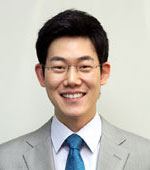
[New York = E-Daily Seong Joowon Correspondent] Jensen Huang, CEO of NVIDIA, refuted the argument that the pace of technology development should be slowed to ensure the safety of artificial intelligence (AI), calling it a “false choice.” He argued that as AI technology improves in performance, safety can also increase, so both technological development and safety must be accelerated simultaneously. He stated that his greatest concern is a situation where the United States, out of excessive fear of AI, fails to properly utilize the technology it has developed itself. Jensen Huang, CEO of NVIDIA, is interviewed by reporters at the Korea Society’s “2026 Annual Gala” held in New York, U.S., on the 28th (local time). (Photo: E-Daily Seong Joowon Correspondent) CEO Huang met with reporters on the 28th (local time) at the Korea Society’s “2026 Annual Gala” in New York, saying, “We must accelerate AI development for safety,” and added, “Safety and performance are not mutually exclusive.” He emphasized, “There is a belief that we must slow down to improve safety, but this is not true,” calling it “the wrong choice.” He also noted that companies that believe they should slow down the pace of AI development are free to do so on their own. CEO Hwang said, “Anyone who wants to adjust the pace is free to do so,” adding, “There’s no need for an adult to tell them what to do. These companies are already mature and have responsible leaders.” However, he stressed that as the AI industry moves from the research stage to the development and deployment of actual products and services, industry standards and external audit and evaluation systems are necessary.
“It’s Not True That AI Can’t Be Controlled”
CEO Hwang also dismissed concerns that AI could act independently, beyond human control. “AI isn’t alive,” he said that day. “It hasn’t gotten out of control. It’s just software.” He added, “AI doesn’t know what it’s doing. It’s just executing algorithms.” Emphasizing that AI is not a sentient being, he also remarked, “It is no more alive than a pet rock.” However, he stressed that this does not mean safety measures are unnecessary. CEO Hwang explained that AI should be placed within a robust “sandbox,” initially granted only minimal permissions and access rights, which should then be expanded based on its capabilities and tasks. He also stated that “all AI must be monitored” to prepare for the possibility that it might accomplish a given goal in unexpected ways. “It is not true that we cannot control AI, nor is it true that we cannot monitor it,” he said. CEO Hwang described this as “responsible optimism.” This means maintaining optimism that AI can create a better society and future, while ensuring the technology is developed responsibly. In particular, he said, “My biggest concern is that the United States will be so afraid of this technology that it will ultimately fail to embrace the technology we invented.”
“South Korea Can Exert Power Beyond Its Size Through AI”
CEO Hwang assessed that South Korea is well-positioned for the AI era. He noted, “There is a social passion for technology in South Korea,” citing not only the country’s ability to develop new technologies but also its capacity to rapidly disseminate them throughout society as key strengths. In particular, he believed that AI and automation could compensate for South Korea’s relatively small population. CEO Hwang said, “South Korea’s ambition exceeds its human capital,” adding, “By leveraging AI and automation, we can punch well above our weight.” He went on to emphasize, “We can realize our ambitions without being constrained by our smaller population.” He also expressed strong confidence in Korea’s semiconductor industry. When asked whether the high dependence on SamsungElectronics(005930)and SK hynix(000660)could pose a supply chain risk, CEO Huang praised Korea’s manufacturing capabilities as “world-class.” He said, “If we have to rely on anyone to manufacture the components essential to NVIDIA’s growth, I couldn’t be more confident in relying on SK, Samsung, and Korea.” CEO Huang also noted that the collaboration with Korean companies, such as SamsungElectronics and SK hynix, will continue for the long term. “Building AI factory infrastructure worth hundreds of billions of dollars isn’t something you can plan a few months in advance—you have to plan it years in advance,” he explained, adding that SamsungElectronics and SK hynix have already been jointly developing products with NVIDIA for several years. He went on to note that the scope of cooperation is expanding beyond semiconductors to include robotics, power systems, autonomous driving, and the development of Korea’s own AI models, stating, “Our collaboration with Korea is very broad, deep, and long-term.” He emphasized, “We have been working with Korea for 33 years. We will continue to work with Korean companies for another 33 years.”
SAMSUNG SDI CO.,LTD. made its debut at “Data Center World Asia (DCWA) 2026,” held in Singapore on the 29th, showcasing battery solutions for artificial intelligence (AI) data centers.DCWA is Asia’s la…
The terms “Jjipmeok” and “Daebak” are appearing on snack packaging sold overseas, and product names previously used locally are being changed to Korean names. This strategy leverages the Korean alphab…
Results from an analysis of real-world clinical data from 500 adult patients with drug-resistant epilepsy treated with cenobamate at three specialized epilepsy centers in the Czech Republic. The left …