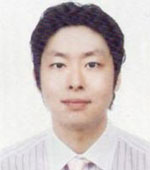
[Edaily Kim Sang-yoon Reporter Hwang Byung-seo] President Lee Jae-myung has formed his second-term economic team, focusing on extending the benefits of economic growth to the general public and enhancing the effectiveness of industrial and investment projects. Ha Jun-kyung, a “master strategist” well-versed in finance and macroeconomics, has been promoted from Senior Secretary for Economic Growth to Chief of Staff, tasked with coordinating social policies—including housing, jobs, and financial services for low-income households—as well as the allocation of resources to support them. Meanwhile, Moon Shin-hak, Vice Minister of Trade, Industry and Energy, who has extensive experience in the industrial sector, has been appointed Senior Secretary for Economic Growth. These appointments are aimed at addressing two key objectives: how to allocate the financial resources generated through growth to improve citizens’ lives, and how to more systematically execute investment projects that will drive new growth.
This reorganization has clarified the division of roles between the Chief of the Policy Office and the Senior Secretary for Economic Growth. Under this structure, Chief Ha will coordinate economic and social policies to spread the “warmth of growth,” while Senior Secretary Moon will serve as the “engine of growth” by fostering high-tech industries and driving forward mega-projects. For Director Ha, a key task is determining the criteria and scale for allocating funds from the Future Response Fund—whose establishment bill is currently pending in the National Assembly—to the three core social policies. Senior Secretary Moon has been tasked with specifying the conditions for investment projects in the United States and removing obstacles to large-scale domestic investment to generate tangible investment results.
Seong Ki-hong, Senior Secretary for Public Relations and Communication at the Blue House, announced these appointments during a briefing on the 1st. Senior Secretary Seong explained, “We focused on channeling the momentum of economic growth into the people’s livelihoods and placing greater emphasis on social policies that tangibly improve the lives of citizens.”

◇Ha Jun-kyung to Oversee Policies That Go Beyond Growth Strategies to Improve “People’s Livelihoods”
Director Ha is an economist who has served at the Bank of Korea, the Korea Institute of Finance, and as a professor in the Department of Economics at Hanyang University. During the 2022 presidential election, he was in charge of the “Transformative Fair Growth Strategy” for candidate Lee Jae-myung’s campaign and was also responsible for economic policy at the think tank “Growth and Integration.” Having designed growth strategies as the first Senior Secretary for Economic Growth, he will now, as Chief of Staff for Policy, coordinate policies and resource allocation to translate those achievements into tangible improvements in people’s lives.
Director Ha is regarded as a “fiscal expansionist focused on growth investment,” advocating for the active use of public finances to support both economic growth and people’s livelihoods. His vision is to broaden the foundation for growth by allocating public funds to revitalize domestic demand and enhance technological and industrial competitiveness, while also investing in addressing low birth rates, housing, childcare, opportunities for young people, and the social safety net. He views welfare not merely as expenditure, but as social investment that supports individuals’ lives and enhances productivity and growth potential. His stance is that fiscal soundness should be assessed not only by the current national debt-to-GDP ratio but also by whether fiscal spending leads to medium- to long-term growth and the expansion of the tax revenue base.
In practice, Director Ha is expected to be tasked with securing the necessary funds for housing, job creation, and financial support for low-income households, while also coordinating policy priorities and support mechanisms. His expertise in finance and macroeconomics adds significance to his appointment as Chief Policy Advisor, as this role requires designing policies to improve citizens’ lives alongside the fiscal and financial measures needed to sustain them.
At a press conference on the 18th of last month, President Lee stated that he was carefully considering a plan to shift the role of the next Policy Chief from a focus on the economy to a focus on social issues. Subsequently, at a Cabinet meeting on the 29th of last month, he identified housing, jobs, and financial support for low-income households as the “three core social policies” and instructed all government ministries to implement them swiftly. Given that he also outlined a plan to use available resources—such as excess tax revenue—to alleviate income inequality and improve citizens’ lives, Director Ha’s work is expected to focus on these areas.
The key tool Chief Ha will utilize is the Future Response Fund. The Future Response Fund, which the government is pushing to establish, is intended to accumulate resources when tax revenue exceeds projections for use in future investments and to support fiscal operations when tax revenue declines. Once the fund is established, determining how much and in what manner to allocate it to housing, jobs, and financial support for low-income households will be a major challenge for Chief Ha.
The use of the fund will depend on the outcome of the National Assembly’s review of the bill and the scope of use ultimately determined. He must identify which initiatives—among housing supply, job creation, and support for low-income households—align with the fund’s purpose and coordinate their roles with existing budgets and funds. However, given the controversy over whether the government can use it as it pleases—dubbed a “slush fund”—the key issue is how appropriate control mechanisms will be established.

◇ Moon Shin-hak: Accelerating Growth Initiatives with an Industry Bureaucrat’s Executive Strength
Moon, the newly appointed Senior Secretary for Economic Growth, has been tasked with bolstering the implementation of growth policies in a role that expands upon the responsibilities previously held by Director Ha. Senior Secretary Seong introduced Moon as “an expert in the real economy who has held a wide range of key positions in the industry and energy sectors,” emphasizing the fostering of high-tech industries such as semiconductors and artificial intelligence (AI), the promotion of the three major mega-projects, and the restoration of potential growth rates.
Senior Secretary Moon entered public service as a member of the 38th class of the Higher Civil Service Examination and has served as Director of the Semiconductor and Display Division, Director of the Petroleum Industry Division, and Director General of Nuclear Power Industry Policy. Given his extensive practical experience in industrial policy and the energy sector, this appointment is seen as well-suited to the current challenges of overseeing both domestic investment in high-tech industries and energy investment projects in the United States.
In particular, follow-up negotiations regarding the investment plan in the U.S. announced that day are considered a key task. For projects such as the eight nuclear power plants and the Alaska LNG project, negotiations remain to review the commercial viability of the projects and to specify the investment terms and the scope of South Korea’s participation. It is essential to secure tangible benefits from these investments while balancing U.S. demands with the interests of domestic industries. Domestically, the key challenge lies in resolving inter-ministerial disagreements over mega-projects and overcoming obstacles in the project implementation process to ensure these initiatives translate into actual investments.
Senior Secretary Moon was involved in the energy transition policy under the Moon Jae-in administration. Although he was arrested and indicted in connection with the deletion of data from the Wolseong Nuclear Power Plant Unit 1, his acquittal was upheld by the Supreme Court. Following his return as First Vice Minister of Trade, Industry and Energy last June, he has now joined the leadership team for growth policy at the Blue House.
This appointment is also notable given that the position of Senior Secretary for Economic Affairs has traditionally been filled by officials from the Ministry of Economy and Finance or economists. Under the Moon Jae-in administration, following Hong Jang-pyo, the first Senior Secretary for Economic Affairs, officials from the Ministry of Economy and Finance—including Yoon Jong-won, Lee Ho-seung, and Ahn Il-hwan—were successively appointed to the role. Choi Sang-mok and Park Chun-seop, who served as Senior Economic Secretaries under the Yoon Suk-yeol administration, were also former First Vice Ministers of the Ministry of Economy and Finance and Director-General of the Budget Office, respectively. Since the Ministry of Trade, Industry and Energy was established in 2013, Moon is the second person from that ministry to be appointed Senior Economic Secretary, following Park Won-ju, the former Commissioner of the Korean Intellectual Property Office, under the Moon Jae-in administration.
The Blue House is already staffed with officials from the Ministry of Trade, Industry and Energy, including Yoon Seong-hyeok, Secretary for Industrial Policy; Lee Won-ju, Advisor for National Strategic Investment; and Kim Seong-yeol, Secretary for Economic Security at the National Security Office. With Senior Secretary Moon joining the ranks, the role of industry bureaucrats has expanded—from fostering industry, overseeing large-scale investment projects, and handling economic security operations to coordinating growth strategies—leading some to suggest that a “golden age of the Ministry of Trade, Industry and Energy” has arrived.
In contrast, officials from the Ministry of Strategy and Finance (now the Ministry of Economy and Finance) have been relatively sidelined. The successor to former Policy Chief Kim Yong-beom—a former First Vice Minister of the Ministry of Strategy and Finance—is Chief Ha, an academic, while the Senior Secretary for Economic Growth is Senior Secretary Moon, a former Ministry of Trade, Industry and Energy official. Kwon Dae-young, Vice Chairman of the Financial Services Commission, was also appointed as First Vice Minister of Finance and Economy. Given that Lee Hyung-il, a former Ministry of Economy and Finance official, has been nominated as Deputy Prime Minister for Economic Affairs, it is difficult to interpret this as a blanket exclusion of the Ministry of Economy and Finance. However, this arrangement can be seen as prioritizing the execution capabilities of industry bureaucrats for industrial and investment projects directly overseen by the Blue House, while relying on the expertise of an academic—who has experience addressing both growth and income inequality—for overall policy coordination.

◇Song Young-gil as Special Advisor for Peace and Diplomacy; Kim Byung-ju as Special Advisor for Defense Policy
On this day, President Lee appointed Representative Song Young-gil—leader of the Democratic Party and a six-term lawmaker—as Special Advisor for Peace and Diplomacy, and Representative Kim Byung-ju, a former four-star general, as Special Advisor for Defense Policy. By bringing in these experts in diplomacy and national security, the administration has effectively strengthened its separate advisory team to assist the President. Given the need to maintain the current stance of dialogue with North Korea and easing tensions while also addressing security cooperation issues between South Korea and the U.S., this appointment is seen as an effort to incorporate advice on diplomacy and national defense into policy decisions. However, since the role of a Special Advisor differs from that of the regular staff, the key issue will be how they will collaborate with existing organizations such as the National Security Office.
Jeong Ui-kyung, Director General of the Land and Urban Planning Bureau at the Ministry of Land, Infrastructure and Transport, was appointed as the Second Vice Minister of Land, Infrastructure and Transport, while Park Jeong-hyun, former County Governor of Buyeo, was appointed as the minister-level Chair of the Committee for the Era of Local Autonomy. This structure aims to ensure continuity in policy implementation by appointing an internal bureaucrat to the Ministry of Land, Infrastructure and Transport, while adding on-the-ground local experience to the Committee for the Era of Local Autonomy by appointing a figure who has led a local government.


