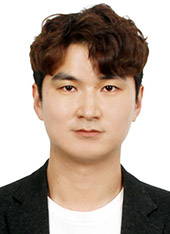
Jeong Seok-geun, CEO of SK Hyper: "5GW Is Not an Unrealistic Figure... We’re Going All Out on Investment Sales"
SKT, 2030년 5 GW AI 데이터센터 목표 제시
Securing Global Big Tech Clients to Facilitate Investment and Financing
“100 Trillion Won per 1 GW”…Securing Power, Capital, and Customers Are Key Challenges
Differentiating Itself with ‘Memory Azure Service’ in Partnership with SK hynix
[Edaily Reporter Yun Junghoon ] “While 5 GW for an AI data center may be an unfamiliar figure, I am confident that it is not an unrealistic number. We are negotiating with Big Tech companies on a scale that would have been unthinkable in the past.”
Jeong Seok-geun, Head of SKTelecom’s AI CIC and CEO of SK Hyper, delivers a presentation at the Digital Insight Forum held at the Chosun Palace in Gangnam, Seoul, on the morning of the 8th (Photo: ReporterYun Junghoon )
Jeong Seok-geun, Head of SKTelecom’s AI CIC and CEO of SK Hyper, expressed confidence in the goal of securing 5 GW (gigawatts) of artificial intelligence (AI) data center infrastructure by 2030. Amid rapidly growing demand for AI infrastructure from global Big Tech companies, the strategy is to secure them as long-term customers and attract global investors to raise the funds needed to build large-scale data centers.
Estimated at 100 trillion won for 1 GW... Long-term contracts with Big Tech are key
Speaking at the Digital Insight Forum held on the morning of the 8th at the Chosun Palace in Gangnam, Seoul, CEO Jeong stated, “To date, the company has approximately 137 MW (megawatts) of data center capacity, and including what we are currently building, we have about 300 MW in Seoul and Daejeon,” adding, “Our goal is to reach 5 GW by 2030.” He continued, “It may seem strange that we’re aiming for 5 GW when the country has only built 1 GW over the past 25 years,” but emphasized, “This is not an unrealistic figure.”
The first step toward the 5GW vision is securing global big-tech clients. CEO Jeong explained that, given the massive initial investment required, it would be difficult to pursue the business by first building data centers and then seeking customers.
CEO Jeong estimated that a 1GW-scale data center would require approximately 20 trillion won for the building and power infrastructure, and about 80 trillion won to equip it with AI servers—for a total of roughly 100 trillion won. A simple calculation suggests that the total project cost for the 5GW initiative, including related infrastructure and servers, could reach several hundred trillion won.
The key lies in long-term contracts. To finance a significant portion of the massive data center project costs through debt, companies must demonstrate a stable cash flow to financial institutions. To achieve this, “offtake” agreements—in which hyperscalers commit to using data center capacity for an extended period—must be secured in advance.
CEO Jeong explained that data center lease agreements typically require a term of 15 years or more, and a contract to use 1 GW for 20 years would amount to approximately 40 trillion won based on current rental rates. He noted that fewer than 10 companies worldwide are capable of securing the trust of financial institutions by entering into contracts of this scale. Securing Big Tech clients is, in essence, the starting point for attracting investment and securing financing.
CEO Jeong said, “We’re visiting Seattle, San Francisco, New York, and other locations where these companies are based, continuously coordinating with them.” He explained that while discussing collaborations with global partners and Big Tech firms—including NVIDIA—the company is also taking steps to attract global capital.
SK AI Data Center Strategy (Photo: ReporterYun Junghoon
Differentiation
Through HBM Memory… ‘Memory Azure Service’
CEO Jeong believed that price competition alone has its limits when competing with countries like India that are vying to attract global AI data centers. The differentiation strategy he unveiled is memory competitiveness linked to the “ SK hynix(000660).”
As AI agents become more widespread and the context that models must process grows longer, the use of KV caches—which store content previously read by AI—is surging. Accordingly, CEO Jeong assesses that the importance of the memory hierarchy—extending from HBM to DRAM and SSDs—is increasing. He stated, “Memory is currently the biggest bottleneck in this industry.”
“Memory as a Service” is the business model built on this insight. The plan is to equip SK’s AI data centers with a relatively large amount of memory, enabling customers to operate their AI infrastructure more efficiently, and to offer this as a differentiated service within the data center.
CEO Jeong explained, “Due to the nature of AI inference, more memory leads to greater efficiency,” adding, “We are preparing the ‘Memory-as-a-Service’ concept—both technically and commercially—to install more memory in data centers so that customers can operate their infrastructure much more efficiently.”
Government support—including power supply and permits—is another key pillar of the 5 GW vision. This is because GW-scale data centers require a level of power that individual companies find difficult to secure on their own, and they must simultaneously resolve issues related to the power grid, land acquisition, and permits. CEO Jeong explained that SK is collaborating with the South Korean government, relevant agencies, and SK Group affiliates, and is receiving support particularly regarding power supply.
SK’s vision is to secure long-term demand from global Big Tech companies, attract global capital based on that demand, and then combine power, land, and SK hynix’s memory capabilities to emerge as Asia’s AI infrastructure hub.
CEO Jeong stated, “We are actually in negotiations with Big Tech companies and are discussing figures on a scale that would have been unimaginable in the past,” adding, “We will strive to reach the stage where our group possesses the largest AI infrastructure hub in Asia, encompassing not only Korea but also Japan and Southeast Asia.”
Camel Al-Wazir, Egypt’s Minister of Transportation (left), and Lee Yong-bae, President and CEO of HYUNDAI ROTEM, sign a memorandum of understanding (MOU) on cooperation to build a hydrogen-electric tr…
Kim Seong-yeon, a director at Genosco and the only son of former OSCOTEC Inc. founder Kim Jeong-geun as well as the largest shareholder of OSCOTEC Inc.(039200), is moving to restructure the board of d…
Alteogen Inc.(196170): Judgments in the U.S. and Europe are diverging in the global patent dispute surrounding "ALT-B4," a technology for converting Keytruda into a subcutaneous (SC) formulation.
“…