“A Team of 10 Completes a Sci-Fi Film in Just Six Months”… Director Seol Woo-in’s New AI World [Interview]
90-Minute Sci-Fi Feature Film Completed with a Budget Under 1 Billion Won
Film Produced by Generating and Linking 13,000 AI-Generated Videos
“As Technology Advances, Creators’ Stories Become More Important”
Plans to Develop AI Actor Stars and Produce a Sequel Next Year
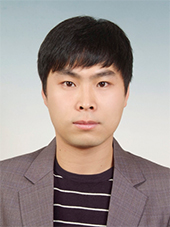
[Edaily Reporter YUN GI BACK ] “As artificial intelligence (AI) technology advances, what ultimately matters is the story. I believe it’s important how creators view the world and how they tell that story.” Director Seol Woo-in, who directed the AI feature film “Stilley.” There were no actors and no large-scale film sets. A production team of just over 10 people spent about six months using AI to generate 13,000 video clips, completing a 90-minute sci-fi action film. The production budget was less than 1 billion won. Unlike conventional sci-fi films, which require production budgets ranging from several billion to tens of billions of won, this project demonstrated the possibility of creating a feature-length film with a small crew and minimal costs. Director Seol Woo-in, who directed the AI feature film *Steel Ray*, which opened on the 21st, recently stated in an interview with E-Daily, “The appeal of AI films lies in the ability to freely bring imagination to life with a low production budget,” adding, “As technology advances rapidly, we will be able to present works with a much higher level of polish in the future.” “Steel Ray” tells the story of Yoon Kang, a young man searching for his missing father, who dons a combat suit to confront Aira, an AI robot with autonomous decision-making capabilities that has become a threat to humanity. Despite having fewer screens, the film attracted approximately 5,300 viewers through the 30th, making it the most-watched AI feature film released in South Korea to date. This film originated from the question: “Can we make superhero movies like ‘Iron Man’ in Korea?” Director Seol and the production team used AI to visualize large-scale action sequences and a futuristic world—elements that would have been difficult to achieve using traditional production methods. Still from the AI feature film “Steelay.” (Photo courtesy of Raon Company Plus and iNo Studio) ◇ 13,000 Clips Produced Without Actors… “We Even Considered the Emotional Aftermath” The production method was completely different from that of conventional films. The production team used AI to create character and background images, then converted them into short video clips. They generated 13,000 clips, each approximately 15 seconds long, and went through the process of selecting and connecting the necessary scenes. AI tools used included Sidance, Kring, Higgsfield, Beo, HomiAI, and Suno. Director Seol explained, “If a character throws a punch in one scene, the movement must flow naturally into the next scene,” adding, “We meticulously checked the continuity of the characters’ appearances, movements, and the space between each cut.” It was also crucial to refine the AI-generated scenes to conform to cinematic conventions. This was because even subtle moments—such as an actor taking a brief breath after a line or conveying emotion through facial expressions—had to be accurately rendered. Director Seol said, “With the technology available at the time, the footage often ended the moment the dialogue finished,” adding, “We explored various methods to preserve the emotional resonance, even in those brief moments.” Director Seol Woo-in, who directed the AI feature film *Stillay*. Human performances were added to the voices. Director Seol and the production team personally participated in post-recording (ADR) to breathe life into the AI characters. In essence, they combined the AI-generated faces and movements with the breathing and emotional expressions of real people. Director Seol explained, “The process of matching voices to the lip movements and emotions of AI actors presented challenges distinct from traditional acting,” adding, “I thought a new field might emerge in the future where actors specialize in voicing AI characters.” Cost savings were another notable achievement. The project was completed—from AI video generation to post-production tasks such as ADR and color grading—on a budget of less than 1 billion won. This was made possible by establishing a production workflow that utilized multiple generative AI models to render characters and backgrounds, and allowed for iterative revisions of the results for each scene. Director Seol predicted that, as technology advances and workflow efficiency improves, it will be possible to produce a feature-length film with just three to four key staff members. He expressed hope that reducing the time and cost required for production will open up new opportunities for creators who previously struggled to secure large-scale investments. ◇Cultivating AI Actors into Stars… Plans for a Sequel The production team’s challenge does not end with a single film. They also have plans to develop the film’s protagonist, Yoon Kang, into an independent AI actor and intellectual property (IP). Director Seol said, “To audiences, Yoon Gang is still no different from an unknown actor,” adding, “If we consistently showcase him and make him familiar to viewers, I think they’ll be happy to come to the theater for the sequel.” From left: Kang Tae-kyung, team leader of the film “Steelay”; Director Seol Woo-in; and Ham Seul-gi, CEO of Aino Studio. Ham Seul-gi, CEO of co-production company Aino Studio, also revealed that they are exploring various collaboration possibilities, such as casting Yoon Kang in other productions or combining live-action footage with AI. This suggests that AI characters can evolve into a new type of actor who remains active beyond a single production. Considerable effort was also put into the process of creating the AI character. Rather than basing the character on a specific celebrity, the production team combined specific features—such as eye shape and hairstyle—and refined the character through multiple revisions. Ensuring visual consistency so that the character would be recognized as the same person in every scene was crucial. The diverse audience reactions following the film’s release have also become an asset for future projects. Director Seol said, “Some viewers expressed anticipation, while others pointed out technical shortcomings,” adding, “I believe we must win over audiences with even better works in the future.” Director Seol is currently preparing a sequel, *Steel Ray 2*. With a target release date of next year, he is reviewing the screenplay and production schedule. Director Seol expressed his expectation that, given the dramatic advancements in AI technology since his first film, the sequel will feature even more natural character portrayals and sophisticated action sequences. Finally, Director Seol emphasized that advances in AI technology will ultimately make the role of the creator even more important. “Technical limitations will continue to diminish. Ultimately, what makes the difference is the creator’s perspective and experience in viewing the story. Whether as an actor or a director, I want to remain a creator who crafts new stories rather than being confined to a single title.”
This week (October 26–30), startups across various sectors—including equipment, medical devices, and platforms for repairing pre-owned luxury goods—secured investments from venture capital (VC) firms …
Have you ever taken a headache medication before bed because of a headache, only to find that while the pain subsided, you became wide awake instead? It’s easy to assume that taking the medicine will …
(Graphic: ChatGPT)
Interest is mounting in the potential benefits for ST Pharm Co., Ltd.(237690), a South Korean contract development and manufacturing organization (CDMO) specializing in active p…