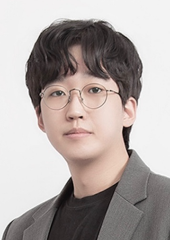
Kim Byung-soo, CEO of ROBOTIS: “I’m Confident in the Era of Humanoids… Aiming to Double Revenue Next Year”
Uzbekistan to Begin Full-Scale Production in the First Half of Next Year… Annual Production to Increase by 1 Million Units
Initial Shipments of Sapiens and New Actuators to Be Sold Domestically
Pushing Ahead with Collaboration with Domestic Magnet Manufacturers… Diversifying the Rare Earth Supply Chain
[Edaily Reporter Shin Yeong-bin ] ROBOTIS(108490)has set a goal to more than double its revenue next year in line with the expansion of the humanoid robot market. The company plans to solidify its mass production foundation by expanding production capacity in South Korea and Uzbekistan and diversifying its rare earth magnet supply chain.
Kim Byung-soo, CEO of ROBOTIS, met with E-Daily at the “2026 RoboWorld” event held at KINTEX in Goyang, Gyeonggi Province, on the 4th. “I am convinced that the era of humanoids is coming,” he said, adding, “We expect next year’s revenue to be more than double this year’s.” Kim Byung-soo, CEO of ROBOTIS (Photo: ReporterShin Yeong-bin ) ROBOTIS is a company that develops “Dynamixel,” an actuator that moves a robot’s joints. This actuator, which combines a motor, a gear reducer, and a controller, determines the movement and operational performance of humanoid robots.
The company is laying the groundwork for growth through investments in production facilities and technology development. It expects the factory in Uzbekistan, a project it has been pursuing since last year, to begin full-scale production in the first half of next year.
The company plans to produce initial batches of the “AI Sapiens” humanoid and new actuators domestically, then expand production scale in Uzbekistan. It confirmed that its goal of expanding production capacity by 1 million units annually remains unchanged.
CEO Kim stated, “Starting in January of next year, we plan to launch AI Sapiens, the actuators used in it, as well as larger and smaller actuators,” adding, “Most of the initial production will take place in Korea.”
The company anticipates that as the applications of humanoid robots evolve, the performance requirements for their components will also change. Analysts note that, in addition to precise hand movements and fast, accurate body movements, the ability to reliably perform actual tasks is becoming increasingly important. [Edaily Reporter Bang In-kwon] At the “2026 RoboWorld” held at KINTEX in Goyang, Gyeonggi Province, on the 4th, ROBOTIS’ humanoid robot, AI Sapiens, is demonstrating Taekwondo poomsae movements during the opening performance. “2026 RoboWorld,” an event where visitors can witness the technological capabilities of domestic and international robotics companies all in one place, is being held until the 7th on the largest scale in its history, with 402 domestic and international companies and institutions participating across 1,198 booths. CEO Kim stated, “The demand for actuators suitable for work-capable humanoids will gradually shift,” adding, “This means that the output, safety, and durability of actuators are becoming increasingly important.”
The company is also advancing its robot hand business. Regarding current hand supply, CEO Kim explained, “We’re still at the sample stage,” adding, “Software is just as important as hardware, and we’re also considering how to train the AI.”
The company is also working to secure a materials supply chain in preparation for expanded production. It plans to collaborate with domestic manufacturers to ensure a stable supply of rare-earth permanent magnets used in motors.
Uncertainty in the rare earth supply chain intensified last April when China designated certain rare earths and permanent magnets as items requiring export permits. As delays in obtaining permits disrupted overseas supply, the need to diversify the procurement network—which had been heavily concentrated in China—grew significantly.
CEO Kim stated, “We plan to continue collaborating with domestic rare earth magnet manufacturers in the near future,” adding, “This is not an attempt to shift our entire supply there, but rather a form of backup; we believe this approach will not pose any major difficulties.”
Utilizing non-Chinese supply chains could increase cost burdens. CEO Kim explained that while rare earth development is underway in countries such as Australia, prices there are higher than those of Chinese products. However, he emphasized that the focus is on securing alternatives that can be utilized in an emergency rather than completely switching all supply sources.
CEO Kim emphasized, “Rare earth elements are extremely important both for the nation and for our company,” adding, “We must calmly prepare with a medium- to long-term plan.”
Moves in the U.S. to tighten regulations on the construction of artificial intelligence (AI) data centers are creating new uncertainty for the domestic industry. This is because the semiconductor, coo…
KT&G Corporation achieved record-breaking third-quarter earnings this year, driven by robust growth in its core tobacco business. With cumulative third-quarter revenue exceeding 5 trillion won, the co…
When a malfunction occurs in factory equipment, artificial intelligence (AI) analyzes the cause and finds ways to minimize production disruptions. It also suggests solutions such as activating other e…