[Edaily Reporter KIM SUNG-JIN ] “If you can go public within two years, I’ll invest 20 billion won.”
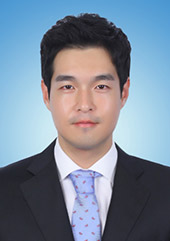
Professor Song Si-young, an emeritus professor at Yonsei University College of Medicine and the head of the biotech firm Cowell Biodime, said he heard this kind of proposal countless times while seeking investment. He explained that venture capital (VC) firms were more concerned with when the company could go public—and thus allow them to recoup their investment—than with how well the new drug’s potential had been demonstrated. Professor Song Si-young, Professor Emeritus at Yonsei University College of Medicine, recently met with E-Daily at the Yonsei University College of Medicine research building to discuss the future of the domestic biotech industry. (Photo: ReporterKIM SUNG-JIN ) For Professor Song, who has spent his entire career treating patients and conducting new drug research, these conditions were not easy to accept outright. He argued that since it was impossible to guarantee when experimental results would be available or whether a candidate compound would remain effective in subsequent stages, research could not be conducted with the sole focus on the short-term goal of an initial public offering (IPO).
Professor Song acknowledged that he was well aware companies must demonstrate results and plans to investors. However, he pointed out that there is a lack of a system to comprehensively support and manage the process, given that new drug development—from identifying candidate compounds through clinical trials to product launch—takes at least 10 years.
Professor Song emphasized, “We need a strategic direction that can guide good science toward producing good results,” adding, “The government must provide guarantees until good science can demonstrate its clinical value.”
The argument he reiterated throughout the interview was not merely a simplistic call to “increase funding for the biotech sector.” Rather, he stressed the need to ensure that companies—which have achieved research results but have not yet reached the stage of recouping their investment—do not disappear due to financial difficulties before they can prove the value of their technology.
Why Did a Practicing Physician End Up Leading a Biotech Company?
Professor Song is one of Korea’s leading authorities on pancreatic cancer. While
treating patients
, he also conducted research to help those who could not be saved by existing treatments.
“Even after retirement, I still want to practice medicine, and I still want to see patients. But I thought I’d use what I’ve gained from running a lab for over 20 years to develop new drugs for patients. I’m primarily focusing on pancreatic and bile duct cancers.”
He sought to address the limitations he encountered in the clinic through his research. While developing treatments, he also sought ways to detect cancer at an earlier stage.
“The question that has stayed with me my entire life is, ‘Is there a way to diagnose these patients early?’ So, based on the research I’ve conducted over the past 20 years, I’m also developing methods for the early diagnosis of bile duct and pancreatic cancers.”
Professor Song’s concerns extended beyond treatment and research. He was actively involved in administration and policy, working on multiple fronts. From 2010 to 2016, Professor Song served as Director of the Office of Medical Science Research at Yonsei University Health System and also headed the Industry-Academia Cooperation Foundation. From 2016 to 2018, he served as Dean of the Yonsei University College of Medicine and Dean of the Graduate School of Medicine. In 2017, he served as Chair of the 12th Health and Medical Technology Policy Advisory Committee of the Ministry of Health and Welfare, and he also chaired the 13th committee, which was launched in 2019.
In addition, he served as the “Private-Sector Chair of the National Biohealth Industry Innovation Strategy Promotion Committee” and the “Chair of the National Bio-Big Data Construction Pilot Project Promotion Committee,” among other roles, while also exploring concrete measures for industrial development. Throughout this process, he never neglected his efforts to link hospital-based research to new drug development.
Professor Song said, “My motivation for starting the company wasn’t that I wanted to run a business. At the time, I wasn’t even a CEO. What I found most regrettable while managing research administration was that even when doctors at hospitals analyzed patients’ genes, they only identified targets.” He continued, “No matter how many patents we filed for these targets, no one was buying them. I thought we just needed to develop them into ‘hits’ or ‘leads.’ It all started with the idea of using the revenue generated from this to provide research funding to the researchers.”
“Hits” and “leads” refer to compounds identified in the early stages of new drug development to confirm potential efficacy and proceed with follow-up research. The vision was to advance research beyond the discovery of therapeutic targets to a stage where a company could take over development.
However, maintaining an organization capable of advancing the research to the next stage also required funding. Professor Song explained that it was difficult to ensure the continuity of the research with only university support and initial investment. Ultimately, he took direct responsibility for management and set out to find investors. In the company he had founded to sustain his research, he now found himself worrying first and foremost about the company’s survival.
The Mismatch Between New Drug Development and Investment Timelines
“The biotech industry takes 5, 10, or even 15 years, but the investment payback period in Korea is at most 5 to 7 years. There’s a discrepancy between these two timeframes. But I can’t very well ask investors to wait.”
Professor Song believes the core issue lies in the mismatch between the life cycle of the biotech industry and investors’ capital recovery cycles. Since investment firms must recoup their funds to secure capital for future investments, this is not a problem that can be solved by asking either side to compromise.
He pointed out that this gap even alters a company’s research direction. He explained that meeting the timelines required for securing investment and going public can take priority over thorough validation. He added that he himself had faced similar demands when meeting with investors.
“When I went to see one investor, they said, ‘CEO, you need to come up with some numbers.’ I know that, as a company, we have to demonstrate tangible results to survive. But after two or three meetings, all they ask for are numbers—when preclinical trials will start, when Phase 1 clinical trials will begin. Yet no one actually knows how that process will unfold.”
His concern is the scenario where a company rushes into clinical trials without fully verifying scientific feasibility due to tight deadlines. He explains that while screening candidate compounds requires time and money, this process can be delayed if the company is pressured to deliver immediate results.
“Even if four out of five pipeline candidates are dropped, funding must continue until we confirm that ‘this one has potential.’ If one of them is a compound that could be a major success, there needs to be a selection criterion for when to invest—but that doesn’t exist.”
According to his explanation, the fact that only one out of five candidate compounds remains does not necessarily mean failure. If the company has gained the basis to discard compounds with low potential and focus on the one that shows promise, that is necessary progress. However, if performance is judged solely by the number of compounds entering clinical trials or the timing of an IPO, it is easy to overlook the value of this process.
Professor Song emphasized that when evaluating a company, “You must examine why this drug can address unmet patient needs and whether the logic behind it holds up. Second, you must assess whether the company has the technology and capabilities to make it a reality. Third, you must evaluate how well the results obtained so far demonstrate its potential.” This means that before asking about the IPO date, one must first assess the potential to develop a drug that patients need.
The Bio Industry at a Crossroads… The Government Must Step In
“I believe there is no future unless innovative policies for the pharmaceutical and biotech industries are introduced next year.”
Professor Song stressed that innovative policy support from the government is necessary to overcome the crisis currently facing the domestic biotech industry. He argued that this should not be limited to merely providing financial support but should involve comprehensive planning that integrates healthcare R&D with industrial development.
“We must view the entire healthcare sector as a single entity and develop research projects with continuity. The ultimate goal is to make people healthy and happy,” he said, adding, “We must be able to see both the end of the industry and the clinical front lines. Those engaged in basic research must also be integrated into this effort.”
When asked what single policy change he would make immediately, he replied, “I would establish an integrated organization to jointly plan healthcare R&D and industrial policies.” The idea is to reorganize support—currently fragmented across different government ministries—into a system that spans research, clinical trials, and commercialization.
He argued that policy funding should be concentrated on the intermediate stage, when promising technologies are demonstrating their potential. This means funding must flow not only to stages where results are visible—such as late-stage clinical trials—but also to the process of validating and screening candidate compounds. Professor Song said, “It takes time and funding to prove that good research results can lead to good outcomes,” adding, “We need to create a system that allows for a smooth transition between existing investors and new ones.”
However, he drew a clear line, stating that this does not mean guaranteeing the survival of every company. Professor Song said that companies for which survival through government grants has become an end in itself must be evaluated objectively. He emphasized, “The government must guarantee the time needed for sound science to demonstrate clinical value.” In other words, while opportunities to verify potential should be provided, decisions on continued support must be based on the results.
Professor Song expressed concern that without such policy support, the foundation of the domestic biotech industry would crumble. “Mid-stage venture companies—whether they have five or ten employees—are firms that have been operating for several years,” he said. “Teamwork has been built up over that time. But if a single project fails, this entire ecosystem of teamwork shatters into pieces.”
He noted that workforce development and business incubation cannot be viewed separately. Even if universities train researchers, if the companies where they can gain experience disappear, the industry’s workforce base will weaken as well.
Professor Song warned, “Startups are at the stage where they demonstrate the potential for good research results to translate into tangible outcomes,” adding, “They need time and funding to prove that, and if funding isn’t provided at this intermediate stage, it cuts off all possibilities.”
Driven by the boom in artificial intelligence (AI) semiconductors, the combined cash reserves of SamsungElectronics and SK hynix have surpassed 329 trillion won. This represents an increase of more th…
With the Samsung Lions claiming the Korean Series title for the first time in 12 years, attention is turning to whether Samsung Group affiliates will launch discount promotions to celebrate the victor…
The government has begun developing public AI services by recruiting private-sector AI experts into its policy organizations and even directly hiring developers. Lee Ji-soo, a former executive at Sams…