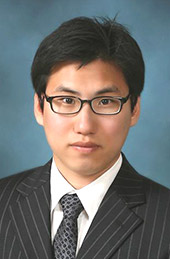
Kim Deok-kyu, CEO of GeronCellVein: “The Fruits of 13 Years of Cooperation with China… PDRN Prescription Drug in Final Stages of Registration in Hainan”
[E-Daily Reporter Kim Seung-kwon ] GeronCellVain is knocking on the door of China’s specialty pharmaceutical market. The company is currently undergoing the registration process for its PDRN specialty drug in Hainan Province. Its strategy is to target the Chinese market through a vertically integrated structure, directly managing everything from raw material production to finished products and local clinics.
In an interview with Pharm E-Daily, Kim Deok-kyu, CEO of GeronCellVein, emphasized that the company’s long-standing efforts in the Chinese market are finally bearing fruit. “We have collaborated extensively with Chinese hospitals over the past 13 years,” said CEO Kim, adding, “We are currently proceeding with the registration of PDRN as a prescription drug in Hainan Province.”
Kim Deok-kyu, CEO of GeronCellVein (Photo courtesy of GeronCellVein)
13 Years of Collaboration in China… Registration in Hainan Nearing Completion
Geroncellvein was founded in 2015. The company manufactures prescription drugs, medical devices, cosmetics, and veterinary products using PDRN extracted from salmon. Dr. Kim operates Dr. Kinvein Clinics not only in South Korea but also in Qingdao, Pingdu, and Yantai, China. He also personally performs procedures at overseas hospitals in Japan, Qatar, Dubai, and China, indicating that the company has already established a robust local medical network.
CEO Kim identified obtaining approval in China as the company’s biggest challenge this year. The company is currently in the final stages of the approval process. “Obtaining approval for prescription drugs in China is extremely difficult,” he said, adding, “We will likely be the only company exporting PDRN-based prescription drugs to China.” The company expects local sales volume to increase significantly once registration in China is complete.
Hainan is considered a backdoor route for foreign pharmaceuticals to enter China. Obtaining formal approval from China’s National Medical Products Administration (NMPA) typically takes more than 10 years. In contrast, BioSolution leveraged the “Policy on the Early Application of New Technologies” in the Hainan Medical Special Economic Zone to overcome entry barriers in a short period.
The Chinese market environment is challenging. Deloitte China and Allergan have assessed that the Chinese medical aesthetics industry is transitioning to a phase of “qualitative upgrading.” The net increase in medical aesthetics facilities in the first half of this year fell sharply to about 100.
Price competition is also fierce. Over the past year, starting in July of last year, 46 Class III injectable products were approved, and Haohai, the forum’s organizer, reported a sharp decline in hyaluronic acid sales during the third quarter. Amid a price war centered on fillers, it remains to be seen whether PDRN—which emphasizes “regeneration”—will serve as a key differentiator.
Kim Deok-gyu, CEO of GeronCellVein, and Kim Mi-jeong, Chairwoman of the Central Association of Chinese Koreans, pose for a commemorative photo after the cooperation ceremony. (Photo courtesy of the Central Association of Chinese Koreans)
“Pharmaceutical and Biotech, Not Cosmetics”… Differentiation Through Low-Temperature Extraction
CEO Kim’s key advantage is his raw material technology. “There are only about five companies worldwide that manufacture PDRN-based prescription drugs,” he said, adding, “Among them, we possess the technology to produce the lowest-molecular-weight, highest-concentration PDRN.”
Conventional methods rely heavily on organic solvents and involve extraction at high temperatures. During this process, DNA is damaged, and the molecular weight varies from batch to batch. Zeron Cellvein developed “PRISM Technology,” a physical extraction method that uses water instead of chemicals and operates at low temperatures. By avoiding the use of expensive proteolytic enzymes, the company has also reduced production costs. The method, which extracts PDRN from both salmon testes and semen, has received approval from the Ministry of Food and Drug Safety. The company explains that extraction from semen results in fewer impurities.
The flagship product, “Cellvein Injection,” is a small, uniform PDRN formulation ranging in size from 50 to 150 bp. CEO Kim emphasized, “Medicines must be consistent,” adding, “Our technological capability lies in our ability to ensure uniform molecular size.”
CEO Kim also clarified the company’s identity. “PDRN is currently the hottest substance in the beauty market, but only 20% of its value is known,” he said, adding, “We are not a beauty company, but a pharmaceutical and biotech company.”
In fact, the company’s origins lie in dentistry. Cellvein Injection is used to treat periodontitis and peri-implantitis—conditions for which there were no effective treatments other than surgery. The company has jointly launched a wound-healing ointment with Chong Kun Dang and is preparing to collaborate in the field of osteoarthritis. It has also completed preclinical trials with Severance Hospital for a treatment for xerostomia caused by radiation therapy. The company is also preparing for Orphan Drug Designation (ODD) from the U.S. Food and Drug Administration (FDA).
Recently, the company was selected for a global project worth 7 billion won based on its “temperature-sensitive gel” technology, which transforms PDRN into a gel at body temperature. It is as thin as water during injection, minimizing pain, and turns into a gel once inside the body, allowing PDRN to be released slowly. CEO Kim explained that the company is also targeting the medical device route, which is easier to obtain approval for overseas than prescription drugs.
The company’s overseas cosmetics business is also gaining momentum. It exported 60,000 units of “Cellvein” brand cosmetics through a Japanese distributor. CEO Kim said, “Since we’ve established a track record in the demanding Japanese market, we’ve been receiving many inquiries from Southeast Asia as well.”
The company’s scale is also expanding. Last year’s revenue was 5 billion won, with cosmetics accounting for about 20% of that total. An underwriter has been selected, and the company aims for a technology-based listing next year. CEO Kim said, “We expect to exceed 10 billion won in revenue this year,” adding, “If we meet both the technological and revenue criteria, there should be no major obstacles to listing next year.”
Taiwan, the global hub of the semiconductor industry, is accelerating efforts to strengthen its competitiveness in the MICE (Meetings, Incentives, Conferences, and Exhibitions) sector through infrastr…
Shinsegae Co.,Ltd Chairman Chung Yong-jin is returning as CEO of E-MART Co., Ltd.(139480) for the first time in 13 years. The keyword for his management style is “pragmatism.” In the core business, he…
While the domestic stock market has fallen sharply over the past six months, the stock prices of security firms AHNLAB,INC. and GENIANS, INC. have risen by more than 50%. Based on regular session clos…