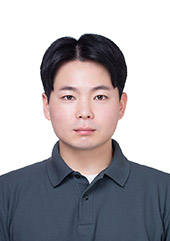
“Constitutional amendments must be led by the National Assembly, based on consensus between the ruling and opposition parties, and with public consent; this means the current president cannot seek re-election.”
National Assembly Speaker Cho Jeong-sik Makes a Strong Statement at the Gwanhoon Forum
“We Apologize for the Misunderstanding Caused by the ‘Public’s Will on Pensions’ Controversy”
“Next Year, With No Elections, Is the Right Time to Discuss Constitutional Reform”
‘Constitutional Amendment Advisory Committee’ Directly Under the Speaker to Launch Soon
Special Prosecutor Act on Manipulation Indictments to Proceed Even Without Consensus
On the Cho Hee-dae Controversy, He Stands by His Position That “It Is Difficult to Make a Premature Judgment”
[Edaily Reporter HEO YUN-SU ] National Assembly Speaker Cho Jeong-sik reiterated his commitment to pushing for a constitutional amendment to enshrine popular sovereignty on the 11th, stating unequivocally that “a sitting president cannot serve a second term.” He drew a clear line against allegations raised by the opposition regarding a constitutional amendment to allow President Lee Jae-myung to serve a second term, arguing that the issue of a sitting president’s re-election should not be reduced to a political battle. National Assembly Speaker Cho Jeong-sik speaks at the Gwanhoon Debate held at the Press Club in Jung-gu, Seoul, on the 11th. (Photo = Yonhap News)(Graphic = E-Daily Reporter Kim Jeong-hoon) Speaking at the Gwanhoon Debate held at the Press Center in Jung-gu, Seoul, on that day, Speaker Cho stated, “The 22nd National Assembly will push for a constitutional amendment on popular sovereignty to fulfill its duty to create a political system that earns the public’s trust.” Chairman Cho, who was previously classified as part of the pro-Lee Jae-myung faction during his time with the Democratic Party of Korea, caused a major stir in political circles during his first press conference after taking office last July. When asked about amending the Constitution to allow the incumbent president to serve a second term, he gave a vague response, stating that it was “a matter of public opinion and the people’s choice as sovereigns.” This stood in contrast to the clear stance taken by former Speaker Woo Won-shik during his tenure, when he stated on a radio broadcast that “if a constitutional amendment is made regarding the presidential term, it would not apply to the incumbent president,” and drew backlash from the opposition.
At the time, Jang Dong-hyuk, then leader of the People Power Party, raised his voice, stating, “If President Lee pushes for a constitutional amendment to allow a second term in office, defying the will of the people and the spirit of the current Constitution, it would amount to a true civil uprising.” Han Dong-hoon, an independent lawmaker, also chimed in, calling it “an illegal destruction of the constitutional order on a scale comparable to martial law.”
As the controversy spread, the Office of the Speaker of the National Assembly stepped in to clarify that it was “a principled stance that such matters must proceed based on public consensus and agreement within the political sphere.” Nevertheless, as the backlash continued, President Lee personally stated during a press conference on current issues last September, “My re-election is constitutionally impossible. I have absolutely no intention of seeking a second term.”
Recalling that time, Speaker Cho said, “I once again express my sincere apologies to the public as a politician for unintentionally causing such misunderstandings and controversy,” and emphasized, “(A constitutional amendment to allow presidential re-election) is completely impossible, as stipulated in Article 128, Paragraph 2 of the Constitution. We must no longer make this issue a subject of political strife.”
He presented three principles for a constitutional amendment based on popular sovereignty, including the prohibition of a second term for the incumbent president: △ a National Assembly-led amendment process; △ consensus between the ruling and opposition parties; and △ broad public consent.
Speaker Cho said, “We will soon launch a ‘Constitutional Amendment Advisory Committee’ directly under the Speaker’s office to define the direction and agenda for constitutional amendment, and we will gather the public’s views through the citizen participation platform ‘Constitution for All.’” He further explained, “We will tackle issues step by step, starting with those where there is a high level of consensus between the ruling and opposition parties and broad public support—such as incorporating the spirit of the May 18 Democratization Movement into the preamble of the Constitution and strengthening the National Assembly’s oversight of the president’s declaration of martial law.” He added, “We will first reach an agreement on the preamble and the provisions guaranteeing fundamental rights, and then continue discussions on restructuring the power system within the scope of bipartisan consensus.”
Speaker Cho also clearly articulated the historical necessity of constitutional amendment. He explained, “The current Constitution is the fruit of democracy won by the people through the June Democratic Uprising of 1987, and next year will mark its 40th anniversary,” adding, “A Constitution designed for an era of $3,000 per capita income is insufficient to guide today’s Republic of Korea, which has entered an era of $40,000 per capita income.”
He also identified 2027 as the optimal time to pursue constitutional reform. “Next year is a year without nationwide elections,” he noted, concluding that “it is the ideal time to calmly discuss constitutional reform.” “Politics is not about the next election but about looking toward the next generation,” he emphasized, adding, “We need a grand blueprint for national security, peace, and prosperity, and the golden opportunity to draw that blueprint is right now.”
Meanwhile, Speaker Cho also shared his views on the Special Prosecutor Act regarding fabricated indictments—an issue where the standoff between the ruling and opposition parties has reached a fever pitch—as well as the parliamentary investigation into Supreme Court Chief Justice Cho Hee-dae and the impeachment process. He stated that he had listened carefully and deliberated thoroughly since April, when the Special Prosecutor Act was first proposed, adding, “Just because there are contentious issues doesn’t mean we can postpone the bill indefinitely. Ultimately, since it has been referred to the plenary session, we have no choice but to address it if a consensus cannot be reached.” He also categorically stated that “there are no legal issues” regarding the provision granting the special counsel investigative authority or the fact that President Lee would appoint a special counsel to investigate a case involving himself.
However, regarding the matter involving Chief Justice Cho, he remained cautious, stating, “The principle of the separation of powers is a fundamental constitutional value that must be upheld to the very end,” and added, “It is difficult to prejudge whether the current events are undermining the separation of powers or normalizing an abnormal situation.”
The collaboration between Samsung Group and HyundaiMotor Group is expanding beyond the supply of electric vehicle batteries to include joint design and the development of next-generation technologies.…
LG H&H(051900)is acquiring the remaining shares of Viva Wave, the operator of the color cosmetics brand HINS, to make it a wholly-owned subsidiary. This move is seen as a strategic effort to create a …
Hancom WITH(054920)is unveiling an authentication technology that uses artificial intelligence (AI) to analyze user behavior and continuously verify identity and security trustworthiness even while th…