“Korean Companies Are Globally Competitive, But…”—The Weakness a U.S. Investor Pinpointed
"Inflow of Foreign Capital" as a Variable in South Korea's Corporate Governance Reform
Despite Share Buybacks and Increased Dividends, 'Numerous' Challenges Remain
South Korea: Activist Funds Are Still in Their Infancy… Japan Has 70 to 90
Dong-A Pharmaceutical and Orion Urged to 'Strengthen the Expertise of Outside Directors'
Golfzon County Emphasizes 'Monetization of Minority Stake and Shareholder Value'
[Edaily Marketin KIM SUNG-SOO Reporter] "Korean companies possess world-class competitiveness. However, they are unable to fully realize their corporate value due to issues with corporate governance and capital allocation."
Ryan Albert, founder of the U.S.-based investment firm Turton Capital, cited a “setback in corporate governance reform” as the greatest risk that could hinder the inflow of foreign investors into the South Korean stock market.
Corporate Governance Reform in Korea: A Variable Affecting ‘Inflow of Foreign Capital’
At a press conference held on the 17th at the FKI Tower in Yeouido, Seoul, Founder Albert commented on corporate governance
reform
and the investment environment in Korea, stating, “If reform measures are not properly implemented or, worse, are reversed, this will be the greatest cause for concern regarding the inflow of foreign investors.”
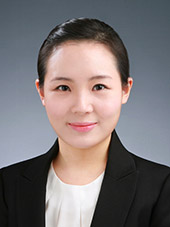
Ryan Albert, founder of the U.S.-based investment firm Turton Capital, speaks during a press conference held at the FKI Tower in Yeouido, Seoul, on the 17th. (Photo: Access Communication)He emphasized, “We are continuing to closely monitor how well the reform measures are being implemented,” adding, “It is also a risk factor if the reforms do not proceed as quickly as possible or become overly complicated.” He continued, “It will be interesting to see how various reform measures, such as the cumulative voting system, are implemented during next year’s annual general meeting season.”
Albert, the founder, cited “the growth potential of companies” and “the potential for improvements in corporate governance” as reasons for investing in the Korean market. He said, “Korea has world-class companies, but these companies are not fully realizing their potential,” adding, “I believed that we could unlock a significant portion of their potential through improvements in corporate governance and capital allocation.”
He continued, “It’s hard to find another market like Korea that meets all three of our investment criteria,” explaining, “That’s why we’re spending so much time in the Korean market.” He also emphasized that Korean companies account for a very large portion of Terton Capital’s investment portfolio.
He viewed the improvements in shareholder returns and investor communication among Korean companies positively. Albert, the founder, said, “Share buybacks and cancellations are at record levels, and the dividend payout ratio continues to rise,” adding, “I have witnessed significant improvements during my visits to the Korean market over the past two to three years.”
However, Albert pointed out that there are still areas for improvement.
He said, “There is still much to be done, such as increasing the proportion of outside directors on boards and improving the dividend payout ratio,” adding, “There is room for further improvement in share buybacks and cancellations, and investor relations (IR) can also be enhanced.”
While changes are evident even in minor areas—such as the speed of responses to email inquiries—he explained that more time is needed before foreign investors feel comfortable investing and operating in the Korean market.
Founder Albert explained that South Korea’s inheritance and gift taxes, as well as corporate succession issues, are factors considered in the investment decision-making process. However, he drew a clear line, stating that he does not view these as key variables in investment decisions.
“Inheritance tax is just one of several factors we consider when analyzing a company,” he said. “However, we first assess the company’s potential and look for value not yet reflected in the stock price, as well as areas for improvement.”
He went on to point out, “Whether succession takes place in three years, five years, or ten years, a situation where cash and assets accumulate unproductively does not benefit shareholders, the economy, the National Pension Service, or society as a whole.”
The founder of Albert also distanced himself from being labeled an activist investor. Terton Capital’s approach is to first send a private letter to a company requesting improvements and to switch to a public letter only if the response and level of implementation are insufficient.
“I don’t consider myself an activist investor,” he said, adding, “What I hope for is that the companies I invest in fully realize their potential.” He continued, “I believe that good corporate governance creates good companies,” explaining, “As a shareholder, I first communicate areas in need of improvement privately in order to secure a reasonable and fair return on my investment.”
He also noted, “We always conduct our open letters and shareholder engagement activities transparently, fact-based, and with respect,” adding, “We are aware that all of our activities may be made public.” Ryan Albert, founder of the U.S.-based investment firm Turton Capital, speaks during a press conference held at the FKI Tower in Yeouido, Seoul. (Photo: Access Communication)
South Korea in
the Early Stages of
Activist Investing… Japan
Has
70–90 Funds
Founder Albert assessed that the
activist investing
environment in
South Korea
is still in its early stages. Noting that there are approximately
70 to 90
activist
funds in Japan
, he said, “In South Korea, there are only a few, or possibly even fewer.”
He continued, “If we compare this to a baseball game, Korea is still in the second or third inning,” and predicted, “In the future, more foreign investors will enter the market, and a network effect will emerge as domestic investors also actively exercise their rights as minority shareholders.”
He offered a positive assessment of domestic activist funds. Albert’s founder said, “Korean funds are doing an excellent job,” adding, “They are presenting the situation in an easy-to-understand way so that foreign investors entering the Korean market can demand change in the right direction.”
However, he explained that significant preparation is required before foreign funds can engage in public shareholder activism targeting Korean companies.
“Sending public letters or taking action requires considerable effort from a compliance perspective,” he said, adding, “Overseas funds are often not prepared for such activities.”
He also cited additional procedures—such as the need to hold shares locally and manage cash in Korea—as burdensome factors when exercising voting rights in the country.
Currently, the Korean companies with which Terton Capital has publicly engaged in shareholder engagement activities include Dong-A Pharmaceutical, Orion, and Golfzon Holdings. The founder of Albert explained that, regarding Dong-A Pharmaceutical, they might propose appointing experts in consumer healthcare and capital allocation as outside directors.
He said, “In the case of Dong-A Pharmaceutical, I believe an expert in consumer healthcare or capital allocation would be of great help to the company,” adding, “Even if the candidate is not one we propose or recommend, appointing such an expert as an outside director would benefit the company.”
He also emphasized the need for Orion to recruit experts with experience in the global consumer goods sector. “Choco Pie and Pokachip are products known worldwide,” he said, adding, “An expert with international experience in the global consumer goods sector would be of great help to the company.”
Regarding Orion’s pursuit of acquiring the JoongAng Ilbo, Albert, the founder, noted that while this falls within the purview of the holding company’s board of directors, the appropriateness of the capital allocation must be scrutinized.
He remarked, “This is a sector quite distant from our core business,” adding, “The market’s reaction to the acquisition of Ligacem BioScience (formerly Legocem Bio) was a decline in the stock price.” He continued, “It is important to refine the framework for overall capital allocation, dividend policy, and reinvestment,” and emphasized, “Ultimately, a comprehensive effort is needed to increase and improve shareholder value.”
Regarding Golfzon Holdings, he stated that monetizing the minority stake and maximizing shareholder value are more important than identifying the final acquirer of Golfzon County. “Since the Golfzon County stake is a minority holding with low liquidity, we are interested in monetizing it,” he said, adding, “From the time of the tender offer until now, our goal has been to maximize shareholder value.” However, he noted that he has not yet received a specific response from the company regarding the sale.
Albert, the founder, did not disclose Turton Capital’s assets under management or the list of major investors. He explained, “Since Turton Capital is a private equity fund, we are under no obligation to disclose our assets under management, and we will not do so for strategic reasons.” Regarding the investor composition, he stated, “The majority consists of family offices, foundations, and individual and institutional investors based in the U.S. and Asia.”
Regarding the possibility of opening an office in South Korea, he said, “We will certainly consider it when the time is right.” He explained that the firm currently operates as an efficient organization in which he personally leads research and shareholder engagement activities, while receiving support from external legal and communications experts as needed.
SK hynix has developed a 122-terabyte (TB) ultra-high-capacity solid-state drive (SSD) for use in artificial intelligence (AI) data centers and has begun supplying samples to customers. Amid growing d…
#SANIGEN Co., Ltd., a molecular diagnostics company specializing in microorganisms, has filed a patent for proprietary technology capable of detecting the dengue virus in just one hour, marking the of…
With the U.S. government introducing export control regulations that block Chinese companies from accessing overseas data centers via workarounds, changes are expected in the global competition to att…