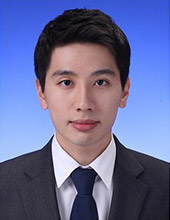
[Edaily Reporter Kim Jinsoo ] Kim Seong-yeon, a director at Genosco and the largest shareholder of OSCOTEC Inc.(039200), has dismissed concerns regarding the possibility of pursuing personal gain through a control premium. He argues that attracting a strategic investor (SI) to improve corporate governance and increase the company’s overall value is more beneficial—not only to minority shareholders but also to the largest shareholder—than selling control at a high price.
Director Kim proposed a plan to sell a portion of his holdings to a strategic investor (SI) without a premium and to pursue an increase in the value of the remaining shares, stating that this approach could also resolve the concerns regarding the control premium held by the current management.
(Photo courtesy of the subject) In an interview with Farm Daily on the 23rd, regarding concerns raised by OSCOTEC Inc.’s existing board of directors about a sale involving a control premium, Director Kim stated, “If a good strategic investor comes in to become the largest shareholder and that aligns with the interests of all shareholders, we could consider selling our stake. What matters is not how high a premium the largest shareholder receives, but rather increasing corporate value so that all shareholders benefit.”
OSCOTEC Inc. held a press conference that day, stating that there is a possibility Director Kim could join the board, secure influence, and then sell his stake at a control premium, and that safeguards for minority shareholders must be put in place first.
Director Kim’s reasoning is that even if he were to forgo the control premium, he could still secure greater economic benefits by attracting a strategic investor (SI).
He explained, “Assuming the value of my holdings is 100, if I sell 30 of them at market price and the value of the remaining 70 rises to 140 or 200 after attracting an SI, it becomes a much more favorable deal. On the other hand, even if I sell the 30 shares at a 30% premium for 39, the total value would only reach 109 if the value of the remaining shares remains unchanged.”
This means that, from an economic standpoint, it is more rational for the largest shareholder to offer the SI an opportunity to participate in management and seek to increase the corporate value of the remaining shares, rather than immediately disposing of a portion of the shares at a high price.
Director Kim emphasized that he had also explained this proposal to GK Asset—OSCOTEC Inc.’s second-largest shareholder—and Chairman Lee Ki-yoon. He said, “I explained the logic that even if a portion of the shares is transferred without a premium, the value of the remaining shares could rise significantly, and Chairman Lee indicated that he could agree to a sale without a premium.”
This approach also serves as an alternative to alleviate concerns raised by OSCOTEC Inc.’s board regarding the monopolization of the control premium. The idea is that if a specific shareholder attracts an SI by selling a portion of their stake at market price—rather than monopolizing the control premium—existing shareholders can also benefit.
Director Kim emphasized, “To become the largest shareholder, the strategic investor (SI) may request that the first- and second-largest shareholders—or major shareholders—sell a certain portion of their stakes. In such a situation, it is reasonable to view the existing major shareholders’ transfer of shares without a premium not as preferential treatment, but as a sacrifice made for the benefit of all shareholders.”
He added, “Even though we have already publicly declared that we will not accept a premium, the same suspicions keep resurfacing. I want to ask just how much of a premium they think they can gain by breaking a public promise.” He continued, “Based on the current stock price of 30,000 won, even applying a 40% premium would only amount to 42,000 won. The valuation of the shares at the time of inheritance was over 50,000 won—under these circumstances, is there really any reason to sell them at that price?” he asked.
He also refuted allegations of a conflict of interest between OSCOTEC Inc. and Genosco, citing economic interests as the basis for his rebuttal. OSCOTEC Inc. currently holds approximately 60% of Genosco’s shares and is pursuing a plan to acquire the remaining shares to make it a wholly-owned subsidiary.
Director Kim holds approximately 13% of Genosco’s shares, and the existing board of directors is concerned that if Director Kim joins OSCOTEC Inc.’s board, he could influence the determination of Genosco’s acquisition price. However, Director Kim argued that the benefits resulting from an increase in OSCOTEC Inc.’s corporate value would outweigh any profits he could gain from selling his Genosco shares. Director Kim and his related parties hold approximately 12.45% of OSCOTEC Inc.’s shares.
Director Kim explained, “OSCOTEC Inc. holds not only a stake in Genosco but also rights related to Lazertinib and other new drug development assets, so its corporate value is inevitably greater than that of Genosco. Even if I were to sell my Genosco stake at a 10% premium, missing the opportunity for OSCOTEC Inc.’s stock price to rise by 5–10% as a result would actually be a greater financial loss from my perspective.”
He added, “I have already made it clear that I will not participate in voting on matters where a conflict of interest related to Genosco could arise. I have been persuading Genosco shareholders to make concessions based on the logic that incorporating Genosco as a wholly-owned subsidiary of OSCOTEC Inc. would eliminate uncertainty and, by attracting a strong strategic investor (SI), could increase the overall corporate value.” “However, Genosco shareholders ask me in return whether I’m making such arguments simply because I hold OSCOTEC Inc. shares,” he said.
Finally, Director Kim emphasized that the company must go beyond simply securing external investors and create a structure where the increase in corporate value following the investment benefits existing shareholders.
He stated, “To increase OSCOTEC Inc.’s corporate value in the future, it is important to resolve uncertainties regarding corporate governance and attract strategic investors (SIs) that will provide tangible benefits.”
Bitcoin is showing a slight rebound. The price, which had plummeted immediately after the release of U.S. inflation data, has risen slightly. However, with international oil prices on the rise due to …
The business scope of food company CJ CheilJedang Corp(097950)—best known for its “Haetban” and “Bibigo” brands—is expanding to include artificial turf for soccer fields and kitchen dishcloths. As pro…
(Graphic: ChatGPT)
BreezeBio, a Korean-founded biotech company that originated in Silicon Valley, is seeking a listing on KOSDAQ. The company plans to use its Pangyo Research and Development (R&D)…