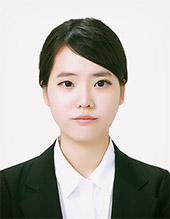
Hong Jong-ho, CEO of KUKJEON: “We’re Making a Bold Move to Expand Our Business into Advanced Materials, from Active Pharmaceutical Ingredients to AI Semiconductor Packaging”
[Edaily Reporter KIM SAE-MI ] “KUKJEON PHARMACEUTICAL Co.,Ltd(307750)is a company that is extending new branches into fine chemicals and materials while remaining rooted in its core business of pharmaceuticals.”
Hong Jong-ho, CEO of KUKJEON, sat down for an interview with Edaily on the 27th at KUKJEON’s headquarters in Anyang, Gyeonggi Province. (Photo:KIM SAE-MI )
Hong Jong-ho, CEO of KUKJEON, met with PharmEdaily—the premium pharmaceutical and biotech content platform of Edaily—at KUKJEON’s headquarters in Anyang, Gyeonggi Province, on the 27th, where he defined KUKJEON not merely as an active pharmaceutical ingredient (API) company but as a Chemical Total Solution (CTS) provider.
“The core of CTS lies in going beyond simply supplying raw materials to jointly solving our customers’ technical challenges,” said CEO Hong. “We aim to be a fine chemicals-based solutions company that participates from the planning stage of our clients’ new products, proposes optimal molecular structures and processes, and supports the entire process—from synthesis and high-purity purification to mass production.”
KUKJEON has a 50-year history, tracing its roots to Daesin Pharmaceutical, which was founded in 1972. Although KUKJEON began as an import and wholesale business, it transformed its business model into an API manufacturer by securing in-house manufacturing capabilities. Recently, leveraging the organic synthesis and high-purity purification technologies accumulated through its API business, the company has been expanding its business portfolio into the fields of electronic materials and biotechnology.
The recent change of the company name from “Gukjeon Pharmaceutical” to simply “KUKJEON” is also in line with this transformation. CEO Hong explained, “This decision reflects our commitment to expanding our business and philosophy beyond the pharmaceutical sector into future-oriented, high-value-added material industries such as fine chemicals and electronic materials.” He added, “Although we have removed the term ‘pharmaceutical,’ KUKJEON’s essence—setting industry standards through technology and quality—remains unchanged.”
However, he cautioned against interpreting this as a simple “move away from pharmaceuticals.” Rather, it signifies a commitment to enhancing competitiveness in the pharmaceutical business while cultivating materials as a new growth engine.
CEO Hong viewed the competitiveness of the API and electronic materials businesses as stemming from the same roots. “The organic synthesis technology and high-purity purification technology—which are central to API manufacturing—share the same roots as the technology used to produce electronic materials,” he said. “Capabilities in high-difficulty organic synthesis, high-purity purification, and trace impurity analysis are critical technologies required in both the API and electronic materials sectors.”
He added, “The electronic materials business is not so much a challenge in an entirely new field as it is a process of expanding KUKJEON’s core competency in fine chemicals, which it has excelled at.”
The pharmaceutical industry analyzes that the technical standards required for electronic materials—particularly semiconductor materials—are a notch higher than those for pharmaceuticals. CEO Hong emphasized, “The semiconductor materials industry demands even more extreme levels of purity than the pharmaceutical industry.” While the pharmaceutical industry requires impurity control at the ppm (parts per million) level, semiconductor materials require precise control down to the ppb (parts per billion) and ppt (parts per trillion) levels.
In August 2023, KUKJEON completed a production plant for electronic materials in Eumseong, North Chungcheong Province, with an investment of approximately 50 billion won. The Eumseong plant is regarded as a hub for the production of high-value-added fine chemical materials, including OLED materials, additives for rechargeable battery electrolytes, and semiconductor materials.
Lee Seon-woo, Director (Executive Director) of KUKJEON’s Materials Technology Research Institute, emphasized, “Semiconductor factories represent the pinnacle of manufacturing technology,” adding, “Since the semiconductor industry requires control down to the atomic level, the production process also demands extreme precision.”
Director Lee, an electronics materials expert who has worked at global chemical and materials companies such as Dow Chemical, BASF, and Umicore, joined KUKJEON at the end of last year. His decision to join KUKJEON, after working at leading global firms, was driven by a spirit of challenge—a desire to build the electronics materials business from the ground up, rather than merely fulfilling a role within the established system of a large corporation.
The background behind CEO Hong’s interest in the high-value-added materials business lies in the limitations he observed in the pharmaceutical distribution industry during his childhood. “Back then, sales at domestic pharmaceutical companies were similar to delivering jajangmyeon,” he recalled, adding, “Even when delivering a truckload of medicines, the payment was only around 1 million to 2 million won.”
He continued, “I think that’s when I realized the importance of high-value-added products,” adding, “My dream was to create products that customers would line up to buy.”
KUKJEON’s goal in the materials sector is not to be a mere “subcontractor,” but rather a “super subcontractor” that supplies core materials indispensable to the industrial value chain. Many areas of the high-value-added materials sector are still dominated by overseas companies from Japan, Germany, and elsewhere.
Although domestic companies have made several attempts at localization, they have struggled to achieve results due to the difficulty of development and uncertainties surrounding mass production. KUKJEON views this structural gap as an opportunity and has adopted a strategy of selecting materials with steady demand but a weak domestic supply base for commercialization.
KUKJEON is currently focusing most of its efforts on the AI semiconductor packaging and substrate materials sector. The market for the specific materials KUKJEON targets for AI semiconductor packaging and substrates is estimated to be worth approximately 4000억 원. KUKJEON aims to achieve 2000억 원 in sales in this market by 2030.
KUKJEON is collaborating with major clients and preparing for mass production next year. In the short term, results are becoming visible in its organic light-emitting diode (OLED) product line and cleaning solution additives for high-bandwidth memory (HBM) manufacturing. The company also generated its first revenue from cleaning solution additives for HBM manufacturing starting in April of this year.
CEO Hong predicted, “As mass production of AI semiconductor packaging and substrate materials gains momentum, the contribution of the electronic materials business to revenue will expand,” adding, “Rather than a structure where electronic materials replace APIs, 2027 will be a process of building a portfolio in which both businesses grow in a balanced manner.”
Meanwhile, KUKJEON is also accelerating the expansion of its finished pharmaceutical business. A prime example is KUKJEON’s subsidiary, KSBL (Kukje BioLogics). KSBL has the albumin-bound paclitaxel anticancer drug “SNA-001” as its core pipeline and utilizes Donga ST(170900)as its contract manufacturing organization (CMO) partner. It is also working to establish a global sales network through overseas partners.
While the electronic materials business represents a diversification strategy based on fine chemicals, KSBL serves as a test bed for KUKJEON’s vertical integration strategy—aimed at advancing into the high-value-added anticancer drug market within its pharmaceutical business. This strategy seeks to elevate the added value of KUKJEON’s pharmaceutical business to the next level by expanding beyond its traditional role as a raw material supplier to target finished anticancer drugs and global distribution networks.
He stated, “KUKJEON’s transformation is a process of expanding the technology accumulated in the pharmaceutical sector into broader industries,” and pledged, “Based on our fine chemicals capabilities—spanning from active pharmaceutical ingredients to electronic materials and finished pharmaceutical products—we will become a company that creates high-value-added products that customers seek out first.”
(Photo: Blind)
One of the concerns facing the Lee Jae-myung administration is the decline in support among young people. According to Gallup Korea’s presidential job approval ratings, the approval…
The KRX Health Care Index rose 4.53% from the previous session on Oct. 1, signaling a rare tailwind for South Korea’s pharmaceutical and biotech sector. Among the gainers, GIInnovation and G2GBio drew…
Lose fat while preserving muscle. As Roche has discontinued emugrovat—a candidate it was developing to counteract muscle loss during obesity treatment—the role of “HM17321,” a technology licensed by H…