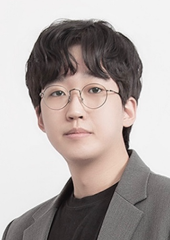
"Aging Population Presents an Opportunity"... Angel Robotics Sets Sights on Southeast Asia's Wearable Robot Market
Interview with Cho Nam-min, CEO of Angel Robotics
Expansion of Medical Device Certifications in Malaysia, Thailand, and Vietnam
Moving Beyond Rehabilitation Robots to Pursue Walking Assistance and Home-Use Platform Businesses
[Edaily Reporter Shin Young-bin] “The wearable robotics business has now moved beyond the certification phase and has reached the point where we must establish an actual sales network. Starting this year, we plan to embark on full-scale market expansion, focusing on major Southeast Asian countries such as Malaysia, Thailand, and Vietnam.”
Cho Nam-min, CEO of Angel Robotics, stated this in a recent interview, adding, “We have completed medical device certification for the wearable rehabilitation robot ‘Angel Suit H10’ in Malaysia, and we are set to begin the certification process in Vietnam this week. Certification work is also underway in Thailand.”
He explained, “Following our existing product, the ‘Angelex M20,’ we are expanding our product portfolio in the Southeast Asian market to include the H10,” adding, “We are not stopping at simply obtaining certification; we are also in the final stages of establishing local dealerships and distribution networks.”
He added, “As demand for medical and rehabilitation services is growing rapidly in Southeast Asian countries, we will begin a full-scale market push based on local partnerships.”
Cho Nam-min, CEO of Angel Robotics (Photo: Angel Robotics) Angel Robotics is a company specializing in wearable robots. Its flagship products are the Angelex M20, which aids in the rehabilitation of patients with severe walking disabilities, and the Angel Suit H10, a lightweight walking assistance robot. While the M20 is designed for hospital-based rehabilitation, the H10 targets a broader range of walking assistance needs, including patients in post-surgical recovery, those with sarcopenia, and those with functional decline.
CEO Cho believes that first validating demand in overseas markets is a realistic growth strategy. Since the domestic healthcare market operates within the framework of national health insurance and fee-for-service systems, it takes time for new technologies to be integrated into the established system. In contrast, he believes that some overseas markets have relatively less rigid public reimbursement systems, allowing the company to open up those markets more quickly through collaboration with hospitals, insurance companies, and distribution partners.
CEO Cho stated, “The domestic healthcare market must operate within the health insurance system, which was established decades ago,” adding, “Since robotics and artificial intelligence (AI) are emerging industries, there are still areas where compatibility is lacking.” He continued, “Overseas markets, on the other hand, offer opportunities to open up more quickly based on their asset values and private insurance structures.” Angel Robotics’ wearable robot, Angelex M20 (Photo: Angel Robotics) Choosing Southeast Asia as the first overseas expansion hub was also a strategic decision. The company explained that the region is geographically close and shares significant cultural similarities, and that the body type and size standards of wearable robots developed in Korea are relatively well-suited to users in Asia. Furthermore, as aging populations rapidly increase in countries like Vietnam, Thailand, and Malaysia, demand for rehabilitation and walking assistance is growing.
CEO Cho stated, “Southeast Asia cannot escape aging either,” adding, “From the perspective of an aging population, wearable robot technology—which can restore, maintain, and augment human capabilities—has a realistic market demand.” He further emphasized, “Our entry into these three countries is not merely about finding a place to sell robots, but a strategic move that takes into account aging trends, the structure of the healthcare market, and the physical and cultural compatibility within the Asian region.”
Angelo Robotics plans to prioritize clinical data and field validation over simple equipment sales in overseas markets. CEO Cho believes that since wearable robots are products worn directly on the human body, it is crucial to first gain recognition in the medical field. He explained that once clinical efficacy is confirmed, the technology can expand into other areas such as hospital rehabilitation, home-use walking aids, industrial safety, and defense.
He said, “While there are many products called wearable robots, few companies have sufficiently proven clinical efficacy,” adding, “Without clinical data, they should not and cannot be utilized as medical devices or medical robots.” He continued, “We must first gain recognition in the highly demanding medical field before we can expand into other markets such as defense and industrial safety.” Angel Robotics’ wearable robot, the Angel Suit H10 (Photo: Angel Robotics) The company is also keeping the door open for entering the European market. Recently, officials from the French General Secretariat for Public Investment (SGPI), under the Prime Minister’s Office, visited Angel Robotics, leading to discussions on robotics cooperation between the two countries. CEO Cho views Europe not merely as an export market but as a strategic market where joint research, clinical trials, and partnerships can be explored.
Angel Robotics’ long-term vision is “connected care,” extending beyond hospital-based rehabilitation robots to the home. This structure involves receiving gait training in the hospital and then continuing recovery and maintenance at home based on data. CEO Cho described this as a business aimed at restoring “human mobility.”
CEO Cho stated, “While our current focus is on products for hospitals, we are preparing robots that can be used in the home,” adding, “We are exploring a platform system that connects hospitals and homes.” He continued, “Angel Robotics is a robotics company,” and emphasized, “Since these are wearable robots, we will first gain recognition in the medical field and then expand into the global market based on that trust.”
As loans to sole proprietors from the three existing internet-only banks (KakaoBank Corp.(323410), #Kbank, and Toss Bank) remain at around 8% of their total loan portfolio, calls are growing for the f…
Bio Solution Co.,Ltd.(086820)BioSolution is focusing its R&D efforts on clearly demonstrating the difference in efficacy between the treatment group and the placebo group in the clinical trial for “Sp…
Koo Hyun-mo, former CEO of KTCorporation, was acquitted in the first trial on charges of improperly interfering in the management of a subcontractor. The court ruled that while there were suspicions o…