[Edaily Reporter Kim Seung-kwon] In the spring of 2016, the match between Lee Sedol, a 9-dan professional Go player, and the artificial intelligence (AI) program AlphaGo sent shockwaves around the world. While for some it was merely a technological marvel, for one software expert, it became a once-in-a-lifetime turning point. This was because he developed a strong conviction that technology could be used to complement human limitations and save lives. This was the decisive catalyst that led Song Gyo-seok, CEO of Medipixel, to found a medical AI diagnostic assistance solutions company the following year, in 2017.
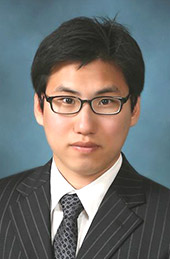
Song Gyo-seok, CEO of Medipixel, poses at the company’s headquarters in Gangnam, Seoul. (Photo by Kim Seung-kwon)
AI Lung Cancer Diagnosis Pivots to Cardiovascular Disease in Just One Year
In the early days of the startup, CEO Song focused on lung cancer diagnosis. He set out to develop an assistive solution that uses deep learning technology to detect lung cancer lesions in X-rays and computed tomography (CT) scans. However, the reality of the market was too harsh to overcome with passion alone. At the time, the AI market for lung cancer diagnosis was already a “red ocean” crowded with leading domestic and international companies. Even if the company could achieve technological differentiation, it seemed difficult to break through the tightly woven competitive landscape and establish a unique ecosystem.
This was followed by a more fundamental question: in which area could AI provide the most direct and immediate help to patients’ lives? After thorough market analysis and intense internal discussions, Medipixel made a bold decision just one year after its founding.
CEO Song Gyo-seok recalled that decision, saying, “We initially focused on lung cancer but pivoted after just one year. The lung cancer market was a red ocean, and we later realized that cardiovascular disease is actually the leading cause of death.”
Although the public fears cancer greatly, cardiovascular diseases—including stroke and myocardial infarction—are actually known to be the leading cause of death worldwide. Emergency situations where every second counts are frequent, and the procedure room often resembles a battlefield. In this intense environment, where a doctor’s quick and accurate judgment determines a patient’s life or death, intuitive and precise AI assistance was most urgently needed.
CEO Song’s personal experience further fueled his sense of social mission to conquer cardiovascular disease. “My father also went to the hospital after experiencing chest pain and immediately underwent a cardiovascular interventional procedure,” he explained. “Going through these experiences made me realize I had to take on the challenge of introducing AI technology to the field of cardiovascular medicine.”
Having witnessed his family’s crisis firsthand and deeply felt the importance of cardiovascular interventional procedures, he poured all of Medipixel’s resources into developing AI for cardiovascular image analysis, with the goal of ensuring its implementation in the operating room—where every second counts. However, the arduous journey was only just beginning.
AI Cardiovascular Diagnostic Product Secures Approval from the Ministry of Food and Drug Safety and the FDA
Building on its outstanding technological capabilities, Medipixel achieved the remarkable feat of securing not only domestic approval from the Ministry of Food and Drug Safety (MFDS) for its flagship product, the MPXA-2000, but also approval from the notoriously stringent U.S. Food and Drug Administration (FDA). When he held the approval certificates in his hands, it felt as if he had the world at his feet. He had no doubt that hospitals around the world would rush to purchase Medipixel’s products immediately.
However, the reality proved to be a formidable obstacle. Even if doctors recognized the clinical utility of the product, getting hospitals to pay for and adopt the system was an entirely different matter. The decisive hurdle was insurance reimbursement rates. No matter how innovative the software might be in saving patients’ lives, if it could not replace existing medical procedures and secure reimbursement or non-reimbursable codes within the health insurance system, hospitals could not establish a viable revenue model.
For a startup that had plunged in relying solely on cutting-edge technology, the complex and multi-layered medical fee system and the conservative hospital procurement process proved to be a painful “Valley of Death.” The company had to struggle for years just to sell its product. But CEO Song did not give up. Taking his failure as a hard-learned lesson, he re-examined the fundamentals of the medical device business. He demonstrated his resilience by devising a new strategy for entering the insurance market, focused on establishing clinical evidence and leveraging the New Medical Technology Assessment system.
After nine long years of perseverance—a period by no means short—Medipixel is finally emerging from that barren valley. CEO Song’s voice carried the unique resilience of an entrepreneur who has weathered the storms.
“I belatedly realized that the medical device business doesn’t end with mere licensing—we must rigorously strategize for insurance coverage right from the product planning stage,” he said, adding with confidence, “After countless trials and errors, we are finally ready to get on a solid track.”
(Photo: Blind)
One of the concerns facing the Lee Jae-myung administration is the decline in support among young people. According to Gallup Korea’s presidential job approval ratings, the approval…
The KRX Health Care Index rose 4.53% from the previous session on Oct. 1, signaling a rare tailwind for South Korea’s pharmaceutical and biotech sector. Among the gainers, GIInnovation and G2GBio drew…
Lose fat while preserving muscle. As Roche has discontinued emugrovat—a candidate it was developing to counteract muscle loss during obesity treatment—the role of “HM17321,” a technology licensed by H…