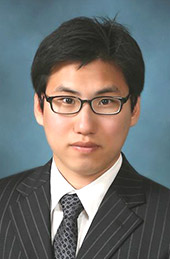
[Edaily Reporter Kim Seung-kwon] “We expect this year’s revenue to more than double compared to last year (approximately 4.2 billion won). Seasonally, the second half of the year always accounts for 60–70% of total revenue, but it appears that second-quarter (first-half) results alone have already surpassed last year’s annual revenue.”
Kim Pil-han, CEO of iBeam Technology (Photo courtesy of iBeam Technology)
A Flurry of Interest from the European Market
Kim Pil-han, CEO of #iBeamTechnology, recently expressed strong confidence in this year’s performance growth during an interview with Pharm eDaily, eDaily’s premium pharmaceutical and biotech content platform. Behind this high growth lies increased global demand for the company’s equipment. Currently, demo tests are actively underway at 15 key institutions, including the University of Chicago and Yale University in the U.S.
Interest from the European market is also running high. Testing has significantly increased in France, Italy, and Spain, as well as at the Technical University of Munich in Germany. Recently, the company has signed consecutive supply contracts with the Italian pharmaceutical company Chiesi and Miyazaki University in Japan.
Based on bio-microscopy technology that enables real-time observation of living tissue in vivo, iBeam Technology is simultaneously expanding its preclinical contract research organization (CRO) and equipment businesses. CEO Kim stated, “With a resolution more than 100 times higher than magnetic resonance imaging (MRI), we can directly observe the reactions of drugs and cells in a living state.”
This technology stands out because it allows researchers to track drug delivery and efficacy over time in a single animal model, eliminating the need to repeatedly sacrifice animals as was previously the case. He explained, “The key is being able to continuously monitor, within a single animal, where and how the drug moves and whether it actually produces the desired effect.”
The most notable achievement for iBeam Technology is undoubtedly the delivery of its equipment to the global pharmaceutical giant Sanofi. The fact that this equipment was meticulously selected by world-class researchers serves as proof of the technology’s high patent barriers and its competitiveness in the global market.
Regarding the reason Sanofi was impressed by iBeam Technology, CEO Kim explained, “Sanofi’s Boston Research Center in the U.S. decided to adopt our equipment after seeing our demo unit firsthand,” adding, “It’s a structure where high-quality data validated by top global research institutions naturally leads to actual purchases.”
A prime example of this technological success is the experiment on drugs that cross the blood-brain barrier (BBB). He emphasized, “We directly demonstrated in a living organism the process by which a BBB-penetrating drug—transferred to Sanofi by the Korean biotech company #ABL Bio—crosses the blood-brain barrier,” adding, “We provided definitive data by continuously imaging a single mouse from the time of drug injection until two days later.”
This is regarded as a major paradigm shift that rewrites the success formula of the existing preclinical CRO market. Until now, the new drug development process required the sacrifice and necropsy of dozens of animals for time-series analysis. However, by adopting iBeam Technology’s solution, the entire process can be tracked in real time using just a single animal, thereby complying with the U.S. Food and Drug Administration’s (FDA) regulations on minimizing animal testing.
The company’s unique high-speed imaging technology is cited as the core of its competitiveness. CEO Kim explained, “Since living tissue is constantly moving due to heartbeats and breathing, the speed at which camera shake is stabilized is key,” adding, “iBeam’s equipment combines high-speed imaging at 50 to 100 frames per second with AI-based motion correction technology, significantly widening the gap with existing global microscope manufacturers.”
He also clearly distinguished the company from Tomocube, with which it is often pitted against in the market. “Tomocube’s equipment is designed to observe stationary cells in culture dishes,” he explained. “iBeam Technology’s equipment, on the other hand, allows users to directly observe living animals with beating hearts. Rather than competing with each other, the two companies are essential complementary partners used together at various stages of new drug research.”
A view of CMS3, iBeam Technology’s flagship product (Photo: iBeam Technology)
Launching Sales in China with U.S.-Based Revvity... Expanding Business into Cancer Diagnostics
iBeam Technology is also actively expanding its global footprint. In particular, through close collaboration with Revvity, a global U.S
.-based
equipment company, iBeam Technology has begun its push into the massive Chinese market. By continuously supplying bio-microscopy equipment to Revvity’s Chinese subsidiary, iBeam Technology has established a solid foothold for its localization strategy.
Their collaboration is based on strong synergy. CEO Kim stated, “After using Revvity’s existing macroscopic equipment (IVIS) to confirm whether a drug is traveling to a mouse’s liver or its paw, we must use iBeam Technology’s high-resolution equipment to examine in detail exactly which cells it is interacting with.” He added, “Ultimately, this creates powerful synergy as the two pieces of equipment are sold as a set.”
iBeam Technology’s medical AI cancer diagnostic device business is cited as another breakthrough that will drive a quantum leap in its performance. iBeam Technology is developing an innovative device that goes beyond research microscopes to address the limitations of emergency cancer tissue diagnosis performed in actual hospital operating rooms.
He pointed out, “Currently, to confirm whether cancer cells remain at the resection margin during cancer surgery, a frozen section examination—which involves freezing and cutting the tissue—takes 30 minutes to an hour,” adding, “At night, critical situations arise where the examination cannot be performed at all due to a lack of pathology staff.”
He continued, “By utilizing the AI medical device being developed by iBeam Technology, we can immediately determine the presence of cancer within five minutes without freezing the tissue removed from the patient, thereby maximizing surgical efficiency.” The device is currently undergoing clinical trials for regulatory approval at three hospitals in South Korea, including Korea University Anam Hospital. The clinical trials are set to conclude in the second half of this year.
Finally, CEO Kim presented the company’s mid- to long-term vision. He expressed his ambition to use iBeam Technology’s technology to set the new global standard for preclinical testing.
“Ultimately, preclinical testing methods in laboratories worldwide will shift from analog methods that involve the mass sacrifice of animals to our technology-based alternatives,” he said. “We will lead the market by focusing on three pillars: global equipment sales, CRO services that conduct various experiments on behalf of clients, and AI-based medical devices for cancer diagnosis.”
(Photo: Blind)
One of the concerns facing the Lee Jae-myung administration is the decline in support among young people. According to Gallup Korea’s presidential job approval ratings, the approval…
The KRX Health Care Index rose 4.53% from the previous session on Oct. 1, signaling a rare tailwind for South Korea’s pharmaceutical and biotech sector. Among the gainers, GIInnovation and G2GBio drew…
(Graphic: ChatGPT)
“While existing ex vivo chimeric antigen receptor T-cell (CAR-T) therapies are personalized treatments that require cell collection from each patient for manufacturing, the in v…