[Edaily Reporter Kim Seung-kwon] #JLK, South Korea’s first publicly listed medical artificial intelligence (AI) company, has entered the monetization phase in the Japanese market.
Having obtained a direct sales license through its Japanese subsidiary, JLK Japan; secured seven approvals from the Japanese Pharmaceuticals and Medical Devices Agency (PMDA); and established partnerships with major local distributors such as the Itochu and Marubeni Groups, the company is now seen as having completed a three-pronged business foundation encompassing “approval, distribution, and direct sales.” In addition, JLK has established a sales structure by deploying local experts with backgrounds at Fujifilm to key positions.
JLK has unveiled a roadmap to achieve 100 contracted hospitals and 3 billion won in sales in Japan this year, with plans to expand to 500 contracted hospitals and 18 billion won in sales next year. Expectations for achieving these goals are rising as various factors—including the market environment, technological competitiveness, and local networks—align.
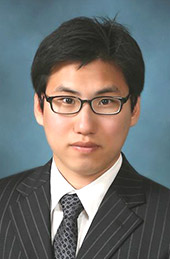
JLK CEO Kim Dong-min being interviewed by Edaily (Photo = Edaily DB)
JLK Japan
Recruits
Talent from Fujifilm… Full-Scale Sales Launch
The most notable change in JLK’s Japan strategy is its personnel. Earlier this year, its local subsidiary, JLK Japan, recruited a
veteran from Fujifilm
—a “leading name” in Japan’s medical device industry—to serve as Head of Business Operations. Mr. Furuya, former Head of Sales Planning at Fujifilm, is the key figure behind this move.
Fujifilm has long led the Japanese medical device market in the field of diagnostic imaging equipment, such as computed tomography (CT) and magnetic resonance imaging (MRI). The company possessed a workforce that not only maintained a network with local university hospitals and major medical institutions but also understood the conservative decision-making structures unique to Japanese medical institutions better than anyone else. The medical AI industry views this as a sign that JLK is evolving from a mere technology company into a localized organization that understands the dynamics of the Japanese healthcare market.
Just as its sales organization has deepened, its distribution partnerships have also grown stronger. JLK first signed distribution agreements with CLAIRVO Technologies and CMI, healthcare subsidiaries of the Marubeni Group, one of Japan’s top five general trading companies. Following this, JLK further solidified its distribution network by forming a partnership with Century Medical, a subsidiary of the Itochu Group, one of Japan’s leading general trading companies.
Century Medical is a company specializing in the distribution of medical catheters in Japan. It operates logistics centers in both eastern and western Japan, providing an infrastructure capable of nationwide delivery within 24 hours. Its sales force of approximately 250 employees has built strong relationships with professors in the departments of neurosurgery and neurology at university hospitals while supplying catheters essential for stroke procedures.
Kim Dong-min, CEO of JLK, emphasized, “Century Medical’s sales representatives are already connected to all the professors who need our solutions,” adding, “Since the structure allows them to naturally propose our AI solutions while delivering catheters, sales efficiency is expected to be very high.”
JLK’s CTP product, which has received approval from Japan’s PMDA, in operation (Photo: JLK)
Japan, a Super-Aged Society... Sustained Structural Demand for Medical AI
With the addition of distribution partners such as Sanshodo to its network, JLK has now secured a supply infrastructure capable of immediate delivery to nearly 500 hospitals across Japan. Clinical data is cited as a key lever for local sales. Last March, JLK officially announced the launch of local sales for its flagship product, MEDIHUB STROKE, at the Japanese Stroke Society conference. At the same time, the results of a joint research project with Professor Jun Sakamoto of Nippon Medical School Hospital in Tokyo were published in a paper, drawing significant attention.
Accordingly, JLK has set aggressive sales targets of 3 billion won in Japan this year and 18 billion won next year. JLK explains that this is the result of a combination of specific changes in the market structure, the regulatory environment, and the company’s technological differentiation.
In fact, regulations limiting doctors’ overtime work have been fully implemented in Japan starting this year. This system, which has been phased in since April 2024, caps doctors’ annual overtime at 960 hours. Consequently, streamlining diagnostic imaging tasks—such as CT and MRI interpretation—has emerged as an urgent priority for medical institutions.
In particular, the shortage of personnel for CT interpretation is worsening, especially in regional hospitals. With specialists often unavailable during night and emergency shifts, AI-based imaging interpretation assistance solutions are becoming essential infrastructure rather than a mere option. Japan is one of the world’s most super-aged societies, with the proportion of the population aged 65 and older reaching 29.1% as of 2023.
Japan sees more than 1.8 million new cases of brain diseases each year, and this figure is projected to continue rising. The Japanese AI medical device market is also expected to grow approximately fourfold, from 125 billion yen (approximately 1.2 trillion won) in 2022 to 500 billion yen (approximately 4.8 trillion won) in 2027.
JLK’s technological competitiveness is also a key factor to watch. JLK can supply hospitals with a single package containing seven types of stroke AI solutions that have received approval from the PMDA. By integrating various diagnostic solutions based on CT and MRI scans, the system supports “full-cycle care” from acute-phase assessment to treatment decision-making.
While most competitors focus on single-function solutions, JLK holds a competitive advantage in that it can support the entire stroke care process under a single contract. From the hospital’s perspective, the incentive to adopt the system is high, as it allows them to secure an integrated platform without the hassle of introducing multiple solutions separately.
A JLK official stated, “Japan is a market where adoption accelerates rapidly once a company establishes a strong reputation,” adding, “If we secure contracts with a few hospitals in the early stages, it is highly likely that this will lead to additional contracts. In other words, there is a strong possibility that we will generate revenue this year.”
(Photo: Blind)
One of the concerns facing the Lee Jae-myung administration is the decline in support among young people. According to Gallup Korea’s presidential job approval ratings, the approval…
The KRX Health Care Index rose 4.53% from the previous session on Oct. 1, signaling a rare tailwind for South Korea’s pharmaceutical and biotech sector. Among the gainers, GIInnovation and G2GBio drew…
Lose fat while preserving muscle. As Roche has discontinued emugrovat—a candidate it was developing to counteract muscle loss during obesity treatment—the role of “HM17321,” a technology licensed by H…