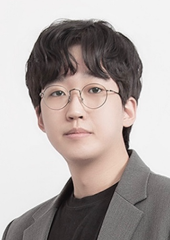
Lim Woo-hyung, Director of LG AI Research: “Global Big Tech Companies Are Flocking to Korea… Manufacturing Data Is Key”
Emphasis on Data Control at the KOSA Leaders Forum
“We Need to Consider How Far to Collaborate and What to Protect”
Focus on Solving Industry Problems Rather Than Chatbot Competition
Case Studies on LG Chem, Medical Biotechnology, and Financial AI
[Edaily Reporter Shin Young-bin] “Global companies such as Google, NVIDIA, OpenAI, and Microsoft (MS) are approaching #LG. They are proposing collaboration based on the premise that ‘if you provide manufacturing data, we’ll handle the development of the artificial intelligence (AI) system.’”
Lim Woo-hyung, President of LG AI Research, made these remarks during his keynote speech at the “3rd KOSA Leaders Forum” held on the 18th at Elysian Gangchon in Chuncheon, Gangwon Province, regarding AI collaboration between global Big Tech companies and the domestic industry.
His point is that, since the manufacturing data and industrial know-how accumulated by domestic companies over decades are attractive assets even to global AI firms, it is essential to carefully consider how much control over core data and technology to retain during the collaboration process. Lim Woo-hyung, President of LG AI Research, delivers a presentation at the “3rd KOSA Leaders Forum” held at Elysian Gangchon in Chuncheon, Gangwon Province, on the 18th. (Photo courtesy of the Korea Artificial Intelligence & Software Industry Association) Director Lim said, “We are considering how far we should collaborate and how much we should protect,” adding, “The technological capabilities that Korean industry has accumulated over decades can be extremely attractive to global companies.” He continued, “If all this know-how were to be transferred during the model training process, it could raise concerns.”
He also argued that the significance of sovereign AI should lie in “controllability” rather than simply in in-house development. Director Lim said, “Rather than building everything from A to Z, what matters is whether we can secure our position within the supply chain and whether we can maintain control when we want to advance the technology.”
On that day, Director Lim delivered a presentation titled “The Industrial Ecosystem Evolving Through AI.” He assessed that AI competition is shifting beyond the race for general-purpose chatbot performance toward solving problems in industrial settings such as manufacturing, biotechnology, and finance.
He also introduced LG AI Research’s ExaOne strategy in this context. President Lim said, “When developing the ExaOne model, rather than simply aiming to compete with ChatGPT or Gemini, we are building it as a foundation for creating ‘expert AI’ based on the understanding that AI capabilities are needed to solve various industrial problems within the LG Group.”
He continued, “We believe that expert AI isn’t just about having advanced AI technology; it must actually solve problems in the field,” explaining that they are pursuing on-site application projects in collaboration with the operational teams of group affiliates such as #LGElectronics, #LGUplus, and LG CNS (#LGCNS).
He cited the AI scheduling agent at LG Chem’s petrochemical plant as a prime example. He explained that whereas experts previously adjusted raw material intake, tank allocation, and production plans based on experience, the AI optimized the entire process and uncovered hidden profit margins.
Director Lim said, “AI identified operational methods that people would normally overlook, and implementing them led to increased operating profit,” comparing this to the way AlphaGo played moves that deviated from established Go strategies. Lim Woo-hyung, Director of LG AI Research, is delivering a presentation at the “3rd KOSA Leaders Forum” held on the 18th at Elysian Gangchon in Chuncheon, Gangwon Province. (Photo by Shin Young-bin) In the medical and biotech sectors, he introduced the “ExaOne PASS” case, which analyzes pathology images of cancer patients to assess their likelihood of responding to drugs. He explained that by combining pathology images with genetic information, the system can predict which drugs will be effective for specific patients and can also be utilized in future new drug development and the selection of clinical trial participants.
In the financial sector, he presented a case where AI analyzes corporate earnings, regulatory filings, news, and market data to automatically generate investment outlook reports. LG AI Research, in collaboration with the London Stock Exchange, is providing outlook data on approximately 500 companies listed in New York and is also working to apply this technology to the domestic securities market. Director Lim stated, “AI analyzes vast amounts of data every day to provide the right output at the exact moment a person needs it.”
He also highlighted the spread of agentic AI and physical AI as major changes. Director Lim said, “Agentic AI has been a hot topic since last year and is continuing to develop; true agent-like agents, including those from OpenAI, have begun to emerge,” adding, “Concerns that AI can perform on its own the functions previously provided by traditional software solution companies are also being reflected in the stock market.”
Regarding physical AI, he cited the example of a Figure AI humanoid robot that worked continuously for 200 hours and processed approximately 250,000 packages, noting, “Physical AI is increasingly being deployed in the field and is becoming capable of performing tasks.”
He also touched on the potential impact of AI’s proliferation on the labor market. “In the past, many believed AI would replace low-wage or simple tasks,” he said, “but there is now widespread speculation that the greatest impact will actually extend to high-income white-collar workers and professionals.”
Director Lim also noted that it is not necessarily true that South Korea is lagging behind in the AI race. “While Koreans often say we’re falling short, the landscape has changed since the days when Google was considered the leader in AI,” he said. “Rather than focusing on whether we’re late, we need to consider how to prepare and shape the future.”
Director Lim emphasized, “While AI will indeed take on many tasks, humans must remain at the center of technological and social progress and provide clear direction,” adding, “We must work together to figure out how to use AI to build a better world more quickly.”
SamsungElectronics and SK hynix have begun returning the massive cash reserves they earned during the memory boom to their shareholders. The total shareholder returns announced by the two companies th…
I’ll try just about anything and report back to you. I’m interested in not only new products but also products making a comeback. I avoid simple reviews. I’ll also explain why a product is popular and…
KTCorporation(030200)is participating in the government’s “AI for All” project call for proposals. To this end, the company has formed a consortium with leading domestic companies and institutions in …