[Edaily Reporter SONG YOUNG-DOO ] Global pharmaceutical giant Boehringer Ingelheim is expected to expand its investments in and technology acquisitions from Korean biotech companies through its venture fund. In particular, it has been confirmed that a venture investment team that recently visited Korea is actively discussing follow-on investments with several biotech companies.
Boehringer Ingelheim has been steadily evaluating the domestic market for several years since 2023, when it became the first global Big Pharma company to announce its intention to invest directly in Korean biotech firms through its venture fund (BIVF). In particular, the venture fund’s strategy to target the Korean market has rapidly taken shape over the past year. The most recent official visit by BIVF to South Korea was for the “Global Open Innovation Week” hosted by the Korea Health Industry Development Institute in November 2025.
E-Daily’s pharmaceutical and biotech premium content platform, Pharm E-Daily, conducted a written interview with June Hahn, Head of BD&L at Boehringer Ingelheim Korea, and Kathryn Liu, Investment Manager at Boehringer Ingelheim Venture Fund (BIVF), on the occasion of the BIO International Convention 2026 (BIO USA). It is considered unusual for key executives overseeing both technology acquisition and venture investment to simultaneously share their perspectives on the Korean market.
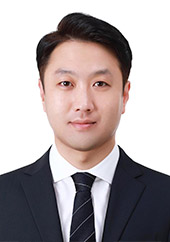
(From left) June Hahn, Head of BD&L at Boehringer Ingelheim Korea, and Kathryn Liu, Investment Manager at Boehringer Ingelheim Venture Fund (BIVF). (Photo: Boehringer Ingelheim website)
“Discussions on Follow-On Investments Underway with Some Korean Companies”
The most eye-catching aspect is the venture fund’s investment plan. Investment Manager Kathryn Liu stated, “We are currently engaged in very active follow-up discussions
with
several companies we met during this visit (in 2025) to Korea,” adding, “We see opportunities to invest alongside Korean VCs.”
This is interpreted as a signal that discussions are moving beyond mere networking to explore the potential for actual investment or strategic collaboration. However, Boehringer Ingelheim did not disclose specific target companies or the current stage of the discussions. Companies developing “first-in-class” therapies, rather than “best-in-class” drug developers, are considered potential candidates.
Industry observers note that, given Boehringer Ingelheim’s long-standing interest in Korean biotech companies, these follow-up discussions could serve as a significant milestone for the domestic biotech ecosystem if they lead to actual investment or joint development.
Manager Liu added, “We hope that institutional barriers will be lowered so that global venture capital firms can invest more easily in the Korean biotech ecosystem,” noting, “If that happens, Korea could establish itself as a key hub for global R&D innovation and business development (BD) partnerships.”
The Secret Behind Aimed Bio Inc.’s 1.4 Trillion Won Deal: “It Almost Perfectly Matched the Conditions We Were Looking For”
A prime example of Boehringer Ingelheim translating its commitment to investing in Korean companies into concrete action is the approximately 1.4 trillion won antibody-drug conjugate (ADC) technology transfer agreement signed last year with #Aimed Bio Inc. The deal drew industry attention as a case where a preclinical-stage candidate—before entering clinical trials—was valued in the trillions of won.
Han Jeong-hyun, Head of BD&L, explained, “When we were first introduced to the project, the target, R&D stage, and characteristics of the compound almost perfectly matched what we were looking for.” He added, “During the in-depth review process, Aimed Bio Inc.’s high level of preparedness and agile responsiveness convinced us that they were a partner with whom we could build a long-term relationship.” This underscores that, in addition to the data, the company’s preparedness and execution capabilities during the business development process were key factors in securing this major deal.
Past collaborative experiences also underpin Boehringer Ingelheim’s commitment to the Korean market. Han explained, “Even before Aimed Bio Inc., we had completed three technology transfers with Korean companies, and through that process, we directly experienced the innovation and dynamic entrepreneurial spirit of Korea’s new drug development ecosystem.” He added, “These experiences were the driving force behind establishing an independent BD&L organization in Korea.”
In fact, the company is expanding joint research and technology evaluations with domestic firms in various fields, including ADCs and long-acting formulations. With even its venture investment organization actively engaging in the Korean market, the company appears to be strengthening collaboration on both fronts: technology acquisition and investment.
Furthermore, the projects with Inventage Lab Inc. and G2GBIO, Inc.—with which Boehringer Ingelheim is conducting joint research to introduce long-acting formulation technology—are believed to have entered a new phase. This interview confirmed for the first time that, based on the results of the joint research conducted so far, Boehringer Ingelheim is currently in the process of internally evaluating the technology’s technical feasibility and commercial viability.
When asked about the possibility of finalizing a deal with Inventage Lab Inc. and G2GBIO, Inc. regarding long-acting formulations, Director Han stated, “Since the research results to date have entered the evaluation phase, it would be difficult for me to provide specific details.” This remark is interpreted as suggesting that the joint research with the two companies has concluded and that an internal evaluation at Boehringer Ingelheim based on those results is underway, with a conclusion expected soon.
Both Inventage Lab Inc. and G2GBIO, Inc. have expanded their collaborative relationships with Boehringer Ingelheim by following a similar path of entering into additional joint research agreements after their initial ones. Inventage Lab Inc. signed its first joint research agreement with Boehringer Ingelheim in September 2024 and entered into an additional joint research agreement in November 2025, approximately 14 months later. #G2GBIO, Inc. signed an additional agreement for the development of a long-acting formulation in July 2025—approximately six months after its initial agreement in January 2025.
“Investing in First-in-Class Even at the Preclinical Stage”… Best-in-Class Is Out of the Picture
Recently, major global pharmaceutical companies have continued to show a tendency to focus exclusively on
first-in-class drugs
rather than
best-in-class ones
, and Boehringer Ingelheim has also emphasized its policy of investing only in first-in-class candidates.
In particular, Boehringer Ingelheim identified T-cell engagers (TCEs) and new ADC payloads in oncology; stroke and chronic kidney disease in cardiovascular and metabolic diseases; and in vivo CAR-T platforms in autoimmune diseases as priority review targets. Building on its expertise in pulmonary fibrosis, the company is also showing interest in new mechanisms related to endothelial and epithelial regeneration.
Han, the head of the division, stated, “We are not interested in best-in-class drugs within a therapeutic class; rather, we prefer projects that are first-in-class and in the preclinical stage,” adding, “We are currently engaged in ongoing discussions with Korean biotech and pharmaceutical companies that meet these criteria.”
The reason for the attention surrounding Boehringer Ingelheim’s commitment to investing in Korean biotech lies in the track record of BIVF. Launched in 2010, BIVF has invested in more than 70 biotech companies, including seven “fund-of-funds” investments, and currently maintains an active portfolio of more than 40 companies.
Of these, 14 companies have successfully exited. Six were acquired by Boehringer Ingelheim’s headquarters, and another six were acquired by other global pharmaceutical and healthcare companies. In other words, the company has pursued an investment strategy that goes beyond mere financial investment to identify promising technologies at an early stage and connect them to strategic collaborations and acquisitions.
When asked why Boehringer Ingelheim holds Korean companies in such high regard, the company cited “science-driven innovation” as the key factor, rather than clinical stage or track records in technology exports.
Manager Liu commented, “The Korean biotech ecosystem is dynamic, driven by active VC investment, government support, and growing business development opportunities, but what impressed us most was the novelty, depth, and high quality of the science.” He added, “In particular, there were many assets with the potential to become first-in-class drugs, backed by differentiated platforms and global competitiveness.”
In particular, he noted, “These strengths were particularly evident in the fields of targeted therapies and next-generation modalities, and what was most appealing was the fact that many companies are willing to take calculated risks based on solid science.”
“The Challenge Lies in Late-Stage Research”… Boehringer’s Perspective on K-Bio’s Challenges
While Boehringer Ingelheim gave high marks to the scientific standards of K-Bio, it advised that a late-stage development strategy is necessary to secure greater recognition of its value.
Han, the head of the division, said, “Even when global big pharma acquires preclinical projects, they ultimately decide on technology transfer with Phase 3 clinical trials and commercialization in mind,” adding, “It is necessary to present not only the current data but also a big-picture plan for how to develop the technology in the future to secure competitiveness.”
He went on to emphasize, “Even after a technology transfer, actively collaborating with global pharmaceutical companies to accumulate late-stage development experience is a critical task for the Korean biotech ecosystem to take a leap forward.”
(Photo: Blind)
One of the concerns facing the Lee Jae-myung administration is the decline in support among young people. According to Gallup Korea’s presidential job approval ratings, the approval…
The KRX Health Care Index rose 4.53% from the previous session on Oct. 1, signaling a rare tailwind for South Korea’s pharmaceutical and biotech sector. Among the gainers, GIInnovation and G2GBio drew…
Lose fat while preserving muscle. As Roche has discontinued emugrovat—a candidate it was developing to counteract muscle loss during obesity treatment—the role of “HM17321,” a technology licensed by H…