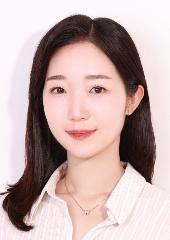
[Photo and Text by Lee Daily Reporter Hong Ju-yeon ] "Developing new drugs in space reduces costs to one-tenth of the original amount. This will create a foundation for domestic pharmaceutical companies to develop new drugs quickly and at a lower cost." Yoon Hak-soon, CEO of Space Lintech (Image: ReporterHong Ju-yeon )
Space CDMO/CRO: Moving Beyond One-Off Demonstrations to a Full-Fledged Business Model
Yoon Hak-soon, CEO of Space Lintech, explained the rationale behind developing new drugs in space during an interview with Pharm eDaily, eDaily’s premium pharmaceutical and biotech content platform.
Space LinTech was founded in 2021 by CEO Yoon, a professor in the Department of Neural Engineering at Norfolk State University in Virginia, U.S. As a space medicine company, Space LinTech has established a new drug development platform that utilizes the microgravity environment of space. The company grows protein crystals and produces artificial organs (organoids) in space to collect high-precision data that is difficult to obtain on Earth.
The satellite Space Lintech launched for the first time last year successfully completed its mission. As a result, Space Lintech’s space Contract Development and Manufacturing Organization (CDMO) and Contract Research Organization (CRO) businesses have entered a phase where they are evolving from one-off demonstrations into repeatable business models.
Following two satellite launches last year, the company is aiming for a total of three launches this year, including the fifth launch of the Nuri rocket. According to CEO Yoon, the number of launches will increase to eight next year.
CEO Yoon stated that, in line with the increasing frequency of launches, the company aims to begin full-scale commercialization starting next year. Space Rintec is the only company in South Korea currently operating space CRO and CDMO businesses. However, analysts note that competition for global market leadership has already begun, as related companies are emerging one after another in the U.S. and Europe.
(Image = AI-generated)
Creating Protein Crystals in a Microgravity Environment... Linked to AI-Based Protein Structure Prediction Technology
Space Lintech’s core technology lies in creating protein
crystals in a microgravity environment
. On Earth, powdered proteins settle due to gravity, and temperature differences can cause convection, making it difficult to form crystals uniformly.
He explained, “Until now, the structure of proteins that act as antigens has not been clearly defined on Earth,” adding, “Drugs must bind to the exact location to neutralize the antigen, but if the structure is unclear, they cannot produce the desired effect.”
This is also linked to AI-based protein structure prediction technologies such as AlphaFold and RosettaFold. AI estimates structures with a 95% probability based on nucleotide sequence data. However, the process of actually verifying these predictions is considered a separate challenge.
In fact, the crystal structures obtained by SpaceLinTech on the International Space Station (ISS) yielded results different from those of ground-based experiments. The binding structures of crystals formed on Earth differed from those formed in space. High-quality crystals in square and pyramid shapes were confirmed in space.
The practical utility of structural analysis leads to improvements in drug formulations. High-purity anticancer drugs require dissolving 150 mg in 1 mL for administration to patients. When produced on Earth, viscosity can rise sharply, making it difficult to administer via a small needle.
CEO Yoon explained that crystals produced in space have low viscosity and heat resistance, making them ideal for transitioning to high-concentration, low-dose formulations. This is the reason why Merck turned to space to develop the technology needed to switch the formulation of Keytruda from intravenous (IV) to subcutaneous (SC) injection.
Automated Platform Expanding to Satellites and Earth Following Successful ISS Demonstration
Last August, Space Lintech launched its self-developed protein crystallization experiment module, BEE-PC1, to the International Space Station (ISS). This is reportedly the first time a Korean company has successfully obtained protein crystals and completed experimental operations in the microgravity environment of the ISS.
The subject of the research was the USP7 protein, studied in collaboration with the Korea Institute of Science and Technology (KIST); it is reported to be a deubiquitinating enzyme being researched as a therapeutic target for various types of cancer. The BEE-PC1 module and the protein crystals returned to Earth aboard a SpaceX Dragon cargo capsule. SpaceLinTech conducted detailed analyses in collaboration with Helix Biostructures in the U.S., the Dana-Farber Cancer Institute, and KIST.
It is also noteworthy that the experiment was conducted fully automatically without any intervention from astronauts. He stated, “The advantage is that the entire process, including verification, was completed automatically without any human intervention,” adding, “Since no human hands touched the samples during the experiment, it is also advantageous for obtaining regulatory approval.”
Following the ISS demonstration, the company’s proprietary satellite platform is also expanding. BEE-1000, Korea’s first CubeSat dedicated to space biotechnology—launched aboard the Nuri rocket’s fourth mission last November—is independently conducting experiments on pembrolizumab, the active ingredient in the immunotherapy drug Keytruda.
The follow-up satellite, BEE-1012, is scheduled to be launched aboard the Nuri rocket’s fifth mission this October to monitor the crystal growth process of proteins used as raw materials for anticancer drugs in microgravity. The BEE-FRM/FPM, a module dedicated to recovery, is designed to support both research and production of crystal growth foundry technology.
Referring to SpaceX’s plan for 10,000 launches per year, CEO Yoon stated, “The more satellites are launched into space, the lower the costs become,” adding, “We expect a time will come when SpaceLintec will also be capable of 1,000 launches per year.”
SpaceLinTech is also conducting microgravity experiments on the ground using a drop tower. The drop tower in Jeongseon, Gangwon Province, is operated in collaboration with the Institute for Basic Science (IBS) Underground Experiment Research Group. The company has also constructed the world’s longest 900-meter-class drop tower in Taebaek, Gangwon Province. While satellites handle proteins and small-molecule drugs, drop towers are used for cell research—such as organoids—and for validating gene delivery technologies.
However, regulations remain a variable. To date, there have been no cases of space-manufactured pharmaceuticals receiving approval from the U.S. Food and Drug Administration (FDA) and being commercialized. In the UK, authorities have recently established a regulatory framework for the commercialization of space-manufactured pharmaceuticals and have begun streamlining related approval procedures. In South Korea, discussions between the Ministry of Food and Drug Safety and the Korea Aerospace Administration have only just begun.
Investment and IPO Roadmap; Long-Term Goal Is Sovereign New Drug Development
CEO Yoon Hak-soon stated that Space Lintech’s short-term goal is the commercialization of its space-based CRO business next year. Space Lintech is targeting 10 billion won in revenue next year. The company plans to go public (IPO) between the second half of 2028 and the first half of 2029. Space Rintec completed its Series B funding round last year and plans to launch the next funding round later this month. In the long term, the company aims to expand beyond protein structure analysis in space to include the production of pharmaceuticals.
CEO Yoon is particularly focused on the field of rare diseases. He expects that if advancements in space technology and AI reduce the cost of new drug development to one-tenth of current levels, domestic pharmaceutical companies will be able to pursue new drug development at a lower cost.
CEO Yoon also linked this to securing pharmaceutical sovereignty at the national level. “If domestic pharmaceutical companies acquire the capability to independently develop new drugs, we will achieve ‘pharmaceutical sovereignty’—the ability to develop, operate, and control the sector domestically,” he said. “We expect space to serve as the foundation for independently developing and supplying medicines that are essential to the nation.”
The biggest bottleneck for AI servers is memory. As the KV cache—where large language models (LLMs) store past computations—accumulates, the required memory capacity increases exponentially. This prob…
Concerns about “tax risks” have been raised in some quarters of the financial investment, pharmaceutical, and biotech markets regarding Genosco, a subsidiary of OSCOTEC Inc.(039200)specializing in new…
As July began (June 29–July 3), the pharmaceutical and biotech industries turned their attention to Celltrion Pharm Inc.’s large-scale investment in production facilities and AriBio’s successful fundr…