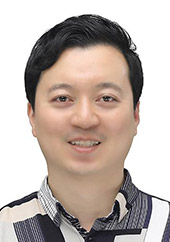
[E-Daily Reporter KIM JI-WAN ] “In the past, bringing in good technology was what gave us a competitive edge. Things are different now. The real competitive edge lies in how successfully we develop the technology we’ve brought in.”

Kim Ju-il, Executive Vice President of Research and Development (R&D) at DaewonPharmaceutical (Ph.D. in Pharmacy), defined the essence of open innovation in the domestic pharmaceutical industry in this way during a recent interview with E-Daily.
He explained that while domestic pharmaceutical companies are racing to adopt technologies from biotech startups, it is difficult to secure competitiveness in the global market if they stop at mere “license-in.” He added that a new drug is only truly completed when the company is capable of directly carrying out clinical development, expanding indications, optimizing dosages, and conducting global business development (BD) after acquiring the technology.
Vice President Kim referred to this strategy as “DaewonPharmaceutical-style Open Innovation.” In fact, DaewonPharmaceutical has been pursuing a strategy over the past few years of actively adopting external technologies while simultaneously building up core R&D capabilities internally.
According to the company on the 6th, it is collaborating with #ILDONG PHARM on DW4421, a candidate drug for gastroesophageal reflux disease, and is jointly developing DW4902, a treatment for uterine fibroids, with TiumBio Co., Ltd. DW4321, a quadruple-action obesity treatment recently unveiled, is also being developed in collaboration with Pharmus Bioscience.
Although these three pipeline projects differ in both the diseases they target and the technologies involved, they share a common thread: an “open innovation” strategy that combines external innovative technologies with DaewonPharmaceutical’s development capabilities to create new competitive advantages.
“We do not want to be a company that simply buys technology,” emphasized Vice President Kim. “While good technology can be found anywhere, it is ultimately our company’s development capabilities that turn that technology into a global product.”
“Licensing-in is just the beginning… New drugs are perfected in clinical trials”When explaining DaewonPharmaceutical’s open innovation strategy, Executive Vice President Kim first cited DW4421, a P-CAB-class treatment for gastroesophageal reflux disease (GERD), as an example.
DW4421 is a next-generation P-CAB treatment currently under development in collaboration with Iljong Pharmaceutical. However, he did not view this project as a mere case of technology acquisition.
“Licensing-in is, after all, just the starting line,” he said. “A new drug ultimately becomes a completely different product depending on how we handle clinical strategy, indication expansion, and dosage determination.”
In fact, DaewonPharmaceutical is currently conducting Phase 3 clinical trials, working not only to obtain approval but also to identify the optimal dosage.
While clinical trials are typically possible using just the single dose required by regulatory authorities, DaewonPharmaceutical is evaluating both 20 mg and 40 mg doses simultaneously to identify the dosage that is most effective in the long term while minimizing side effects.
Vice President Kim explained, “In terms of efficacy alone, the two dosages may appear similar, but the story could be different with long-term use,” adding, “What we are looking for is the optimal dosage that offers the best efficacy while causing the fewest side effects.”
He continued, “If we had only aimed to obtain approval, the process could have been much easier,” adding, “However, considering future expansion of indications and maintenance therapy, it is far more important to secure sufficient data starting now.”

“Venture Companies Focus on Innovation, Pharmaceutical Companies on Development”… The Evolution of Open InnovationVice President Kim’s concept of open innovation is clearly distinct from joint development.
A prime example is DW4321, a quadruple-action obesity treatment. Although the company is collaborating with Palmus Bioscience on this candidate compound, DaewonPharmaceutical’s research team is leading the actual candidate optimization, structural design, and R&D.
“While it’s true that we leveraged the know-how accumulated over many years by external experts, the subsequent process of designing hundreds of candidate compounds and identifying the optimal structure was entirely carried out by our in-house research team,” he said.
In fact, the research team synthesized hundreds of candidate compounds to add a fourth mechanism of action based on a triple-action structure that targets GLP-1, GIP, and glucagon (GCG) receptors, ultimately identifying the optimal ratio.
Vice President Kim emphasized, “We designed and compared about 400 candidate compounds to find the best structure,” adding, “True open innovation is taking external ideas and bringing them to fruition through our internal R&D capabilities.”
He also noted, “If we had developed this entirely on our own from the start, the number of candidate compounds would have risen to 1,000 or even 2,000 or more,” adding, “We were able to significantly accelerate development because we combined external expertise with our internal research capabilities.”
"Venture firms provide ideas, pharmaceutical companies handle development… Success requires distinct roles"Vice President Kim emphasized that for open innovation to succeed, the roles of large corporations and biotech venture firms must be clearly distinguished.
“Venture companies excel at discovering innovative ideas and new mechanisms of action,” he said. “Pharmaceutical companies, on the other hand, possess experience in clinical development, regulatory approval, manufacturing, and commercialization. Combining each other’s strengths is the core of open innovation.”
This philosophy has been fully applied to DW4902, a treatment for uterine fibroids currently under development in collaboration with TiumBio Co., Ltd.(321550).
DW4902 is an oral gonadotropin-releasing hormone (GnRH) antagonist and is expected to transform the treatment landscape for uterine fibroids, for which there have been few alternatives to surgery.
Vice President Kim drew a clear line, stating, “This is not an era where a single good idea is enough to create a new drug,” and emphasized, “The process of advancing a candidate drug through clinical trials, obtaining approval, and establishing it in the market is a separate area of expertise.”
“We want to be a company that cultivates technology, not one that simply buys it.”Vice President Kim emphasized that DaewonPharmaceutical’s open innovation efforts extend beyond the domestic market.
Following its domestic approval, Daewon Pharmaceutical is discussing joint development and approval strategies with overseas partners, primarily in South America, for DW4421. “We are also considering plans to conduct local clinical trials together depending on the country,” he said, adding, “Open innovation is not a strategy that ends with cooperation among domestic companies; it extends to connecting with global partners.”
Vice President Kim, who has been in charge of business development for nearly 30 years, spoke about his ultimate goal: “Many of my friends work at the Korean branches of global pharmaceutical companies. But I’ve always wondered: Why can’t we be the headquarters?” He emphasized, “My dream at DaewonPharmaceutical is to become a company that conducts clinical trials overseas using Woori Technology, Incorporation, licenses out our products, and competes directly in the global market.”
He continued, “Open innovation is not a strategy to fill technological gaps, but a growth model for becoming a global company,” adding, “Going forward, the competitiveness of domestic pharmaceutical companies will depend not on how good the technology they acquire is, but on how well they can develop that technology into world-class new drugs.”


