[Edaily Reporter SONG YOUNG-DOO ] Kolon TissueGene, Inc.(950160) Controversy surrounding the fundamental efficacy of TG-C (formerly Invossa), a cell-gene therapy for osteoarthritis, has reignited after the drug failed to demonstrate efficacy compared to a placebo in a U.S. Phase 3 clinical trial.
At a press conference on the 21st, executives of Kolon TissueGene, Inc. emphasized that the degree of improvement in pain and joint function in the TG-C treatment group was similar to that seen in previous clinical trials, citing the larger-than-expected placebo response as the cause of the trial’s failure. They even went so far as to describe the outcome as a “half-success.”
The TG-C Phase 3 clinical trial was conducted as a randomized, double-blind, placebo-controlled study. This type of trial is designed to verify whether a treatment produces additional benefits even when the placebo effect and the natural course of the disease are controlled for.
It is difficult to conclude that the drug’s efficacy has been proven based solely on the fact that symptoms in the TG-C group improved compared to pre-treatment levels. Since the placebo group showed virtually the same level of improvement, this clinical trial was unable to distinguish how much of the changes observed after TG-C administration were due to the drug itself.
In particular, doubts surrounding TG-C’s efficacy were not first raised in this U.S. Phase 3 trial. During the 2017 domestic marketing authorization review, there was also debate over whether the improvement in pain was attributable to the drug itself. Since its domestic launch, criticism has continued in clinical practice and during the National Health Insurance reimbursement evaluation process that the drug failed to demonstrate superior efficacy compared to existing treatments.
On the other hand, Noh Moon-jong, CEO of Kolon TissueGene, Inc., maintains that there is no issue with TG-C’s efficacy in symptom improvement, citing clinical results accumulated from the U.S. Phase 2 trial and domestic studies. He explains that since approximately 80% of all patients respond to treatment, the drug’s overall efficacy should not be evaluated based solely on the negative experiences of a few patients.
CEO Noh, a key figure in the development of Invossa, joined KOLON CORPORATION in 1995 and began participating in TG-C research the following year. He subsequently served as head of research and development, leading domestic and international clinical trials and interactions with the U.S. FDA, and spearheaded the resumption of U.S. clinical trials following the 2019 Invossa controversy.
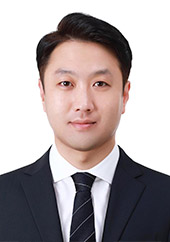
Noh Moon-jong, CEO of Kolon TissueGene, Inc. (Photo: ReporterSONG YOUNG-DOO )
U.S. Phase 3 Trial Shows No Difference from Placebo... Repeated Efficacy Controversies Since the Past
In Kolon TissueGene, Inc.’s U.S. Phase 3 clinical trial, neither the Visual Analog Scale (VAS) nor the Western Ontario and McMaster Universities Osteoarthritis Index (WOMAC)—both co-primary endpoints at the 12-month mark—demonstrated statistical significance compared to the placebo.
The improvement in VAS scores was -38.7 for the TG-C group and -39.2 for the placebo group, with the placebo group actually showing a 0.5-point greater improvement. The 95% confidence interval was -4.3 to 5.3, and the p-value was 0.8322. Similarly, for WOMAC, the TG-C group scored -27.61 and the placebo group -26.54, with a difference between groups of only 1.07 points and a p-value of 0.5701. Thus, no distinguishable difference between TG-C and the placebo was observed in either pain or joint function.
Fundamental doubts regarding the drug’s efficacy had been raised since the domestic marketing authorization review. According to the minutes of the Central Pharmaceutical Affairs Deliberation Committee meeting in April 2017, one committee member asked, “Why did the pain of patients participating in the clinical trial decrease?” Other members pointed out that osteoarthritis pain naturally fluctuates between improvement and worsening and can also be influenced by seasonal factors. The issue raised was the need to clearly distinguish whether the observed reduction in pain was due to the drug itself.
During a re-review in June of the same year, the significance of the results compared to the placebo was acknowledged, and the conclusion shifted in favor of approval. In the domestic Phase 3 trial, the VAS improvement at the 12-month mark was -24.5 for the Invossa group and -10.3 for the placebo group, while the IKDC improvement was 15.1 points and 5.0 points, respectively. The Ministry of Food and Drug Safety granted marketing authorization based on the finding that the drug demonstrated statistically significant improvements in pain and joint function compared to the placebo group.
Controversy over the drug’s efficacy persisted even after approval. In particular, some evaluations from the clinical field suggested that its effects were not significantly better than those of existing hyaluronic acid injections. According to a 2019 news report, when KOLON LIFE SCIENCE Inc. applied for Inbosa’s inclusion in the national health insurance coverage, a professional society consulted by the Health Insurance Review and Assessment Service (HIRA) concluded that “from a medical standpoint, we cannot recommend insurance coverage.” The reasons cited were that the drug had failed to demonstrate advantages over existing treatments in terms of pain relief, functional improvement, and joint structural recovery, and that it was difficult to confirm clinical value commensurate with its price of over 7 million won.
The efficacy of structural improvement was also repeatedly called into question. In 2017, the Central Drug Review Committee pointed out that while the size of the primary cartilage lesion had decreased in MRI-based WORMS analysis, changes in bone marrow edema, cartilage thickness, and defect depth did not support this finding. In the 2019 reimbursement advisory review, the assessment continued that no improvement in cartilage was confirmed through imaging tests.
Ultimately, this U.S. Phase 3 trial was a large-scale confirmatory study intended to resolve the controversies over the drug’s efficacy that had persisted throughout the domestic approval process, clinical practice, and reimbursement evaluation. However, since it failed to demonstrate statistical significance compared to the placebo in both pain and joint function, it has once again raised the fundamental question: not “Did the patient improve?” but “Did the improvement result from TG-C?”
CEO Noh Moon-jong: “No Reason to Doubt Efficacy; 80% of Patients Responded”
In a meeting with Edaily following a briefing on the 21st, CEO Noh acknowledged the controversies that have persisted since the drug’s domestic approval but emphasized that the efficacy in symptom improvement and the effects on structural improvement must be evaluated separately.
He said, “I recall that when the Korean Ministry of Food and Drug Safety (MFDS) granted approval in 2017, they issued a press release stating that while clinical symptom improvement had been confirmed, structural improvement had not been confirmed. “At the time, the company claimed it was a DMOAD, which led to questions about why it couldn’t prove structural improvement,” he said. “The MFDS’s assessment at the time was that while pain relief and functional improvement were confirmed, structural improvement was not,” he explained, adding, “As far as I recall, the symptomatic improvement itself wasn’t specifically an issue.”
Regarding the assessments made by some medical professionals after the domestic launch—that Invos’s efficacy was not as great as expected or that it was similar to hyaluronic acid injections—he drew a clear line, stating that he had not been directly involved in that process at the time.
CEO Noh said, “I was not specifically briefed on the issues raised in clinical settings after the launch. The application for domestic reimbursement was handled by KOLON LIFE SCIENCE Inc.(102940), and since I was not involved in that process, I am not aware of the specific details.”
However, he made it clear that, based on the clinical results accumulated in the U.S. and South Korea, there is no doubt regarding TG-C’s efficacy in improving symptoms.
CEO Noh countered, “Based on the results from the U.S. Phase 2 trial and the data accumulated in Korea to date, I see no significant grounds for doubt regarding its efficacy in improving symptoms,” adding, “No drug is 100% effective for every patient who receives it. Just as some people respond well to headache medicine while others do not, there are patients who respond to TG-C and those who do not.”
In particular, he noted, “According to the clinical results, the response rate for TG-C is approximately 80%. If 100 patients are treated, about 80 will see benefits, but about 20 may not.” He added, “Patients who do not see benefits may say, ‘I received the treatment but didn’t really notice a difference,’ or ‘It didn’t work.’ If the experiences of a few patients are extrapolated, it could lead to an assessment that the drug is ineffective.”
As the sixth anniversary of the passing of the late Lee Kun-Hee, former chairman of Samsung, approaches on October 25, his legacy as a business leader is once again in the spotlight. The semiconductor…
The home shopping industry is accelerating its efforts to secure proprietary and exclusive products. Amid declining TV viewership and fierce competition with e-commerce platforms, the industry is purs…
Apple’s first foldable smartphone, the “iPhone Duo,” has received mixed reactions since its launch. While it has garnered praise for its sophisticated design and smooth folding mechanism—and pre-order…