[Edaily Reporter KIM JI-WAN ] “While developing Udenafil over the past 20 years, we reviewed countless other new drug candidates. But in the end, we couldn’t find a compound as promising as this one.”
Park Dong-hyun, CEO (Chairman) of Mezzion Pharma Co., Ltd.(140410), explained why he has devoted more than 20 years to “Udenafil” alone. The plan is to develop Udenafil—which began as a treatment for erectile dysfunction—into a global new drug platform suitable for long-term use, rather than a simple PDE5 inhibitor. Currently, Mezion Pharma Co., Ltd. is conducting a Phase 3 clinical trial for Udenafil in the U.S., targeting complications following the Fontan procedure for patients with single-ventricle syndrome. At the same time, the company has identified new potential in autosomal dominant polycystic kidney disease (ADPKD) and is moving to expand its indications.
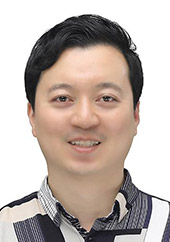
Park Dong-hyun, CEO (and Chairman) of Mezion Pharma Co., Ltd., is seen here during an exclusive interview with Edaily on the 4th at Yeouinaru-ro in Yeongdeungpo-gu, Seoul. (Photo: ReporterKIM JI-WAN )
CEO Park cited Udenafil’s competitive advantages as its appropriate half-life, long-term safety profile, and the potential to secure use-specific patents for each indication. In particular, he is focusing on the positive results from recent animal studies on ADPKD, which showed promising signs not only in indicators related to renal cysts but also in indicators related to kidney function, such as blood urea nitrogen (BUN). The company’s strategy is to first demonstrate commercial viability through direct sales in the U.S. if the drug is approved for the treatment of Fontan syndrome, and then open the door to licensing negotiations with global pharmaceutical companies.
E-Daily conducted an exclusive interview with CEO Park on the 4th at Yeouinaru-ro in Yeongdeungpo-gu, Seoul. The following is a Q&A with CEO Park.
△Did you see the potential for a global new drug from the moment you first encountered Udenafil?
- I didn’t set out with grand ambitions of creating a global new drug from the start. At the time, the very idea of a domestic pharmaceutical company developing a new drug in the U.S. was still very unfamiliar. I, too, knew almost nothing about the drug. However, as I researched the data myself and met with international experts, I realized that the properties of this compound were quite intriguing. In particular, I asked an international expert who had participated in the Viagra clinical trials to evaluate Udenafil’s potential. Through that process, I received an assessment that it was sufficiently worth developing in terms of its half-life and safety profile. That’s when I began seriously exploring the possibility of global development.
△What do you consider to be the greatest advantage of Udenafil?
-First, the half-life. While some medications are taken once when needed, others—such as those for chronic conditions—must be taken daily. In the latter case, the half-life is extremely important for commercial viability. Whether a patient can take it once a day or must take it two or three times a day significantly affects patient convenience. Udenafil has a longer half-life than Viagra and possesses characteristics that make it suitable for long-term use. We also determined that it offers relatively good selectivity in terms of side effects related to the eyes or muscles—potential issues with PDE-inhibitor drugs. Another strength is that safety data has been accumulated through its long-term use in Korea.
△For over 20 years, we have essentially focused on a single compound: Udenafil. Some view this as an excessive reliance on a single pipeline.
- I’ve heard that a lot. But that doesn’t mean we haven’t reviewed other compounds. We’ve reviewed a significant number of candidate compounds, including those that were discontinued by domestic and international universities or pharmaceutical companies. We actively reviewed dozens of them. However, in many cases, the conditions didn’t match our criteria, or their development potential proved low during the actual research process. Finding a single good new drug candidate is much harder than one might think. Ultimately, after reviewing numerous candidates, we found that there weren’t many compounds we understood as well as we do udenafil or could leverage to their full potential.
△What led you to develop Udenafil as a treatment for patients who have undergone the Fontan procedure?
-We didn’t think of Fontan patients right from the start. There was a medical team in the U.S. researching the potential benefits of PDE5 inhibitors for Fontan patients. Even a small-scale study funded by the U.S. National Institutes of Health (NIH) showed promising signs. At the time, the research team discovered Udenafil while searching for a long-acting PDE5 inhibitor. We had experience developing drugs in the U.S. for conditions such as erectile dysfunction and benign prostatic hyperplasia, and udenafil was suitable in terms of its half-life as well. A series of coincidences and connections led to the development of a treatment for Fontan patients.
△As a treatment for the Fontan procedure, what exactly does Udenafil improve? Is it physical performance or survival rates?
- With Fontan patients, it’s difficult to consider just a single indicator in isolation. Improved exercise capacity doesn’t simply mean walking longer or moving more; it’s linked to cardiovascular function, the patient’s ability to perform daily activities, and potential long-term complications. Registries and various studies that have tracked Fontan patients over the long term show a correlation between exercise capacity and hospitalizations, complications, and prognosis. Ultimately, the perspective is that maintaining a patient’s functional status can lead to improved long-term quality of life and prognosis.
Park Dong-hyun, CEO of Mezion Pharma Co., Ltd. (Photo: ReporterKIM JI-WAN )
△Did you hear any stories about changes in daily life from patients who actually participated in the clinical trial?
- As Fontan patients age, their physical condition often deteriorates, making it difficult for them to maintain a normal school or social life. Among the patients who participated in the Udenafil clinical trial, I heard of a case where a patient’s physical condition improved to the point that they were able to enroll in college. Stories like this are incredibly important. While numerical indicators of exercise capacity are important, the ultimate goal of a new drug is to enable patients to lead a better daily life.
△Existing PDE5 inhibitors can also be used off-label for Fontan patients. Even if Udenafil is approved, won’t it have to compete with low-cost generics?
-I understand that other PDE5 inhibitors are currently being used off-label for some patients. However, there is a difference between these and a drug that has been formally approved after confirming safety and efficacy at appropriate doses in Fontan patients. From a physician’s perspective, if there is a treatment approved through clinical trials in Fontan patients, there is less reason to opt for off-label prescribing without sufficient evidence. There are also solutions to insurance issues. The company can prepare a market access strategy, including support programs that can reduce patients’ out-of-pocket costs.
△How many Fontan patients in the U.S. do you estimate could actually be candidates for sildenafil treatment?
-Assuming there are approximately 30,000 Fontan patients in the U.S., we estimate that the patients we can realistically target account for about two-thirds of that total. It is not realistic to simply count the entire patient population as the market. We must focus our approach on the patient group for whom treatment is actually feasible and who are eligible for prescription.
△Don’t rare disease treatments entail significant costs for building a sales organization?
- The market structure for Fontan is completely different from that of general chronic diseases. Specialized hospitals treating these patients are highly concentrated. Major U.S. hospitals manage a large number of Fontan patients, and many of them are participating in our clinical trials. Therefore, this is not a market that requires thousands of sales representatives. By dividing the U.S. into several regions, we can cover major hospitals with a small number of specialized staff. By utilizing specialty pharmaceutical distributors, we can also establish a system to deliver medication to patients after it is prescribed. For these reasons, direct sales are certainly worth considering.
△So, is it more likely that you will sell the product directly after approval, or that you will license the technology to a global pharmaceutical company?
- We are keeping all possibilities open. From the perspective of companies interested in an acquisition or licensing deal, the most important factor is risk. The value of the product before clinical results are available and after approval is bound to differ. If we sell the drug directly after approval, and actual patients use it and generate sales, the value changes again. This is because market share and drug pricing are proven by actual figures rather than estimates. From the company’s perspective, negotiating with a global pharmaceutical company at that point would allow us to expect much better terms. Rather than direct sales being the ultimate goal in itself, it is important to directly demonstrate the commercial value of Udenafil.
△Are there any global pharmaceutical companies already showing interest in Udenafil?
-There are companies showing interest. However, at this stage—where clinical results and approval status have not yet been finalized—they tend to reflect that uncertainty in the price. From the company’s perspective, the value could change significantly once positive results are in, so there is no reason to rush into a deal at a low price now. Ultimately, we must determine when and how to proceed with a deal to maximize value for our shareholders and the company.
△You recently expanded the indications to include ADPKD. How did this idea come about?
-It all began when we happened to connect with an expert in the U.S. who had been researching ADPKD for a long time. We learned that there was basic research and a patent exploring the potential of existing PDE5 inhibitors for ADPKD. After that, to verify the actual feasibility of development, we contacted experts in the ADPKD field and presented the data on Udenafil to a research team with extensive experience in this area. After receiving the assessment that “it’s scientifically worth pursuing,” we began full-scale experiments.
△What is the mechanism by which PDE5 inhibitors act on ADPKD?
-We are currently working to clarify that aspect through research. It is possible that cell proliferation, apoptosis, and various signaling pathways are involved. What is important is that we are not merely stopping at the theoretical claim that PDE5 inhibition could be helpful, but are actually observing disease-related changes in experiments using udenafil. We need to accumulate more data in the future to elucidate the exact mechanism of action.
△What results from recent animal studies on ADPKD have you found particularly noteworthy?
-Initially, the primary focus was on the extent to which cysts shrunk. This is because in ADPKD, cysts in the kidneys enlarge and the overall kidney size increases. In the actual experiments, we observed meaningful changes in cyst-related indicators. However, what we found even more encouraging was that changes also appeared in kidney function-related indicators, such as blood urea nitrogen (BUN). A reduction in cyst size and an actual improvement in kidney function are two separate matters. We consider it significant that positive signals have also emerged in function-related indicators.
△If developed as a treatment for ADPKD, how do you expect it to differentiate itself from existing drugs?
- Since we are still in the early stages of development, it is too soon to make definitive statements. However, given the clear limitations of existing treatments, there is a demand for new mechanisms of action or new treatment options. Udenafil is a compound that has been administered to humans for a long time, and a substantial amount of safety data has been accumulated. If we can demonstrate sufficient efficacy in ADPKD as well, I believe this could be a significant advantage from a development perspective.
△Ultimately, what does Udenafil mean to you, CEO Park?
-When I first started, I knew almost nothing about drugs. Over the past 20 years, I’ve faced failures, learned from them, and kept trying until I reached this point. Throughout this process, the very act of learning about the human body and new drug development was incredibly fascinating. And meeting Fontan patients in person changed my perspective significantly. These patients have undergone major surgeries multiple times since childhood and spend their entire lives worrying about their health and future. I no longer view this as simply a matter of making money. My top priorities right now are ensuring that Udenafil becomes a treatment that truly helps these patients and seeing the new drug we started through to completion.
Personal information leaks are occurring simultaneously across the banking sector due to attacks by hackers.
A view of Hana Bank’s headquarters. (Photo courtesy of Hana Bank)
Hana Bank announced…
The KRX Health Care Index rose 4.53% from the previous session on Oct. 1, signaling a rare tailwind for South Korea’s pharmaceutical and biotech sector. Among the gainers, GIInnovation and G2GBio drew…
“The approach of chasing targets that have already been validated by others no longer suits the Korean biotech industry.”Yoon Tae-young, CEO of OSCOTEC Inc., made this remark during a separate intervi…