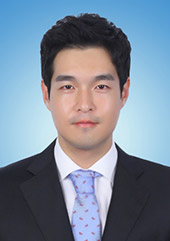
Yoon Tae-young, CEO of OSCOTEC Inc.: “The Era of Fast Followers Is Over… We’ll Compete with Innovative New Drugs”
Moving Beyond a Catch-Up Strategy to R&D Focused on Discovering Differentiated New Drugs
Focus on New Mechanisms, Including Anticancer Drug Resistance and Renal Fibrosis
OCT-648: Candidate Compounds to Be Selected by Year-End… Seeking Technology Transfer
[Edaily Reporter KIM SUNG-JIN ] “The approach of chasing targets that have already been validated by others no longer suits the Korean biotech industry.”
Yoon Tae-young, CEO of OSCOTEC Inc., made this remark during a separate interview after concluding his presentation at the Korean Pharmaceutical and Chemical Society’s Annual Academic Conference held at Cheongju OSCOTEC on the 2nd. The head of the company that created a “fast follower” success story with Lazertinib (brand name: Lecraza) personally assessed that the strategy’s shelf life has expired. Yoon Tae-young, CEO of OSCOTEC Inc., is seen speaking with reporters after delivering a presentation at the Korean Society of Pharmaceutical Chemistry’s annual academic conference held at Cheongju Osco on the 2nd. (Photo: ReporterKIM SUNG-JIN.) CEO Yoon stated, “Our early-stage pipeline—including Lazertinib, Sevidoplenib, and Denpibontinib—consists of excellent drugs, but ultimately, they were ‘fast follower’ strategies launched after seeing the success of preceding drugs.” He added, “Nowadays, once a target is validated, China follows suit at an incredible speed and scale, so the hurdles for employing such a strategy have become too high.”
“First-in-Class” Is Actually the Shortcut to Early Technology Transfer
The alternative he proposed is to pursue “first-in-class” (innovative new drugs). While developing new, unproven targets is no easy task, this approach may actually be more advantageous for technology transfer (license-out).
Recently, with the emergence of new modalities such as proteolytic agents and antibody-drug conjugates (ADCs) in the domestic biotech industry, there has been a significant increase in “technology-driven” new drug development—which involves improving already-validated targets through technological advancements. Regarding this, CEO Yoon emphasized, “While that is certainly a strategy worth pursuing, competition has become too fierce,” adding, “First-in-class approaches, which test less-validated hypotheses, are the more appropriate direction moving forward.”
CEO Yoon stated, “Global pharmaceutical companies are hungry for new target hypotheses and are willing to take risks and invest aggressively.” He added, “If you rigorously validate a hypothesis and demonstrate its potential, technology transfer is entirely possible even at the preclinical stage.”
He cited infrastructure as the reason domestic biotech companies are unable to bear the risks of new drug development. He pointed out that the screening process for identifying “hits” (early-stage active drug compounds) and the process for validating them are weak. CEO Yoon explained, “In many cases, a few compounds are selected through virtual screening, and if the desired results appear in cell cultures, they are often called ‘inhibitors.’ However, this is useful only for publishing papers and doesn’t help much in actual drug development.” He added, “We need a process to verify whether the compound actually acts on the target and to continuously validate the hypothesis.”
How to Use a Compound Is More Important Than
Simply
Making It Well
CEO Yoon emphasized that simply
producing a high-quality compound
does not guarantee successful new drug development. CEO Yoon said, “New drug development is about demonstrating how to use a compound, rather than just making it well.” He explained, “Most companies focus on synthesizing compounds, but new drug development is a much broader undertaking,” adding, “New drug development encompasses the entire process of identifying which targets to target for which diseases, developing drugs accordingly, and demonstrating how those drugs will be used.”
He cited OSCOTEC Inc.’s sevidoplenib as a prime example. This compound, which selectively inhibits splenic tyrosine kinase (SYK), was considered a failed pipeline after OSCOTEC Inc. experienced two clinical trial failures. However, OSCOTEC Inc. reanalyzed the data based on the mechanism of action and, as a result, succeeded in identifying efficacy in a specific patient population. OSCOTEC Inc. turned the tide in June of this year by signing a technology export agreement worth up to $665 million (approximately 1 trillion won) with Agios Pharmaceuticals, a U.S.-based pharmaceutical company specializing in treatments for rare diseases.
CEO Yoon explained, “The endpoints we set when we began the clinical trials were not strongly correlated with actual therapeutic efficacy,” adding, “When analyzed in a truly meaningful way, these were successful trials.” The company’s assessment was that both clinical trials accurately demonstrated phenomena based on the mechanism of action. He continued, “Rather than who developed it or how well it was developed, it was far more important to extract data from the failed clinical trials and demonstrate that the compound was worth further investigation,” adding, “Azios also agreed with that narrative.”
Betting on First-in-Class Status Through Cancer Resistance and Fibrosis
CEO Yoon said that one of the resolutions he made when he returned to Korea about 10 years ago after working at LOGEN in the U.S. and the Novartis Research Institute was to develop innovative new drugs. Having joined OSCOTEC Inc. in 2020, CEO Yoon explained that while he had previously focused on completing research projects OSCOTEC Inc. had already been conducting, the company is now entering a phase of actively pursuing the development of first-in-class new drugs.
CEO Yoon stated, “The anti-drug-resistant anticancer agents—which I’ve truly wanted to pursue—and the fibrosis program derived from them are now beginning to come to the forefront.” OSCOTEC Inc. plans to “go all-in” on anti-drug-resistant anticancer agents for the time being. CEO Yoon emphasized, “To put it positively, it’s an innovative concept, so it’s not without its challenges, but we have scientific confidence.”
The first first-in-class project derived from the drug-resistant platform is “OCT-648,” a candidate for fibrosis treatment. OSCOTEC Inc. plans to finalize the candidate compound for OCT-648 by the end of this year at the latest. CEO Yoon said, “For a first-in-class drug, it is far more important to demonstrate how closely the target is related to the disease than to focus on how good the compound itself is.”
Interest from global pharmaceutical companies is also continuing. Currently, discussions are underway in earnest with one company. Other companies are reportedly taking the stance that they want to see at least the results of GLP toxicity tests before proceeding. CEO Yoon said, “As the project progresses and the data turns out well, the number of competitors will increase.” He added, “While I want to transfer the technology as soon as possible, I also want to increase its value further before licensing it in the medium term,” noting, “The company we’re currently in discussions with is open to an early technology transfer, so it might happen sooner than expected.”
Stabilizing Management Control… Pursuing Strategic Investor Attraction and Subsidiary Restructuring
CEO Yoon also cautiously addressed management issues. “Whether it’s the largest or second-largest shareholder, our policy is to prioritize the interests of all shareholders—not those of any specific shareholder—and to pursue board-centered management,” he explained. “While this neutral stance means we aren’t welcomed by both major shareholder groups, the official position of the board majority remains unchanged.” He added, “We need to consider whether a biotech company needs to follow the management structure of traditional pharmaceutical companies exactly,” and shared his personal view that “establishing board-centered governance in line with global standards is the path for OSCOTEC Inc. to grow into a truly global biotech company.”
CEO Yoon identified securing strategic investors (SIs) as the ultimate solution for stabilizing management control. He cited expanding the authorized share capital and the valuation of Genosco as prerequisites for this. Since expanding the authorized share capital requires a special resolution at the shareholders’ meeting, shareholder approval is essential. He explained that without this expansion, it is impossible to engage in concrete discussions with any strategic investor. Regarding the plan to make Genosco a wholly-owned subsidiary, he said, “I believe there has never been any other path from the very beginning.”
Personal information leaks are occurring simultaneously across the banking sector due to attacks by hackers.
A view of Hana Bank’s headquarters. (Photo courtesy of Hana Bank)
Hana Bank announced…
CJ CheilJedang Corp(097950)is teaming up with global grain company ADM to strengthen its competitiveness in the North American feed-grade amino acid business. The plan is to consolidate the production…
“The approach of chasing targets that have already been validated by others no longer suits the Korean biotech industry.”Yoon Tae-young, CEO of OSCOTEC Inc., made this remark during a separate intervi…