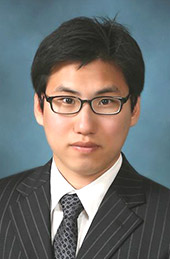
Welt to Launch IPO Next Year... CEO Kang Seong-ji: “In the Face of the LLM Offensive, the Answer Lies in Patient Data; We Will Redefine the Market with Clinical Smart”
[Edaily Reporter Kim Seung-kwon ] “We are moving from an era of manufacturing products to an era of creating intelligence. While global Big Tech companies, including Google, are intensifying their push into large language models (LLMs), Welt is building digital therapeutic intelligence using real, patient-centered data accumulated in actual prescribing settings.”
Kang Seong-ji, CEO of Welt, has highlighted “patient data” as the survival strategy for digital therapeutic devices amid the surge in generative artificial intelligence (AI). Unlike general-purpose large language models (LLMs) trained on academic papers and online information, the company plans to create “therapeutic intelligence” that predicts diseases and facilitates interventions based on patient-specific data accumulated in actual clinical settings.
Welt expects sales of 5 billion won this year. SleepQ is designed for insomnia patients to use for six weeks with a single prescription, and the prescription price is approximately 250,000 won. According to the company, some subscribers to out-of-pocket medical expense insurance can reduce their out-of-pocket costs through insurance coverage. As of July of this year, the number of healthcare professionals registered with the National Evidence-based Healthcare Research Institute (NECA) who are authorized to prescribe SleepQ has exceeded 1,000. The company is dispelling industry concerns that it would face difficulties gaining a foothold in the market during its initial launch and is proving a new formula for success as a leading domestic digital therapeutic. PharmDaily met with CEO Kang Seong-ji to hear specifics about the company’s business situation this year.
Kang Seong-ji, CEO of Welt (Photo: E-Daily DB)
A Survival Strategy Learned from the Downfall of Akili and Fair… “We Set Aside Autocracy and Built an Ecosystem”
The reason Welt was able to establish itself in the prescription market in such a short time and reach a clear turning point was that it learned from the painful failures of leading global DTx companies. CEO Kang closely interacted with first-generation global founders—including Professor Adam Gazali, founder of the U.S.-based company “Akili,” whose corporate value soared to the trillions after receiving approval from the U.S. Food and Drug Administration (FDA)—and witnessed their rise and fall firsthand.
CEO Kang attributed Akili’s failure to the “lack of a nurturing environment (ecosystem)” and “autocratic management.” He recalled, “I’m on such friendly terms with Akili’s founder that whenever he visits Korea, I personally drive him around in a convertible and spend the weekend with him. However, observing their business practices taught me the hard lesson that ‘they were too stingy with goodwill and ultimately failed.’”
His analysis is that, at a time when they should have been building partnerships and laying the groundwork for the entire industry, they instead pursued a “one-man show” by unilaterally shifting to the B2C (business-to-consumer) market—a move that led to the market rejecting them. Market acceptance was woefully insufficient for consumers to pay over 100,000 won and purchase the app on their own, without a doctor’s prescription or institutional backing.
Taking this as a lesson, CEO Kang implemented a localization strategy centered on building a robust ecosystem. He chose to work together to cultivate the barren soil of the domestic digital therapeutic device industry, even going so far as to willingly cede the prestigious title of “Korea’s first” to competitors. CEO Kang emphasized, “While a single company may achieve fleeting success, solid ground is essential for a paradigm shift in the world. To nurture that ecosystem, Welt has boldly shared its know-how with competitors.”
In particular, Welt opened up a blue ocean by creating a win-win revenue structure that benefits both hospitals and patients. Cognitive behavioral therapy (CBT), which is traditionally recommended for insomnia patients, requires doctors to conduct one-hour consultations with patients weekly; however, with reimbursement rates of only around 400,000 won, it was effectively shunned by domestic university hospitals, where patient turnover is critical. In response, Welt set the prescription fee for SleepQ’s 6-week program at around 250,000 won, creating a niche market where doctors could generate a solid profit with a consultation lasting just three minutes. At the same time, patients were able to receive high-quality treatment with a minimal out-of-pocket cost of about 20,000 won thanks to reimbursement from their health insurance, leading to an explosive increase in prescriptions in actual clinical settings.
The company also stood out for its bold decision-making, seizing the opportunity presented by the bankruptcy of a global leader. When Fair Therapeutics—which had commercialized the world’s first prescription-based digital therapeutic device—declared bankruptcy, CEO Kang immediately jumped into the Delaware court auction. After paying 100 million won just for the auction participation fee and personally verifying the global-scale data, he swiftly acquired the migraine-related pipeline assets for a mere 50 million won. CEO Kang hinted, “The migraine pipeline we acquired at that time was an asset we secured by anticipating a future of explosive advancements in AI technology, and we’re now ready to ‘microwave’ that asset and cook it up into something delicious.”
Welt promoting its product, SleepQ, at CES 2026 (Photo courtesy of Welt)
Navigation Beyond Paper Maps (CBT)… Taking on Google and Big Tech with ‘Clinical Smart’
Currently, Welt is attempting a quantum leap beyond simple CBT software for overcoming insomnia toward “AI therapeutic intelligence” integrated with large language models (LLMs). CEO Kang likened existing standardized cognitive behavioral therapy to a static “paper map” and declared a groundbreaking paradigm shift.
He emphasized, “If traditional CBT is a static paper map that simply copies textbook content, the AI therapeutic intelligence we are developing is a navigation system that guides patients along the optimal path by reflecting their real-time variables and daily routines.” He continued, “Patients with insomnia aren’t lacking sleep itself; rather, they are unable to get good sleep during the ‘golden time’ when they should be sleeping. Just as a navigation system alerts users to real-time traffic congestion and roadwork, Welt’s AI analyzes a patient’s real-time daily routine to proactively predict and guide them—for example, by saying, ‘It looks like you won’t be able to sleep tonight, so take your medication at exactly this time.’”
To this end, Welt has pioneered the introduction of “Dr. Sam,” an AI assistant that communicates in a friendly manner via KakaoTalk with patients prescribed SleepQ. Patients use the familiar KakaoTalk platform to converse with the AI—from recording details like a cup of coffee consumed the previous afternoon to reporting their current fatigue levels. Based on this data, the AI meticulously learns the patient’s lifestyle patterns and suggests the optimal time to take medication. Thanks to this close monitoring, the company has achieved an overwhelming level of treatment adherence, with a patient dropout rate of just 2% even in real-world prescription settings.
CEO Kang asserted that this “real-world data,” accumulated layer by layer from the clinical front lines, is Welt’s unique and powerful patent barrier capable of fending off the fierce onslaught from Big Tech. CEO Kang emphasized this clear distinction, stating, “If the AI developed by general-purpose AI companies like Google is what we call ‘book smart’—having studied only academic papers and medical textbooks—then Welt’s AI is ‘clinically smart,’ having completed a hospital residency program while monitoring actual patients up close.” This is a meticulous strategy to win the global platform competition by leveraging intelligence that provides specialist-level insights.
Ultimately, Welt’s main competitors are not other startups in the same industry, but global Big Tech companies such as Google. Welt has embarked on a massive “reshuffling of the deck,” expanding its pipeline beyond insomnia to include all diseases, such as binge eating disorder and migraines. To this end, it is building a convergent ecosystem with leading pharmaceutical companies like Handok and Ildong Pharmaceutical and accelerating the development of combination therapies that create synergies with existing drugs.
CEO Kang outlined the company’s vision, stating, “Our core goal is to become the company that best understands and predicts patients’ diseases worldwide.” He added, “To compete head-on with global pharmaceutical companies and big tech firms, we plan to proceed without a hitch with securing substantial capital through a KOSDAQ initial public offering (IPO) next year.”
As loans to sole proprietors from the three existing internet-only banks (KakaoBank Corp.(323410), #Kbank, and Toss Bank) remain at around 8% of their total loan portfolio, calls are growing for the f…
CJ CheilJedang Corp(097950)is launching a new product with a portion size about half that of its standard “Haetban” rice (210g). This strategy targets the growing demand for small-portion instant rice…
AsianaIDT(267850)has obtained international certification for its compliance management system from the International Organization for Standardization (ISO).AsianaIDT announced on the 25th that it had…