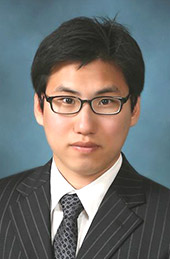
[Edaily Reporter Kim Seung-kwon ] “We recently secured an equipment order worth 510 million won from a global pharmaceutical company in the cell and gene therapy (CGT) sector. We are currently in active discussions with more than 10 global pharmaceutical companies regarding equipment adoption, and there is a high likelihood of additional multi-unit contracts with advance payments totaling more than 10% of last year’s revenue (approximately 500 million won).”
Kim Nam-yong Curiox Biosystems Co., Ltd.(445680)(hereinafter Curiox), CEO of Curiox, responded as such in a recent interview with Pharm e-Daily when asked about the company’s global business status. His core strategy is to achieve gradual and steady “step-by-step upward” growth based on strong preference from the operational team, rather than a short-term “quantum leap.”
Curiox is a homegrown Korean company that is the only one in the world to have commercialized a cell analysis process automation technology that does not use centrifuges (C-FREE). In the second quarter alone, the company secured two consecutive equipment sales contracts, laying the groundwork for a turnaround in its performance.
Kim Nam-yong, CEO of Curiox Biosystems Co., Ltd. (Photo courtesy of Curiox Biosystems Co., Ltd.)
“Changing the Process Itself”… Adoption by Big Pharma Is Slow but Deep
Cell analysis is an essential foundational process in new drug development and clinical trials, yet it still relies heavily on manual labor. While standard equipment can be purchased immediately with sufficient budget, adopting Curiox’s equipment means transforming the “manual-based process” that has persisted for decades.
CEO Kim emphasized that the comprehensive software license agreement for “Pluto Code” signed last April with a pharmaceutical company ranked among the top 10 globally in terms of revenue marks the starting point of this transformation. “This comprehensive agreement signifies that, at the very least, a company-wide consensus has been established within multiple organizations at Big Pharma regarding the need to adopt new processes,” he explained, adding, “Currently, demand is concentrated primarily in two areas: basic cell research groups and CGT analysis and quality control (QC) departments.”
However, as this is a new business model, the fact that decisions by Big Pharma’s top management are taking longer than expected remains a challenge. Curiox’s second-quarter revenue was 1.176 billion won (an 18% increase year-over-year), but its operating loss was in the 4.4 billion won range. CEO Kim said, “I apologize to our shareholders that progress has been slower than expected,” but added, “With more than ten major pharmaceutical accounts currently under discussion, we are steadily expanding our market presence.”
◇ Competitors’ Entry Is a ‘Signal of Market Expansion’… Changing the Landscape with Non-Centrifugal Technology
Recently, Agilent, a global equipment giant, announced its entry into the centrifuge-based cell automation market. However, CEO Kim interpreted this not as a threat but as a powerful “signal of market expansion.”
CEO Kim predicted, “When large companies launch marketing campaigns, it’s effectively like them educating the market on ‘why automation is necessary’ on our behalf,” adding, “As our single voice transforms into multiple powerful voices, our target market will open up explosively.”
In particular, he expressed confidence in his company’s solid advantage even in direct comparison with competitors. The centrifugation method requires not only pipettes but also centrifuges, washers, and complex robotic arms, resulting in substantial maintenance costs and space requirements. In contrast, Curiox handles everything from antibody mixing to washing in a one-stop process using just a single liquid dispenser. CEO Kim emphasized, “In terms of structural simplicity and cost-efficiency, Curiox’s non-centrifugal (C-FREE) method is overwhelmingly advantageous.”
In addition, new software released in June (such as the Workflow Wizard) allows researchers to easily operate the device following their existing experimental procedures—even without programming knowledge—significantly lowering the barrier to purchasing the equipment.
NIST Reproducibility Data Sparks a Trend… Joint AI Drug Discovery Research Imminent
The strongest momentum in the second half of the year is undoubtedly the achievement of overwhelming “reproducibility” in data and the artificial intelligence (AI) collaborations based on it.
According to a multi-center pilot study by the National Institute of Standards and Technology (NIST) Flow Cytometry Standardization Consortium, inter-institutional variability in traditional manual processes reached up to 27%, but after implementing Curiox’s automated equipment, the variability plummeted to 5.3%. This represents a more than fivefold improvement in reproducibility.
CEO Kim explained, “Due to the error rate associated with manual processes, it typically takes four months just to align data during multi-center clinical trials,” adding, “By increasing reproducibility and shortening this period, pharmaceutical companies can gain astronomical profits by extending the exclusive sales period for new drug patents by as much as four months.” It is anticipated that the official white paper from the NIST consortium, set to be released next year, will serve as the catalyst for a full-scale quantum leap.
In particular, data with such a low error rate and high uniformity is essential for AI and machine learning-based drug development, which has recently become a hot topic. CEO Kim stated, “Since AI cannot self-correct data with significant errors, Curiox’s automated data with high reproducibility is absolutely necessary,” and added, “Based on this, we plan to officially announce a joint research agreement on AI-based data analysis with a major global corporation as early as late August or September.” Final legal reviews are currently underway.
In closing, CEO Kim told shareholders, “While it is regrettable that progress has been somewhat delayed, we have fully demonstrated our technical achievements, such as securing data from the NIST consortium,” and promised, “Having overcome these challenges, we will now demonstrate a much faster and more robust growth trajectory.”
"When domestic startups are asked where they hope to expand overseas, 'Japan' is the second most frequently mentioned destination after the U.S. However, as Japanese investors prioritize 'exits' (retu…
While South Korea’s pharmaceutical and biotech sector traded lower across the board, Sillajen stood out by hitting the daily upper price limit. In contrast, Hanmi Pharmaceutical and Hanmi Science, whi…
HLB innoVation(024850)is acquiring HLB Cell, a company specializing in cell and regenerative medicine. The plan is to expand its business scope into the Korean and Asian markets by adding a domestic R…