[Edaily Reporter Shin Yeong-bin ] OpenAI is set to build domestic infrastructure in South Korea to handle artificial intelligence (AI) inference. The plan goes beyond simply storing data in South Korea to processing the computational steps involved in generating AI responses domestically.
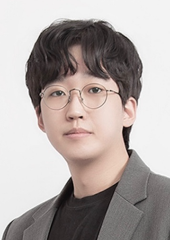
Kim Kyung-hoon, Managing Director of OpenAI Korea, stated on the 9th at a press conference marking the first anniversary of the Korea office’s launch, held at the Chosun Palace Hotel in Gangnam-gu, Seoul, “We are continuing discussions with several partners capable of providing inference infrastructure in Korea.”

Currently, OpenAI offers “data residency”—which stores data in Korea—to domestic ChatGPT Enterprise, ChatGPT Edu, and API customers. Going forward, the company plans to support “inference residency,” where even the GPU computations required for the model to process user requests and generate responses are performed domestically.
CEO Kim stated, “To perform inference, we need high-quality GPUs and a cloud system to support them,” adding, “We are in ongoing discussions with several partners in Korea who can provide this infrastructure.” He continued, “We expect that when new GPUs are deployed at one of these partners, a portion will be allocated to our inference operations.”
For domestic inference services, securing GPUs and cost are key variables. CEO Kim predicted that companies will decide whether to use the service by weighing both the actual need for domestic inference and the associated costs. Rather than limiting the service to specific industries or customer groups, the company plans to offer it to any business that requires local inference.
He also left the door open for collaboration with domestic cloud service providers. Currently, OpenAI partners with global cloud providers such as Microsoft (MS), Amazon Web Services (AWS), and Oracle.
CEO Kim said, “It doesn’t necessarily have to be a U.S. company,” adding, “Since there are quite capable cloud service providers in Korea as well, I expect that someday OpenAI models will be deployed on the infrastructure of Korean cloud service providers.”
OpenAI’s move to expand its domestic infrastructure is driven by the growing use of AI among Korean companies and institutions. As of late August, the number of ChatGPT Enterprise users in Korea had increased approximately 28-fold compared to a year earlier. Weekly active users of the standard ChatGPT in Korea also rose by 35% year-over-year.
The trend of utilizing AI as a practical tool for performing work tasks has also become more pronounced. The number of weekly active users of ChatGPT Work and Codex in Korea increased approximately 14-fold in just six months compared to last March. Codex is a coding agent that writes, modifies, and reviews code, while ChatGPT Work is a work-oriented AI that uses apps and files to handle tasks ranging from research and analysis to document creation.

CEO Kim said, “In the past, we were limited to providing information within a company via chatbots, but now we are seeing teams collaborate with Agent AI to create new products and services.” He explained that the use of agents is rapidly increasing even in non-development roles such as legal, finance, human resources, accounting, marketing, and sales.
OpenAI believes that GPT-6 “Astra,” recently unveiled, will further accelerate this shift. CEO Kim remarked, “What we considered most important in Astra was whether it could truly complete tasks on its own from start to finish,” adding, “Its strength lies in its ability to continuously reflect on a goal set by a person and recall previous work to produce higher-quality results.”
He continued, “In the past, even when assigning tasks to AI, there was often a lot of human intervention or review required, but I believe we’ve now entered an era where we can confidently entrust it with more challenging tasks.”
The scope of practical applications is also expanding. According to OpenAI, SamsungElectronics is utilizing ChatGPT for various tasks, including research and development (R&D), marketing, international sales, and production management. Regarding SamsungElectronics’ adoption, CEO Kim assessed it as “one of the largest-scale implementations in the world.” At Seoul National University, nearly 50,000 students and faculty members are using ChatGPT and Codex for research and work.
The company is also expanding its cybersecurity business in Korea. CEO Kim revealed that there are currently about five companies in Korea with which the company is collaborating on cybersecurity. The government sector is managed separately from the private sector, and the company continues to collaborate with various government agencies, including the Korea Internet & Security Agency (KISA).
Regarding the cybersecurity program “Daybreak,” in which Samsung SDS (SAMSUNG SDS CO., LTD.(018260)) is participating, he said, “Samsung affiliates will be the first to adopt the cybersecurity model,” adding, “If the pilot phase goes well, we will expand the service to more companies.” He also predicted that other domestic companies would join the pilot program.
Collaboration on “Stargate” with Samsung and SK Group is also ongoing. CEO Kim said, “We are in discussions with various affiliates within both groups,” adding, “As AI technology is advancing rapidly, the data center we envisioned last October now differs from what is currently needed, so coordination is taking longer than expected.”
Discussions with SamsungElectronics regarding the company’s own AI processing chips are also ongoing as part of a long-term strategy. CEO Kim explained, “SamsungElectronics is utilizing a variety of AI technologies, and the goals and challenges of each project differ.” He continued, “Since we need to take a longer-term approach to develop our own processing chips, we are engaging in in-depth discussions in that area.”
OpenAI plans to expand its enterprise services, infrastructure, and security ecosystem in line with the growing use of AI in South Korea. CEO Kim said, “We will continue to grow alongside our many partners in South Korea and help domestic companies and institutions leverage the most advanced AI technologies.”


