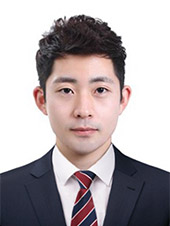
[Edaily Reporter KIM EUNG-TAE ] The families of owners at some mid-sized and small companies—facing the threat of delisting due to so-called “penny stocks” with share prices below 1,000 won—are actively buying back shares. Analysts suggest that second- and third-generation heirs have begun purchasing shares both as part of responsible management before implementing full-scale measures to boost stock prices and to expand their control over the companies. Pictured from left: Kim Ji-won, CEO of HANSAEMK; Kang Ho-jun, CEO of DAEKYO; and Kim Young-hoon, CEO of Daesung Private Equity, Inc. (Photo courtesy of respective companies) According to the Financial Supervisory Service on the 22nd, Park Geon-hee, the son of Kim Ji-won, CEO of HANSAEMK(069640)—a fashion subsidiary of the Hanse YES24 Co.,Ltd.—purchased 18,603 common shares of HANSAEMK between the 10th and 17th. Park Geon-hee’s total shareholding increased from 92,212 shares to 110,815 shares. His ownership stake rose to 0.51%, up 0.09 percentage points from the previous figure. CEO Kim Ji-won is the youngest daughter of Hanse YES24 Co.,Ltd Chairman Kim Dong-nyeong, and Park Geon-hee is his grandson, born in 2011. CEO Kim Ji-won and Chairman Kim also increased their stakes in HANSAEMK. From August 13 to the 4th of this month, CEO Kim purchased a total of 80,387 shares on the open market. As a result, CEO Kim’s holdings now total 84,734 shares, and her ownership stake has expanded to 0.39%. In addition, CEO Kim announced a trading plan to purchase 271,810 shares over 30 trading days starting October 19. Combining the shares already purchased on the open market with the projected purchase volume outlined in the trading plan brings the total to 352,197 shares; if the plan is carried out as scheduled, her ownership stake will rise to 1.62%. Chairman Kim also purchased 16,170 shares on the 2nd and 3rd of this month, increasing his holdings to 427,251 shares. His ownership stake stands at 1.97%. As of the closing price on the 21st, HANSAEMK’s stock price was 1,398 won per share. Kang Ho-jun ( DAEKYO(019680) ), the second-generation owner of the education company DAEKYO Group, also drew attention recently for purchasing DAEKYO shares. From the 8th to the 11th of last month, CEO Kang purchased 298,796 shares (prior to the stock consolidation), expanding his holdings from 26,000 shares to 324,796 shares. Additionally, Kim Young-hoon, the second-generation owner and CEO of Daesung Venture Investment (Daesung Private Equity, Inc.(027830)), a venture capital (VC) subsidiary of the Daesung Group, purchased 1,066,270 shares on the open market in three separate transactions between July 30 and August 3. The fact that second- and third-generation owners of domestic mid-sized and small-to-medium-sized enterprises are successively buying shares appears to be a strategy to increase their ownership stakes with relatively little capital while stock prices remain low, thereby expanding their control and demonstrating a commitment to responsible management. In particular, these companies share the common characteristic of facing the risk of delisting as their stock prices have fallen to around 1,000 won. As of July 24, HANSAEMK’s closing price was 995 won per share, falling below the 1,000-won mark. DAEKYO’s stock price was also below 1,000 won on August 5, prior to its stock consolidation, while Daesung Private Equity, Inc. has recently been fluctuating in the 800-won range. Experts view these share purchases by the owners’ families as a positive signal. This is because once the owners’ families have completed the acquisition of a certain amount of shares, they can begin implementing full-scale measures to boost the stock price. In fact, DAEKYO and Daesung Private Equity, Inc. proceeded with stock consolidations following share purchases by their owners’ families. Stock consolidation has emerged as an alternative measure to induce stock price increases, while also responding to the government’s new delisting requirements for penny stocks—those trading below 1,000 won per share (or with a market capitalization below 30 billion won on the KOSPI or 20 billion won on the KOSDAQ)—which took effect on July 1. Kim Yong-jin, a professor in the Department of Business Administration at Sogang University, said, “Once the owner family has accumulated shares, this can be interpreted as a positive signal for a stock price rise, as it may serve as a strategic move intended to increase dividends or enhance corporate value.”
LG Group Chairman Koo Kwang-mo’s artificial intelligence (AI) “One LG” strategy is taking shape. By consolidating the manufacturing, battery, automotive electronics, robotics, and IT capabilities accu…
The families of owners at some mid-sized and small companies—facing the threat of delisting due to so-called “penny stocks” with share prices below 1,000 won—are actively buying back shares. Analysts …
Naver (NAVER(035420)) has set its sights on developing artificial intelligence (AI) for cybersecurity. The company aims to release a security-specialized AI model that goes beyond the government’s exp…