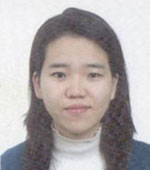

[Interviewer: Ye Jong-seok, Senior Correspondent (Professor Emeritus, Hanyang University); Compiled by ReporterLee Ji-hyun ] As a young man preparing for the civil service exam, he stood at a crossroads in life: Should he continue pursuing the exam, or build a future with his beloved girlfriend? Not wanting to lose her, he ultimately abandoned his civil service exam preparations. He entered the job market four to five years later than his peers. The path he embarked on as a securities professional eventually led him to the position of chairman of one of Korea’s leading financial groups.
Choi Hyun-man (66), former chairman of MIRAE ASSET SECURITIES, joined Hanshin Securities in 1989. He applied by writing a personal letter directly to the head of human resources and became a securities professional after passing an interview attended by seven executives. Having started late, he studied all the more intensely. He never missed a training session and learned the ins and outs of the financial world by meeting with clients.
The field was the weapon that fueled his growth. During his time at Dongwon Securities, he served as the manager of the Gangnam Seocho branch while holding the rank of assistant manager and quickly boosted performance. In 1997, he co-founded the company with Hyun Joo Park, Chairman of Mirae Asset Group. He led the group’s growth by managing a wide range of businesses, including asset management, securities, and insurance. In December 2021, he became the first chairman in the securities industry to rise from the ranks of a salaried employee.
If Chairman Park served as a father figure who charted the course for Mirae Asset Group’s growth, former Chairman Choi was regarded as a mother figure who looked after the organization and cared for its employees. He revealed that he developed bronchiectasis while devoting himself to managing the insurance company, and he coughed heavily throughout the interview. However, his eyes lit up when the conversation turned to recent stock market conditions.

-As an expert who has observed the securities market for 34 years, how do you assess the current market?
△Stock prices are driven by four factors: policy, earnings, supply and demand, and market sentiment. To understand the current stock market, you must consider all four of these factors together. First is policy. There is significant uncertainty surrounding U.S. President Trump’s tariff policies, political pressure on the Federal Reserve (Fed), and the risk of war. If war breaks out, oil prices will rise, affecting inflation and interest rates. Ultimately, this will destabilize the stock market as well.
- But aren’t semiconductor companies posting strong earnings?
△SamsungElectronics and SK hynix remain highly competitive. High-Bandwidth Memory (HBM), in particular, is essential to the artificial intelligence (AI) industry. No matter how advanced the AI chips produced by NVIDIA or AMD may be, they still require South Korean memory chips. Strong earnings have driven stock prices higher. However, supply and demand are now the issue.
-Why are foreign investors continuing to sell?
△Foreign investors have been accumulating semiconductor stocks since prices were low. Now that stock prices have risen significantly, they are taking profits. Global hedge funds and institutional investors rebalance their portfolios according to set criteria. They sell stocks that have risen sharply to adjust their asset allocations. The problem is that even after these sales, they still hold a substantial amount of these shares. The possibility of further selling is weighing on the market.
-You also mentioned that the timing of allowing leveraged products was an issue.
△The products themselves aren’t the problem. They’re traded in the U.S. and Hong Kong as well. The issue is the timing. They were permitted when stock prices had already risen significantly. It was a time when “FOMO” (fear of missing out)—the feeling that “everyone else is making money but I’m not”—was intensifying. Retail investors who jumped in late flocked to leveraged products, and as stock prices fell, their losses grew. Financial authorities should have examined market conditions and investor protection more carefully.
-How do you assess the National Pension Service’s response?
△I believe the National Pension Service also failed to rebalance its portfolio in a timely manner. As stock prices rose, foreign investors took profits and adjusted their asset allocations. However, the National Pension Service failed to respond at the appropriate time. With foreign investors selling and retail investors’ buying power dwindling, the National Pension Service was unable to support market supply and demand. This is one of the reasons why the stock prices of companies with strong earnings are fluctuating.
- Do semiconductor stocks still have room to rise?
△I believe the semiconductor industry still has significant growth potential. High-Bandwidth Memory (HBM) is particularly important. Even if companies like NVIDIA or AMD produce AI semiconductors, they still need memory semiconductors. This is an area where SamsungElectronics and SK hynix hold a competitive edge. There are also reports that a significant portion of HBM supply has already been secured for the period from 2027 to 2029. If semiconductor companies’ earnings improve, opportunities will also arise for materials, components, and equipment firms. Although there is debate in the U.S. over data center investments, it will be difficult to easily halt AI investments given the technological competition with China. We must distinguish between a company’s growth potential and short-term stock price movements.
-How should individual investors respond?
△There are three things to check first: whether you own good stocks, how many you own, and how much cash you have on hand. If you already hold stocks like SamsungElectronics or SK hynix, you don’t necessarily need to sell just because the stock price fluctuates. Conversely, if you have cash but no stocks, you shouldn’t rush to buy when prices surge. It’s better to buy in installments as the price falls. Five installments might not even be enough; I recommend spreading your purchases over seven to ten installments. You can also buy a small amount right from the start. This will help you stay engaged and keep an eye on the market. However, you should never invest all your money at once. Cash is also an asset. Even if you want to buy when stock prices fall, you won’t be able to if you don’t have cash. To seize opportunities when they arise, you must always keep some cash on hand. This is why it’s recommended to maintain 30% cash in your account. For retail investors, I recommend the “4-3-3 Investment Method.” Allocate 40% of your total investment assets to relatively stable financial products, such as bonds or savings accounts, and invest 30% in stocks. Hold the remaining 30% in cash. Even if you have cash, you shouldn’t invest it all at once. Borrowing money to buy stocks or betting your entire fortune on a single stock is even riskier.
-Is this a principle you’ve learned from your 34-year career in securities?
△I remember an incident from when I went to Wall Street in the U.S. for training in 1993. I was taking a course at the New York Stock Exchange and would often buy hamburgers to save on lunch. One day, while sitting outside with fellow trainees eating hamburgers and looking out at the Hudson River, an American professor approached us. He told us not to think of the stock market as merely a glamorous and beautiful place. He said there were people who had suffered massive losses from stock investments and ended up taking their own lives. I experienced something similar while working on the trading floor at a securities firm. There were instances where clients who had borrowed money to buy stocks and suffered heavy losses would come to the branch to lodge complaints. If stock prices fall and the client is forced into a margin call, their life can fall apart. That’s why managing risk is just as important as generating returns when it comes to investing. You must know how to select good companies, diversify your investments, and be patient.

-How did your career in securities begin?
△I didn’t set out to become a securities professional from the start. I prepared for the civil service exam but failed several times. Then, in 1989, I applied to Hanshin Securities. I was four or five years older than the other applicants. I applied by writing a letter to the HR manager and mailing my application documents. When I walked into the interview room, seven executives were sitting there. They asked about my history of participating in student activism. I explained that while I had joined the movement to build a just society, I intended to contribute to society by working within the system from then on. That’s how I joined the securities firm.
-How did you work after joining the company?
△ I was eager to learn. Whenever there was securities-related training, I made sure not to miss it. I continued to study on my own, in addition to the training programs the company provided. I figured that if I was going to recommend financial products to clients, I had to understand them thoroughly myself first. On the sales floor, I tried to treat clients’ money as if it were my own. I believed that properly managing clients’ assets was more important than generating commissions by encouraging them to make frequent trades. At the time, there was a sales practice in the securities industry of encouraging clients to buy and sell stocks frequently, but I didn’t like that approach.
-You were put in charge of a major branch at a young age.
△While working as an Assistant Manager at Dongwon Securities, I was appointed branch manager of the Gangnam Seocho Branch. It was a large branch typically led by a director-level executive. At first, the branch ranked 7th internally and around 35th nationwide in terms of performance. Within a month, I had climbed to second place within the company. Sales isn’t something you can manage by sitting at a desk and giving orders. You have to meet clients in person and work side by side with your staff. You can only see what the problems are and what opportunities exist if you understand the field. That experience had a major influence on my management style later on.
-How did you come to join forces with Mirae Asset Chairman Hyun Joo Park?
△We got to know each other’s perspectives while working together at Dongwon Securities. At the time, the securities industry was heavily focused on brokerage—buying and selling stocks. We believed there was a need for a business that would manage and grow clients’ assets over the long term. Our goal was to move beyond simply brokering stock trades and create a new kind of financial institution. In 1997, I joined the founding team of Mirae Asset. Chairman Park excelled at anticipating new markets and setting the strategic direction. I was responsible for turning that vision into actual business operations and managing the organization. I believe we were able to grow together precisely because our roles were different.
- Mirae Asset’s first mutual fund caused quite a stir.
△We introduced Korea’s first corporate-type mutual fund. We named it the “Mirae Asset Hyun Joo Park Fund.” Chairman Park was opposed to putting his name on the fund. However, I saw it as a way to demonstrate that we would manage the fund responsibly under his name. I first announced the name to reporters. The first fund generated a 76% return in just one year. The response was tremendous. When we launched the second fund, there was such a rush of investors that the amount raised was four to five times the target. However, the second fund suffered a 45% loss as the market plummeted. We didn’t just experience success; we also endured a major failure.
-Investors must have protested fiercely.
△We held a general meeting of investors, and the atmosphere was tense. There was swearing, and fierce protests ensued. Someone even told me, “Go drown in the Sea of Japan.” I went there in person and explained everything from start to finish. I didn’t shy away from explaining why the losses occurred or what the situation was like. Then, one investor stood up and suggested giving me another chance. That comment shifted the mood slightly. Afterward, some investors even patted me on the back. That’s when I truly realized how important it is to take responsibility in front of clients.
- Were there any difficulties managing the fund at that time?
△The first fund was a closed-end fund that couldn’t be redeemed for a set period. Even if the market plummeted, we had to liquidate the assets at maturity and return the proceeds to investors. The problem was that even good stocks had to be sold when the market was down. At the time, I even requested that the government allow us to distribute the stocks to investors in kind, rather than liquidating them for cash. However, I was told that this was legally difficult. Later, we switched to an open-end fund, but this time we faced the problem of investors redeeming their shares prematurely. I became increasingly convinced that stable capital was necessary for long-term investing.
-Is that why you became interested in the insurance industry?
△Yes. Together with Chairman Park, I studied the business structure of Berkshire Hathaway extensively. Insurance companies can collect premiums from customers and manage those funds over the long term. This differs from a structure like a mutual fund, where investors can request redemptions daily. The advantage is the ability to manage assets from a long-term perspective. Insurance is, after all, about asset management. It originated from the idea of many people pooling their money to prepare for risks. It’s also connected to the spirit of mutual aid in times of need, similar to Korea’s “dure” or “hyangyak” traditions. Only by managing those funds well can we provide the coverage promised to our customers. It was with this mindset that we entered the insurance industry.
-I’ve heard that managing an insurance company wasn’t easy.
△Insurance was a business entirely different from securities. The life insurance company we acquired had been operating at a loss for several years. At Chairman Park’s request, I took direct charge of management. To demonstrate my commitment to taking responsibility, I cut my salary to one-third of what it was. I set out to change insurance sales practices right from the start. At the time, it was common practice to pay agents commissions in advance when they secured a new policy. This led to a problem where customers were being pressured to cancel their existing policies and switch to new ones. Instead of selling the insurance that customers truly needed, agents were fixated solely on sales targets. I retrained the agents and developed a product that reduced advance commission payments. I named it “The Difference of Sincerity.” Although there was some resistance at first, I believed we had to make changes that would benefit the customers.
-Ultimately, the company returned to profitability.
△We returned to profitability three years after I took over management. The process was not easy. In the insurance industry, managing assets effectively is just as important as selling products. That’s why I established a 55-member asset management team within the insurance company. I believed the insurance company needed to develop its own asset management capabilities rather than entrusting everything to the group’s asset management firm. When performance improved, I shared the rewards with the employees. Business success isn’t achieved alone—it’s the result of the hard work of employees who meet customers on the front lines and work diligently behind the scenes.
- How did the “3·3·7 Management” approach begin?
△It involves visiting three branches, meeting with three companies, and making seven phone calls every day. You can’t just pay lip service to the front lines—managers must take action themselves. I visited not only publicly traded companies but also those that hadn’t gone public yet. Even if there’s no immediate business opportunity, getting to know a company can lead to future opportunities, such as an initial public offering (IPO). Meeting people and building relationships ultimately becomes the company’s greatest asset. I believe that even a CEO must be a salesperson. If you draw up a business plan without understanding the front lines, you end up making decisions based solely on numbers. I also tried to lead by example—showing my employees through actions rather than just words.
-What principle did you value most in management?
△Balance. It’s dangerous to lean too far in either direction. Being good at sales doesn’t automatically mean you’re good at management, and simply devising a good strategy doesn’t guarantee a company’s growth. You need to understand the front lines and analyze the numbers. The same applies to the economy. When war breaks out, oil prices fluctuate, affecting inflation, interest rates, and even the stock market. Everything is interconnected. That’s why a manager must constantly study. You shouldn’t make decisions based solely on past experience.

-What was your relationship with Hyun Joo Park, the chairman, like?
△Chairman Park and I were business partners and have shared a deep, long-standing relationship. I never thought of Mirae Asset as someone else’s company. As someone who participated in its founding, I worked with the mindset that it was my own business. It is a remarkable achievement that Chairman Park grew Mirae Asset into a world-class financial group. I believe that achievement deserves proper recognition.
-What kind of leader were you to your employees?
△I placed great importance on working alongside employees and growing with them. I sought out talented individuals, entrusted them with responsibilities, and helped them take on bigger roles when they performed well. Many of the junior colleagues I worked with have gone on to become CEOs. Even now, I still hear from them. They’ll contact me to say they’ve been promoted and ask me to treat them to a meal. When that happens, I’m happy to meet up and treat them. Just because someone has left the company doesn’t mean our connection ends. It brings me great joy to see the people I’ve worked with grow.
- Since retiring, I have been actively involved in social contribution activities.
△ I am involved with Catholic organizations and charitable foundations. The foundation has assets of approximately 40 billion won and supports about 500 facilities. The problem is that as interest rates have fallen, it has become difficult to sustain this support with interest from deposits alone. We can’t very well reduce the number of facilities we support, can we? So, we started by changing our asset management strategy. We divided our funds between two securities firms and found a way to generate an annual return of around 5 percent while prioritizing stability. I find it rewarding to be able to use what I’ve learned throughout my career in the financial industry to help those in need.
-Do you have any plans to start a company again?
△I know very well how difficult it is to start a business. Building a company from the ground up requires an enormous amount of energy. Rather than starting a business myself again, I’d like to pass on my experience to younger colleagues and play a role in advising companies so they move in the right direction. I’ve learned a great deal in the financial industry over the years and received help from many people. Now, I want to spend my time sharing that experience.
■ Choi Hyun-man, Former Chairman of MIRAE ASSET SECURITIES
△Born in 1961 in Gangjin, South Jeolla Province △Graduated from Gwangju Il High School △B.A. in Political Science and International Relations, Chonnam National University △Completed the Executive MBA program at Sogang University Graduate School of Business △Joined Dongwon Securities △Founding member of Mirae Asset Group △CEO of Mirae Asset Management △CEO of Mirae Asset Venture Capital △President and CEO of MIRAE ASSET SECURITIES △ Executive Vice Chairman of MIRAE ASSET SECURITIES △ Senior Vice Chairman of Mirae Asset Group △ CEO of MIRAE ASSET Life Insurance CO., Ltd. △ Chairman of MIRAE ASSET SECURITIES △ Independent Director and Chairman of the Board at Hanmi Science △ Independent Director on the Independent Board of HYUNDAIGLOVIS Co.,LTD.


