[Edaily Reporter YU JIN-HEE ] #Remedy, a company specializing in AI-based medical imaging diagnostic platforms, is officially launching its roadmap to establish a foothold in the Indonesian market. Moving beyond simple hardware exports, the company is accelerating its multifaceted business expansion—from establishing a local assembly and production system to providing remote image interpretation services for public health centers and partnering with the country’s largest private healthcare network.
Signing a Series of Memorandums of Understanding with Major Local Companies and Medical Institutions
According to industry sources on the 20th, Remedy recently participated in the “Indonesia-Korea Healthcare Cooperation Program” held in Jakarta, Indonesia, and signed memorandums of understanding (MOUs) with a total of four major local companies and medical institutions.
The agreements cover: △ strategic cooperation with “PT Madina Mentari Utama,” a company affiliated with Muhammadiyah; △ a clinical proof of concept (PoC) with Persahabatan National Hospital; △ distribution and commercialization with the Indonesian Respiratory Society (PDPI); and △ expansion of business networks with the Indonesian Entrepreneurs Association (KEIND).
The most notable aspect is the expansion of ties with Muhammadiyah, Indonesia’s leading social organization with a membership and related network totaling approximately 150 million people. Muhammadiyah possesses a vast infrastructure spanning hospitals, medical facilities, universities, and schools throughout Indonesia.
The CEO of PT Madina Mentari Utama, which signed the agreement, is concurrently the Chairman of Muhammadiyah’s Central Health Committee (MPKU), Mohammad Agus Shamsuddin. Remedy plans to launch health screening programs linked to Muhammadiyah’s nationwide healthcare network and aims to penetrate both the private and public markets by combining clinical validation at national hospitals with local distribution networks.
Remedy’s expansion into Indonesia is driven by a meticulously designed strategy centered on localized production hubs. Previously, the company’s top management visited Jakarta in person to conduct a thorough review of key licensing procedures for establishing a local foreign-invested company (PMA) and constructing a finished-product assembly plant. During this visit, specific topics were discussed, including the completion of corporate registration, site inspections for the factory, reviews of environmental impact assessments and building permits, and the accreditation process with the Indonesian Nuclear Regulatory Agency (BAPETEN) for the manufacture of radiation equipment.
The reason Remedy is investing significant effort in building a local production plant stems from regulatory changes in Indonesia’s public healthcare procurement market. The local government is significantly strengthening its Local Content Requirement (TKDN) regulations to protect domestic industries. While it limits bonus points in bidding or even bars participation for companies importing only finished products, it grants absolute bidding priority to companies that meet the required ratios for local assembly and component procurement.
By directly operating a local factory, Remedy has broken through trade barriers head-on and established an institutional foundation to secure projects commissioned by the Indonesian Ministry of Health. Remedy has already officially participated, alongside a local partner, in a large-scale public procurement tender for portable X-ray equipment funded by the Indonesian central government budget (APBN) to ensure rapid factory operation. Last April, officials from the Indonesian Academy of Hospital Engineering (IAHE)—a public institution under the Indonesian Ministry of Health—visited Remedy’s headquarters factory in South Korea. There, they signed an agreement to facilitate the local mass production of ultra-compact medical devices and strengthen healthcare capabilities, thereby solidifying a close cooperative relationship.
The market potential is also explosive. With a population of 285 million, Indonesia is Southeast Asia’s largest economy and healthcare market. The country is divided into more than 17,000 islands, presenting geographical challenges that limit access to large hospitals. This environment makes mobile medical services—where medical staff carry equipment to patients rather than patients traveling to hub hospitals—and remote imaging diagnostics essential. Even if we simply estimate the cost of an X-ray per session at approximately 10,000 won based on the population, the potential diagnostic market alone amounts to about 2.85 trillion won.
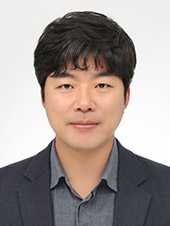
Irena, founder of Remedy and professor at Ewha Womans University. (Photo courtesy of Remedy)
Signing a Series of Memorandums of Understanding with Major Local Companies and Medical Institutions
To meet this local demand, Remedy is moving beyond one-time hardware deliveries to implement a software-as-a-service (SaaS) model. This approach directly applies the next-generation CHA AI Healthkare ecosystem currently being developed in Korea through the “ DAEWOONGPHARMACEUTICAL(069620).” The company plans to supply portable X-ray machines to the approximately 10,000 public health centers (“Puskesmas”) operating throughout Indonesia and establish a telemedicine network that instantly transmits images to central university hospitals and an AI cloud platform for interpretation. Once the project is fully operational, a high-margin, recurring revenue structure will be established, featuring not only one-time revenue from device sales but also a steady stream of per-case interpretation fees.
A solid track record of global success serves as a powerful asset for business expansion in Indonesia. Founded in 2012, Remedy has independently developed core technologies including ultra-compact X-ray tube control, ultra-high-vacuum sealed packaging, and ultra-lightweight high-voltage generators. The flagship model, the “Remex-KA6,” has established itself as essential equipment for emergency sites and mobile screening thanks to its lightweight design—which allows for one-handed operation—and extremely low radiation exposure levels. The company participated in India’s National Tuberculosis Control Program, supplying a total of 2,284 units to the central government, and was the sole bidder to pass the technical evaluation in a procurement tender by the state government of Odisha, which has a population of 46 million.
The company’s expansion into advanced markets and non-medical industries is also proceeding unhindered. Recently, it signed a supply contract for portable X-ray and ultrasound devices with “American Medical Administrators” (AMA), a leading healthcare services group that operates hospitals and clinics across the United States. This achievement is the result of synergy between the advisory expertise of Dr. Kaushal Meta—a local radiologist who holds a degree from the Massachusetts Institute of Technology (MIT) School of Engineering and an MBA—and the company’s track record of having its models selected for installation on NASA spacecraft.
Given that the global portable X-ray market is valued at approximately $810 million (about 1.0826 trillion won) and North America accounts for 30.9% of that market, explosive growth in supply is expected following a proof of concept (PoC) in the U.S. In the industrial sector, the company demonstrated the scalability of its technology by delivering 13 sets of the “RIX-B100”—a core module for battery non-destructive testing equipment co-developed with LGELECTRONICS(066570)—to battery mass production lines.
These achievements in export diversification are clearly reflected in the company’s financial results. Remedy’s consolidated revenue for the first half of this year reached 15.5 billion won, surpassing last year’s total annual revenue (14.6 billion won) in just one half-year. During the same period, operating profit reached 6.1 billion won—more than double the previous year’s annual operating profit (2.75 billion won)—and the company achieved an operating profit margin of approximately 40%, among the highest in the manufacturing industry. Exports in the first half alone totaled 13.9 billion won, instantly surpassing the previous year’s annual export figure (12.2 billion won). The securities industry forecasts that, leveraging the full-scale launch of U.S. supply in the second half and the expansion of public healthcare procurement in Asia, the company will easily surpass 20 billion won in annual revenue—the highest in its history—this year.
Irena, a professor at Ewha Womans University and founder of Remedy, stated, “This agreement is highly significant as it lays the groundwork for substantive commercialization with major Indonesian medical institutions and companies.” She added, “We will collaborate with local partners to expand early tuberculosis screening and secure new revenue growth drivers through large-scale equipment supply and AI diagnostic services.”
SamsungElectronics will exclusively live-stream the year-end concert of hip-hop duo Dynamic Duo for free via Samsung TV Plus. This strategy aims to strengthen its content competitiveness by expanding …
#Remedy, a company specializing in AI-based medical imaging diagnostic platforms, is officially launching its roadmap to establish a foothold in the Indonesian market. Moving beyond simple hardware ex…
LG Uplus(032640)announced on the 23rd that it has launched “WanderJoy,” a global travel membership service that partners with global telecommunications companies to share travel benefits discovered in…