[Exclusive] South Korea’s First Representative Joins the DIF, an International Standardization Body for Decentralized IDs, as a Steering Committee Member
Park Kyung-chul, CEO of K-POS Security, Elected to the DIF Steering Committee
First Korean Joins DIF’s Top Decision-Making Body, Which Includes Microsoft and IBM
Proposing an "Interop Working Group" for Next Year, Highlighting "Cross-Border DID Interoperability"
[Edaily Reporter Lee Jeong Hun ] Park Kyung-chul, CEO of K-POS Security—a leading Korean company specializing in security and decentralized identity (DID)—has been elected to the Steering Committee of the Decentralized Identity Foundation (DIF), a global organization dedicated to standardizing decentralized identity. This marks the first time a Korean national has been appointed to the DIF Steering Committee.
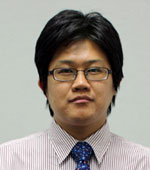
Park Kyung-chul, CEO of K-POS Security (Photo: Reporter Lee Jeong Hun )
In an official newsletter published on the 25th (local time), the DIF announced the results of this year’s Steering Committee election, with CEO Park selected as a new member alongside Makki El-Fati and Neil Thompson. Committee members Ankur Banerjee and Steve McCown were re-elected. Among the candidates tied in votes, the Election Committee ultimately selected Sumit Bekaria and Chatchai Chanbet, resulting in a new 11-member Governing Board that includes incumbent members. A total of 14 candidates ran in this election, and the new term begins on the 1st of next month.
DIF is a nonprofit membership organization launched in 2017 under the leadership of Microsoft (MS) and others, with global companies such as IBM and Accenture, as well as blockchain and identity verification firms, participating as members. Its goals include research and development of decentralized identity technology—which enables individuals and organizations to self-manage their identity information—and the establishment of international interoperability standards.
It currently operates nine working groups, including DID Methods, DIDComm, Applied Cryptography, and Trusted AI Agents, and has recently expanded its discussions to include issues related to identity and authorization delegation for AI agents.
The Steering Committee serves as the DIF’s highest decision-making body. It sets the foundation’s strategy and priorities and provides final approval for standard specifications and protocols issued under the DIF’s name. The Steering Committee is also responsible for reviewing the annual budget and overseeing the Secretary-General’s duties. Committee members are elected annually through a vote by full member companies that pay dues. Each member company has one vote, and the committee consists of up to 11 members.
As the head of the DIF Korea Special Interest Group (SIG), which was launched in 2023, Park has served as a bridge between the domestic decentralized identity ecosystem and global standards. He has participated in standardization activities through the Korea Information and Communications Technology Association, the Korea Internet & Security Agency’s Decentralized ID Technology Standards Forum, and CIRPASS2, the European Union’s (EU) Digital Product Passport project. He has also carried out government projects related to decentralized identity, central bank digital currency (CBDC), and digital product passports (DPP).
In his candidacy statement, CEO Park emphasized his experience in establishing and operating a steering committee for DID and Verifiable Credentials (VC) projects in Korea for five years. He noted that this technology was designated as an “Excellent New Technology” by the Ministry of Science and ICT, has secured patents in the U.S., Japan, the U.K., and South Korea, and has been in operation on Incheon City’s blockchain mainnet for over two years.
The key initiative CEO Park has put forward is the “Global Interoperability Project.” His vision is to achieve cross-border identity interoperability through practical services that combine digital wallets, W3C DID and VC standards, and digital assets. Citing the EU’s Digital Identity Regulation (eIDAS 2.0) wallet specifications and the growing demand for digital assets, he believes now is the right time. He explained that the approximately 16.4 million foreign visitors to South Korea and the approximately 28 million South Korean citizens traveling abroad in 2024 could serve as a test bed for cross-border identity verification.
He also pledged to expand the participation of domestic companies in the DIF. CEO Park is currently in discussions with financial institutions, local governments, infrastructure companies, and major retail conglomerates. He revealed plans to recruit domestic organizations as paid members of the DIF, noting that a major technology company is expected to be the first to join. Next year, he plans to propose the establishment of an “Interop Working Group” focused on building actual cross-border services. He also stated his intention to work toward expanding the adoption of DIF standards by linking them to TTA domestic standards.
Until now, domestic public and private distributed identity initiatives have been criticized for being reluctant to adopt international standards such as DIF or W3C due to issues related to policy, control, and system management. With this election, observers note that the domestic distributed identity industry now has a direct channel to voice its opinions in global standard-setting discussions.
In a phone interview with Edaily, CEO Park stated, “The role of a steering committee member is to discuss strategies and activities for elevating standards—whether currently being developed, planned for development, or already established through DIF—to other international organizations.” He added, “In particular, through the DIF Korea SIG, we have created a crucial turning point that allows us to move into a leadership position in global standards, addressing the limitation that has prevented various domestic services from going global: compliance with global standards.”
The Bank of Korea has released an analysis suggesting that if delays in artificial intelligence (AI) investments, deteriorating financial conditions, and China’s increased production of memory semicon…
As temperatures plummet, making it increasingly important to manage sleep environments during the winter, COWAY(021240)has unveiled a mattress that features a heated massage function to help relax mus…
It has been revealed that Baidu, China’s largest search engine company, has excluded South Korea, the European Union (EU), and the United Kingdom from the list of authorized users after releasing the …