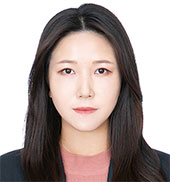
Song Ha-joong, Who Grew the Private School Teachers’ Pension Fund to 36 Trillion Won: “I Kept My Promise, but There’s Still Work to Be Done”
Double-digit returns for three consecutive years… Delivered on the promise made upon taking office
A Series of 'Excellent' and 'A' Ratings… Striking a Balance Between Investment Management and Corporate Governance
Insiders Call Him a “Leader Who Values People”… Praised for His Warm Leadership Style
“Pensions Are Not Just About Benefit Amounts; We Need to Expand the Benefits That Subscribers Actually Feel”
[Edaily Marketin JI YEONG-EUI YunJi Kim Reporter] Back in July 2023, when he announced his inaugural pledges to “lay the foundation for the next 50 years of the Private School Teachers’ Pension Fund” and “achieve double-digit returns within his term,” the market reacted with skepticism. However, Song Ha-joong, Chairman of the Private School Teachers’ Pension Fund, has proven those promises by flawlessly accomplishing his top priority: stabilizing the fund’s finances through asset growth.
His commitment was backed by clear figures. The Private School Teachers’ Pension Fund recorded annual returns of 13.46% in 2023, 11.63% in 2024, and 18.93% in 2025, achieving the remarkable feat of double-digit returns for three consecutive years. The size of its financial assets under management also surged from 21.5636 trillion won in 2023 to 35.9841 trillion won as of the end of May this year.
It would not be an exaggeration to say he is leaving behind the most exemplary “textbook” in the history of the Private School Teachers’ Pension Fund. This is because, during his tenure, he consistently earned “Excellent/A” ratings in institutional evaluations, successfully achieving both fund management and institutional governance. Behind this dazzling track record lies the inclusiveness with which he embraced the organization. This is why internal members who have shared his three-year journey remember Chairman Song’s leadership not for a results-first approach, but for its “warmth.”
When asked about his reflections on the past three years as his term nears its end, he offered a thoughtful response: “It will remain a source of pride in the latter half of my life.” Chairman Song remarked, “It was a challenging goal, but since we’ve achieved double-digit returns for three consecutive years, I think we’ve come close to meeting our expectations,” adding, “I take pride in the fact that we’ve contributed to the financial stability of our faculty and staff.” Even in the face of these dazzling achievements, he credited the organization’s members, stating, “This is the result of the efforts of all employees, who demonstrated their expertise based on long-term planning.”
The Leader Who Guided the Fund to 36 Trillion Won… A Strengthened Operational Framework for the Private School Pension Fund
The changes at
the Private School Pension Fund
during Chairman Song’s tenure went beyond simply expanding the fund’s size. As the fund grew, it developed the fundamental resilience to cope with risk and volatility, and using this as a springboard, the range of strategies available to generate additional returns also broadened.
A prime example is the revision of domestic stock investment regulations. The Pension Fund boldly revised its existing rule prohibiting investments of more than 10% in any single stock. This was a strategic move to nimbly capture returns during the rally centered on large-cap semiconductor stocks such as SK Hynix. The ratio of in-house management to outsourced management was also adjusted from the previous 4:6 to 5:5, enhancing the agility of internal operations in responding to volatile market conditions.
The fund also refined its medium- to long-term strategic asset allocation (SAA). Reflecting the results of the 6th fiscal re-calculation in 2025, it developed the “2026–2031 Medium- to Long-Term Strategic Asset Allocation Plan,” increasing the domestic stock allocation by 1 percentage point from the previous level and expanding the permitted fluctuation range by 2 percentage points. Chairman Song assessed, “Strategic management in response to the fiscal balance reversal has greatly contributed to improving profitability and has also enhanced the pension fund’s future sustainability.”
This innovation yielded impressive results. The Private School Teachers’ Pension Fund received the highest rating of “Excellent” for the fifth consecutive year in the fiscal year 2025 fund management evaluation and secured an “A” grade for the third consecutive year in the Ministry of Education’s performance evaluation of other public institutions. Identifying “expertise” as the core of fund management and “efficiency” as the top priority for institutional management, he successively established a Fund Performance Evaluation Division, deployed specialized managers for each asset class, streamlined the organization, and drove the transition to digital and AI technologies.Song Ha-joong, Chairman of the Private School Pension Fund (Photo courtesy of the Private School Pension Fund)
“Pensions Are Not Just About Benefit Amounts”… We Must Enhance Members’ Perceived Value
The new topic Chairman Song has raised toward the end of his term is “the sense of efficacy felt by members.” His core belief is that the value the Private School Pension Fund provides to members should not be limited to the pension benefits received after retirement. While the Fund should return benefits to both active members and pension recipients through welfare programs, he pointed out the limitation that, under the current structure, it is difficult to directly translate its outstanding investment performance into member welfare.
Chairman Song stated, “Although the Private School Teachers’ Pension Fund could provide various benefits to pension subscribers through welfare programs, it is difficult to allocate even 1%, or even 0.01%, of our investment returns to such initiatives,” adding, “It is also quite important to offer diverse benefits that enhance subscribers’ sense of fulfillment from their pension contributions.”
This is a pointed observation that the essence of pension reform should not be limited to mere increases in contribution rates or adjustments to benefit structures. It reflects the philosophy that the system’s sustainability is only guaranteed when members feel the warmth of the system while still employed and maintain strong confidence in their post-retirement benefits. If past achievements have boosted the fund’s “numbers,” the next step is to translate those gains into a “tangible experience” for participants.
Private School Pension Fund Depletion Clock Set for 2047… “Avoid Optimism About High Returns; Emphasize Sustainability”
Despite record-breaking performance, the financial sustainability of the Private School Teachers’ Pension Fund remains a serious challenge. According to the results of the 6th financial re-calculation in 2025, the fund is projected to be depleted by 2047. Although a pension deficit has emerged due to the recent rapid increase in beneficiaries, high investment returns have offset this, allowing the overall financial balance to remain in the black.
As of the first half of this year, the Private School Teachers’ Pension Fund’s investment returns have exceeded approximately 7 trillion won. Some projections suggest that if the investment return rate remains around 20% through the end of the year, the fund’s depletion date could be pushed back to 2051 or later. However, Chairman Song did not get carried away by these optimistic projections. “It is difficult to be optimistic that the current high rate of return will continue,” Chairman Song said. “Although the expanding fund size is creating more favorable conditions for fiscal stabilization, we must examine measures to improve the system from multiple angles.”
Currently, the Private School Teachers’ Pension Fund has partnered with the Korean Association of Public Finance to conduct policy research aimed at finding ways to stabilize its finances. The overarching principles of reform emphasized by Chairman Song are “sustainability” and “reliability.” He pointed out, “The pension system is not merely a financial system but a promise between generations,” adding, “We must consider both the rights and interests of current subscribers and the burden on future generations.” This is a warning that short-sighted reforms biased toward one side could undermine the long-term foundation of the system.
Declining School-Age Population and School Closures Deal a Direct Blow… ‘Structural Variables’ Unique to the Private School Teachers’ Pension Fund
The Private School Teachers’ Pension Fund has unique characteristics that distinguish it from other public pension systems. This is because it is on the front lines of the turbulent changes in the educational landscape. The decline in the school-age population, university restructuring, and a series of school closures directly lead to a weakening of the subscriber base. Chairman Song diagnosed this as “a structural factor unique to the Private School Teachers’ Pension System that is rarely found in other pension systems.”
The Fund has supported the proposal of a partial amendment to the Private School Pension Act aimed at improving the payment structure for pensions disbursed early due to school closures and other factors; the amendment is currently awaiting deliberation in the National Assembly. At the same time, the Fund has rolled up its sleeves to establish a safety net to fill the income gap for faculty and staff displaced during restructuring. Chairman Song’s mention of the need to introduce a job-seeking allowance system stems from this same context. The point is that only when the two wheels—financial stabilization and the protection of faculty and staff—turn together can we avoid half-baked reforms.
His advice to his successor as Chairman and the next Chief Investment Officer (CIO) also falls along these lines. Chairman Song repeatedly emphasized, “The sustainability of the pension fund is a core national challenge in the medium to long term,” adding, “We must focus on achieving goals based on medium- to long-term strategies, with a long-term perspective on fund management as our foundation.” He further called for systematic investment processes, efficient risk management, enhanced expertise through staff recruitment, and the fostering of a flexible organizational culture.
Song Ha-joong, Chairman of the Private School Pension Fund (Photo courtesy of the Private School Pension Fund)
A “Virtuous Leader” Leaves Behind a “Textbook” Legacy… “I Cheer for the Next 50 Years”
Internal members who worked alongside him over the past three years remember Chairman Song’s leadership as “warm.” One executive at the Private School Pension Corporation recalled, “He demonstrated an inclusive leadership style that is rarely seen in public institutions,” adding, “He was a leader who showed consideration for others and cherished relationships with people.” The executive continued, “The atmosphere within the Private School Pension Corporation was particularly warm during Chairman Song’s tenure.”
Chairman Song looked out for frontline employees right up until the very end. He credited the achievements to his staff, saying, “The fact that the Private School Pension Corporation has achieved remarkable results in various areas over the past three years is thanks to the executives and employees who quietly fulfilled their duties in their respective roles,” and added, “I extend my deepest gratitude to all of you.”
He also did not forget his firm commitment to members and beneficiaries. Chairman Song said, “The employees of the Private School Pension Corporation work with a sense of mission and pride, taking responsibility for the economic stability and improved welfare of school staff,” adding, “I would like to promise our members and beneficiaries that the Corporation will be a reliable partner for their retirement.” Having demonstrated the “gold standard” of institutional management, his final gaze as he departed was once again directed toward the next 50 years of the Private School Teachers’ Pension Service. “I hope the Private School Teachers’ Pension Service will always be remembered as a sustainable institution that prepares for the future.”
The fundraising strategies of Korean companies seeking to grow their U.S. subsidiaries—which are expected to drive future growth—in local capital markets have hit a snag. With SK hynix suspending the …
The home shopping industry is accelerating its efforts to secure proprietary and exclusive products. Amid declining TV viewership and fierce competition with e-commerce platforms, the industry is purs…
Apple’s first foldable smartphone, the “iPhone Duo,” has received mixed reactions since its launch. While it has garnered praise for its sophisticated design and smooth folding mechanism—and pre-order…