[Edaily Reporter YU JIN-HEE ] Huino, which began as South Korea’s first information and communications technology (ICT) regulatory sandbox biotech venture, has overcome the high regulatory barriers in the remote monitoring market and established itself in the “proof of value” phase based on its performance. The company recently secured a new order from strategic investor (SI) Yuhan(000100)—the largest single-brand order to date—and is estimated to have achieved sales of over 6 billion won in the first half of the year alone, matching last year’s total revenue. As Huino begins the process of listing on KOSDAQ in earnest, the company is determined to dispel market concerns by demonstrating its solid financial foundation. On the 3rd, we met with CEO Gil Young-jun at Huino’s headquarters in Gangnam, Seoul, to discuss the market expansion of its flagship product, the real-time in-hospital patient monitoring solution “MEMO CUE,” as well as the company’s strategy for a successful initial public offering (IPO). The following is a Q&A with him.
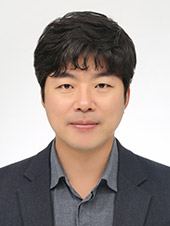
Gil Young-jun, CEO of Huino. (Photo courtesy of Huino)
- You recently secured a substantial order from Yuhan. What is the financial significance of this achievement?
△ Yuhan’slarge-scale order is not merely based on sales forecasts or promotional volumes. It is an order secured based on actual purchase demand from tertiary general hospitals, as the solution’s clinical value has been proven, particularly at major general hospitals. This single order covers a volume equivalent to Huino’s entire annual revenue from the previous year. In fact, discussions regarding additional volumes for the second half of the year are proceeding smoothly, and it is expected that supplying a cumulative total of over 2,500 beds within the year is entirely feasible. Based on this, the company has already secured cumulative sales of 6 billion won in the first half of this year alone, and full-year sales are projected to approach the break-even point (BEP). The scale of operating losses has also improved significantly, and the company expects to establish a solid profit trend starting next year.
- What is the actual scale of Memo Q’s domestic adoption in general wards, and what has been the practical response from the medical field?
△Starting with H+ Yangji Hospital lastMay, the company has completed implementation at 10 major regional hub hospitals nationwide—including Korea University Anam Hospital, Busan Veterans Hospital, and Gangneung Korea Hospital—covering a total infrastructure of 1,000 beds, and is now operating the Memo Q service stably. Looking at the current status of adoption, the system has been deployed primarily in wards where precise ECG monitoring is essential, such as cardiology, thoracic surgery, and neurology. As hospital executives and medical staff with hands-on experience have verified not only the accuracy of the artificial intelligence (AI) but also the infrastructure’s “flexibility” via wireless gateways and its outstanding ability to manage patient “safety,” requests for additional purchases are pouring in from hospitals that have already adopted the system.
- The company is pursuing integration with electronic health record (EHR) providers such as ezCaretech Co., LTD. Why is it important to directly integrate the AI solution with the hospital information system (HIS) environment?
△The key to business expansion lies in the convenience it offers doctors in clinical settings, allowing them to use new AI tools without changing their existing treatment workflows. The company has proactively formed alliances with leading electronic health record (EHR) firms, such as ezCaretech Co., LTD., which is used by more than 50% of tertiary general hospitals in Korea. Building on this foundation, it is encouraging existing clients to naturally adopt Huino’s solutions without the need for additional network configuration. This is the most powerful tool for dramatically lowering installation barriers and rapidly expanding its portfolio of tertiary general hospital references.
- How does it effectively address “alert fatigue” among medical staff compared to competitors’ products?
△Simplyachieving a certain percentage accuracy is not important in the clinical setting. If an alarm sounds 10,000 times and is correct only 100 times, it has an efficiency of just 1%. This only maximizes fatigue among medical staff. Memo AI has dramatically reduced the frequency of false alarms by analyzing 750,000 cases of data verified by cardiologists down to the bit level. Rather than replacing doctors, it maximizes its value as auxiliary diagnostic software that precisely supports physicians’ decision-making, thereby significantly improving medical productivity on the front lines.
- Compared to competitors’ wearable devices, what sets your hardware performance apart?
△We focused our preemptive investments on ourin-house hardwaremanufacturing facility. As a result, we successfully integrated “Type CF Defib-proof” technology, which meets the highest level of electrical safety standards for patient-contact devices and can withstand cardiac shocks. Approximately 30% of critically ill inpatients wear implantable cardiac assist devices; our wearable medical device can be safely attached to these patients as well, providing uninterrupted real-time ECG monitoring. We have also achieved a continuous measurement yield of up to 14 days, far exceeding the 3- or 9-day limits of competing devices.
-The clinical predictive performance of “Vital Picasso,” which integrates and analyzes EMR data and continuous biosignals,
△ In collaboration with Seoul National University Hospital, the company has completed the development of a medical AI model that predicts cardiac arrest, hypotension, and hypoxia in hospitalized patients using data from 500,000 patients. In particular, the hypotension prediction model—designed to prevent patient shock—achieved a remarkable performance with an accuracy metric (AUROC) of 0.91. This represents an innovative shift that allows medical staff to proactively secure the “golden time” before a patient’s condition deteriorates severely, thereby increasing survival rates and preventing emergency transfers to the intensive care unit. Existing prediction models operate based on information entered into EMR/EHR systems. In general wards, this data is entered with a delay ranging from as short as 2 hours to as long as 8 hours. Huino’s medical AI receives real-time data—including ECG, respiratory rate, oxygen saturation, and blood pressure measurements—from the Memo Queue, enabling it to provide real-time predictions of clinical deterioration without any gaps, thereby overcoming the limitations of existing technologies.
-What specific plans are currently underway to target the Japanese healthcare market, which has entered a super-aged society?
△The Japanesemarket is a massive, key market with a patient pool more than eight times larger than Korea’s, and a fully established insurance reimbursement system for home healthcare and remote monitoring. With the recent revision of reimbursement rates for long-term Holter ECG monitoring, we believe this market holds significant potential from a profitability perspective as well. We are currently in discussions with major local medical device distributors in Japan regarding distribution strategies tailored to the specific characteristics of the local healthcare market, and our goal is to secure meaningful contract results within this year. Given that remote patient management is already institutionalized in this market, we will rapidly capture market share by leveraging our unrivaled long-term continuous monitoring technology.
-Regarding our strategy for the U.S., the world’s largest market:
△To enter the U.S. market, we have begun joint research and pilot testing on an “AI solution for early prediction of inpatient deterioration” with Professor Matsushita’s research team at Johns Hopkins University. By combining Johns Hopkins Hospital’s vast EHR data with Huino’s unique AI technology, we are developing algorithms optimized for the local healthcare environment. We plan to focus on gathering real-world clinical evidence through key major hospitals, such as Harvard, and steadily expand our supply chain within the vast U.S. market.
"Keep AI behind the scenes."Chris Skis, Executive Director and CEO of the Global Association of the Exhibition Industry (UFI), introduced this approach to utilizing AI (artificial intelligence) in the…
The families of owners at some mid-sized and small companies—facing the threat of delisting due to so-called “penny stocks” with share prices below 1,000 won—are actively buying back shares. Analysts …
In logistics settings, robots handle over 200 types of fast-moving items using five fingers, just like humans. RealWorld is accelerating the development of a next-generation robot artificial intellige…