From “100 CEOs” to “Two Engines”… The Kakao 4.0 Era Transformed by AI
Kakao Expands Its Subsidiary Network to 147 Companies… ‘Select and Focus’ in the AI Era
AI Organizational Structures Vary Widely… Naver and Google Keep Them Together, While Kakao Splits Them Up
While Decision-Making May Speed Up Through Spin-Offs, Collaboration Among Affiliates and Undervaluation Remain Challenges
CEO Kim Do-young, Who Joined the Company a Year Ago, Emerges as the Architect of ‘Kakao 4.0’
[Edaily Reporter Lee So-Hyun ] As it approaches its 20th anniversary, Kakao is rewriting its growth formula. Having previously expanded its business territory by increasing the number of affiliates, Kakao will now operate with “two engines” in the age of artificial intelligence (AI): “Kakao AI,” centered on KakaoTalk and AI, and “Kakao X,” which handles finance, content, mobility, and investments.
Kakao has defined the period when it entered the mobile era with KakaoTalk in 2018 as “1.0,” business expansion as “2.0,” and synergies among affiliates and global expansion as “3.0.” This spin-off marks a shift in its growth strategy from expansion to “separation and focus,” representing what is known as “Kakao 4.0.”
[This image was created using AI technology.]
Expansion
Through “100 CEOs”… Focus in the AI Era
At the root of Kakao’s growth history lies founder Kim Beom-soo’s “100 CEOs” philosophy. This approach grants autonomy to the managers of each business unit, allowing them to grow their operations independently, much like startups. This served as the foundation for “community-based management,” which rapidly expanded Kakao’s territory into gaming, finance, content, and mobility; according to the Fair Trade Commission, the number of domestic affiliates peaked at 147 in May 2023. Since then, through the divestiture and consolidation of non-core businesses, that number has been reduced to 92 as of August of this year.
However, Kakao has determined that while this structure was effective for expansion, it has diminished the parent company’s focus in the AI era. Over the past five years, 23 cases—85% of the board’s major decisions—and 84% of internal investment reviews in the past year were related to subsidiaries. Kim Do-young, the nominee for CEO of Kakao X, stated, “A significant portion of Kakao’s management resources was spent on urgent matters rather than important ones.”
Consequently, Talk, AI, Advertising, and Commerce will be consolidated under Kakao AI, while affiliate management and investments will be spun off into Kakao X. Kakao AI has set a target of over 6 trillion won in revenue by 2030, while Kakao X aims for over 10 trillion won in revenue from its core businesses. Kim emphasized the “golden window” for AI competition, noting, “There was a sense of urgency that we couldn’t afford to miss this moment.”
Organizational solutions for the AI era vary by company. Naver also maintains functional subsidiaries, such as Naver Cloud and a specialized AI infrastructure company, but retains its core structure centered on key services like search, shopping, and maps, connecting them under “Team Naver.” Kakao is taking it a step further by transferring even the investment functions—which already manage separate subsidiaries in finance, content, and mobility—to Kakao X, effectively splitting the main company into two entities.
Google has integrated Brain and DeepMind into “Google DeepMind” and brought its model development and Gemini app teams closer together. Meta has reorganized its AI structure following the launch of Llama 4, while Apple has opted for both in-house AI development and external collaboration—utilizing Google’s Gemini for the next-generation Siri. In essence, the key lies not in the structure of merging or splitting legal entities, but in how quickly technology and products can be connected.
Gaining Speed, but Collaboration Costs and Undervaluation Remain Challenges
The benefits of Kakao’s spin-off strategy are clear. Kakao AI can break free from the day-to-day operations of its subsidiaries to focus resources on AI, while its AI division—which differs in nature from its finance, content, and mobility divisions—can be evaluated separately by the market. While Kakao estimates the combined value of its individual businesses at 34.2 trillion won, its average market capitalization over the past three months stands at 16.8 trillion won—a gap of 17.4 trillion won.
The decision to opt for a stock split—in which existing shareholders receive shares of both Kakao AI and Kakao X—rather than an asset spin-off was also intended to draw a clear line from past controversies over “splitting up companies and duplicate listings.” However, the market reacted primarily based on past experiences. On the 21st, the day of the announcement, Kakao’s stock price closed at 35,800 won, down 7.49%, and fell as low as 33,600 won during the trading session, a drop of 13.18%.
Splitting the corporation does not mean that business boundaries will be neatly delineated. Kakao Enterprise, which operates AI and cloud businesses, is similar in nature to Kakao AI, but due to eligibility requirements for the spin-off, it will initially be incorporated into Kakao X. Kakao stated that it may consider transferring the business to Kakao AI in the future.
The sharing of brands, data, and infrastructure among KakaoTalk, kakaopay, Kakao Mobility, and Kakao Entertainment will also require separate contracts and settlements between the distinct legal entities following the spin-off. As the CA Council—which serves as the group’s control tower—will be dissolved, costs associated with collaboration and coordination between the entities may arise, even as management costs for subsidiaries are reduced.
KakaoX’s undervaluation is another challenge. Even if the value of its subsidiaries increases, it may not be fully reflected in KakaoX’s stock price. This is why Kim, the nominee, has proposed both the growth in subsidiary asset value and the reduction of the discount between market value and net asset value (NAV) as key performance indicators (KPIs) for KakaoX.
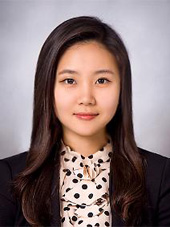
Kim Do-young, CEO-designate of Kakao X (Photo: Kakao)
From External Hire to Architect of “Kakao 4.0” in Just Over a Year
Kim stands out as a key figure in Kakao’s largest restructuring since its founding. After holding positions such as head of the M&A team and head of Corporate Finance Group 2 at Samsung SDS and SamsungSecurities, as well as Chief Financial Officer (CFO) of KOLON CORPORATION, he was recruited from outside the company to serve as CEO of Kakao Investment in March of last year. In February of this year, he took on the role of Head of the Group Investment Strategy Office at the CA Council.
Just over a year after joining Kakao, he has moved beyond investment strategy to take center stage in the restructuring of the corporate governance framework. On the 21st, Kakao introduced him as “the person who has led the review of the spin-off and preparations for its implementation.” During a briefing that lasted about an hour, Kim spoke for approximately 34 minutes and answered 15 of the roughly 19 questions raised.
The success of “Kakao 4.0” hinges on whether it can demonstrate—through the actual launch of AI services and the speed of monetization—that the burden of managing subsidiaries has been effectively alleviated. Jeong Shin-ah, CEO of Kakao, said, “This spin-off is a decision aimed at transforming Kakao into a structure with the speed and accountability required for the AI era.” Founder Kim Beom-soo also stated, “The AI era demands a whole new level of agility,” adding that the company would “redesign its growth structure with two engines: Kakao AI and Kakao X.”
Lisa Su, Chairwoman and CEO of AMD, concluded a meeting lasting over three hours with Jeon Young-hyun, President and CEO of SamsungElectronics and Vice Chairman in charge of the Device Solutions (DS) …
Epfeglenatide, developed by HanmiPharm, has received approval from the Ministry of Food and Drug Safety as the first domestically developed GLP-1-based obesity treatment. With this approval, Korea has…
A new domestically developed drug has emerged to compete in the obesity treatment market, which is currently dominated by global pharmaceutical companies. With HanmiPharm’s efeglenatide receiving mark…