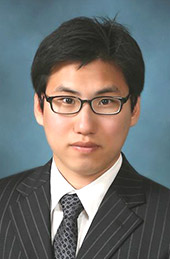
CEO of Shangya Bio, a Partner of Xcell Therapeutics Inc.: “China’s Collagen Skin Booster Market Reaches the ‘J’ Level… Changes Are Coming to Korea, Too”
[Edaily Reporter Kim Seung-kwon ] “The Chinese medical beauty market is already shifting its focus from hyaluronic acid (HA) to recombinant collagen. I believe the same shift will begin in Korea as well.”
Liu Yang, General Manager (CEO) of Xiangya Bio, made these remarks in a recent interview with Pharm E-Daily at the #Xcell Therapeutics Inc. headquarters in Gangnam-gu, Seoul. He predicted that, just as in China, the landscape of South Korea’s medical beauty market will also shift in the long term. He argues that the market will transition from the era of “hyaluronic acid (HA),” which focuses on volume and hydration, and PDRN, which promotes indirect regeneration, to an era of “recombinant collagen,” which excels in skin regeneration. He explained that this shift is already progressing rapidly in China.
At the center of this turning point are the Chinese regenerative medicine technology company “SHINYABIO” and the South Korean high-tech culture medium specialist “Xcell Therapeutics Inc.” The two companies recently signed an exclusive domestic distribution agreement for “triple-helix structure recombinant human collagen type III,” marking their full-scale entry into the competition to capture the South Korean skin booster market.
Liu Yang, General Manager (CEO) of SHINYABIO, who is currently visiting South Korea, clearly foreshadowed this period of market upheaval in an interview with Pharm E-Daily on the 26th. CEO Liu Yang emphasized, “The Chinese recombinant collagen market is experiencing high growth of over 40% annually,” adding, “It has already undergone a major transformation, completely replacing hyaluronic acid.”
Liu Yang, CEO of Xiangya Bio (left), and Lee Woon, Head of the China Business Division at Xcell Therapeutics Inc., pose for a commemorative photo after the interview (Photo courtesy of Xcell Therapeutics Inc.)
A Major Shift Beyond Hyaluronic Acid (HA) to “Recombinant Collagen”… The Blue Ocean of Skin Boosters Opens
Recombinant collagen is considered a clear “blue ocean” in the cosmetic and medical markets. According to industry sources, the global collagen raw materials market is expected to expand to approximately 27.3 trillion won by 2030. Some analyses suggest that, in the long term, the global scale of related industries—encompassing both cosmetic and medical devices—will approach a staggering 40 trillion won. The domestic market, still in its early stages of development, is also projected to experience high growth, reaching approximately 392 billion won by 2030.
Hyaluronic acid, which previously dominated the domestic skin booster market, boasts excellent moisturizing effects. However, it had clear limitations when it came to regenerating damaged tissue and fundamentally improving the skin’s condition. Recombinant collagen is the next-generation alternative that has completely overcome these limitations.
CEO Ryu Yang clearly defined the role of recombinant collagen. “Hyaluronic acid remains an excellent ingredient,” CEO Ryu stated, “and going forward, it will focus deeply on its core function of skin hydration.” He analyzed, “On the other hand, recombinant collagen will fully assume the fundamental regenerative role of collagen, the key protein that constitutes human tissue,” adding, “Ultimately, recombinant collagen will rapidly replace a significant portion of the existing market—which was dominated by hyaluronic acid—and lead the way in reshaping the industry.”
Amid this trend, the material independently developed by Xiangya Bio has transcended market limitations. Going beyond simple genetic recombination, it perfectly replicates the “triple helix” structure—the core of human collagen. Human collagen fundamentally possesses a triple-helix structure in which three long amino acid chains are tightly twisted together like a rope. Only when this structure is fully preserved can collagen exhibit its inherent strong tensile strength and exceptional regenerative capacity once it enters the body.
CEO Ryu emphasized, “Existing collagen products are primarily made from animal-derived materials, such as those from cows or pigs, which posed significant inherent limitations in terms of safety and immune responses,” adding, “We have applied a 100% recombinant technology that uses absolutely no animal- or human-derived materials.” He further explained, “This has ensured the complete safety and homogeneity of the raw material.”
The applications of “Type III Collagen,” which is being introduced proactively in Korea, are limitless. This is because it is directly involved in the regeneration of skin and connective tissue. Beyond serving as a simple cosmetic ingredient, it can be widely expanded into various high-value-added fields, such as high-performance skin boosters, implantable medical devices, and regenerative medicine.
CEO Ryu stated, “Only by fully realizing the triple-helix structure can we achieve an overwhelming advantage over competing materials in terms of cellular persistence and adhesion efficiency within the skin.” He added, “Our product demonstrates superior functional performance in terms of mechanical strength and in-vivo stability.” In fact, Shangya’s core material has become the first in the world to be successfully registered with the International Nomenclature of Cosmetic Ingredients (INCI) under the name “Recombinant Type 3 Humanized Collagen.” This effectively provides the company with a powerful asset for global expansion and market share growth.
Image of Shangya Bio’s collagen product (Photo courtesy of Xcell Therapeutics Inc.)
Building Patent Barriers with the Participation of a Nobel Laureate… A Bold Move for Cross-Selling Between Korea and China with Xcell Therapeutics Inc.
Behind Shangya Bio’s overwhelming technological prowess stands a steadfast ally: Nobel laureate Sir Martin John Evans. Sir Evans is a world-renowned British life sciences scholar and currently serves as Shangya’s Chief Technology Officer (CTO), playing an active role in the company.
CEO Ryu stated, “I have been collaborating with Sir Martin John Evans on research and development for a full 14 years.” CEO Ryu explained, “He is the world’s leading authority in the field of cell biology,” adding, “He has gone beyond mere consultation to take full charge of guiding our overall foundational technology.” Thanks to this, Shangya’s robust basic research achievements have been seamlessly translated into commercial applications in the medical beauty sector. This is the result of fantastic synergy between a solid patent portfolio and world-class research capabilities.
So why was Xcell Therapeutics Inc. chosen as the model partner to exclusively supply such outstanding next-generation materials to the Korean market? CEO Ryu emphasized “deep trust” and “outstanding culture medium technology” without hesitation. He recalled, “We have engaged in in-depth discussions with Xcell Therapeutics Inc. regarding cell culture media over the past three years.” He added, “I personally verified the overwhelming quality of Excel’s chemically defined media on-site, and I became firmly convinced that Excel—with its well-established sales and marketing network in Korea—is the ideal partner to secure a leading position in the market.”
From Xcell Therapeutics Inc.’s perspective, this collaboration holds significance that goes beyond simple product distribution. It marks a major turning point in refining the company’s core survival strategy and diversifying its business. Moving beyond its existing role as a specialist in cell and gene therapy (CGT) culture media, the company has embarked on a new strategy to establish itself as a platform for high-performance, cutting-edge biomaterials.
Lee Woon, Head of the China Business Division at Xcell Therapeutics Inc., clearly articulated the fundamental rationale behind this partnership. “Both companies are perfectly aligned in their philosophy regarding cutting-edge raw materials: overcoming the critical limitations of animal-derived materials and delivering materials with high safety and homogeneity,” he said.
Xcell Therapeutics Inc. has devised a strategy for rapid early market entry. The company plans to thoroughly benchmark the success formula of the Chinese market—which began with cosmetic ingredients and gradually expanded into high-value-added medical devices—for the Korean market as well. Lee said, “We are currently in close discussions regarding product supply with specialized sales and distribution teams in Korea that have primarily handled hyaluronic acid,” adding, “Although it may be somewhat unfamiliar in Korea, we will quickly build a track record starting with cosmetics.”
From a financial perspective, recombinant collagen is also expected to become a powerful cash cow for Excel. This is because, unlike the existing culture medium business—which requires a long time for various approvals, such as Drug Master File (DMF) registration—it enables immediate cash generation. Division Head Lee emphasized, “The collagen raw material business has very clear inputs and outputs, so revenue generation is noticeably fast.” The division head expressed confidence, stating, “We will swiftly expand into high-margin sectors such as medical and medical devices to firmly establish this as a core business pillar for the company, generating over 10 billion won in revenue within three years and reaching the tens of billions of won range within a few years.”
SamsungElectronics has ranked first in the general home appliance category for the fourth consecutive year in the “Digital Customer Experience Index (DCXI)” evaluation organized by the Korean Standard…
Global cosmetics Original Design Manufacturer (ODM) company COSMAX, INC.(192820)is participating in the launch of Indonesia’s first department specializing in cosmetics. The company plans to take the …
“The Chinese medical beauty market is already shifting its focus from hyaluronic acid (HA) to recombinant collagen. I believe the same shift will begin in Korea as well.”Liu Yang, General Manager (CEO…