[Market In] People Flock to an Island at Risk of Disappearing… Pasona’s Blueprint for “Venture Island”
An Experiment in Regional Regeneration Combining Jobs, Housing, Education, and Content
Expanding Collaboration with Korean Companies… Seeking to Spread the Awaji Model
[Edaily Marketin Soyoung Park Reporter] A major Japanese corporation has suddenly relocated part of its operations—which had been running smoothly—to a “region at risk of depopulation” where the population has been cut in half. The employees’ reaction was unexpected. As a steady stream of employees volunteered to relocate, nearly 2,000 staff members gradually gathered there. This is the story of the major human resources services firm, Pasona Group. In 2020, the company moved some of its headquarters functions from Tokyo to Awajishima in Hyogo Prefecture, Japan.
Awaji Island is located near Osaka and Kobe in Japan. Its population, which once reached 220,000, had declined to around 120,000 due to the exodus of young people to major cities. Now, however, Awaji Island is bustling once again. This revival began after the Pasona Group embarked on efforts to attract people, companies, and startups, and to create new industries to revitalize the local economy. Awaji Island is now emerging as a new model for overcoming the crisis of “regional depopulation” through private-sector leadership and pioneering a sustainable future.
Takuji Matsumura, Senior Executive Officer of the Pasona Group and President and CEO of Pasona Tourism, who oversees the Awaji Island regional revitalization project, emphasized, “For Pasona, the starting point of regional revitalization does not lie in mere financial support or facility development.” This underscores the importance of the philosophy that people must be able to move to the region and create new jobs and businesses there.
E-Daily met with Takuji Matsumura, President of Pasona Tourism, who visited South Korea to discuss cooperation in the tourism sector with the Korea Tourism Organization. We asked him about Pasona’s strategy and philosophy for revitalizing local ecosystems. We also examined Pasona’s blueprint for collaboration with South Korean companies and startups.
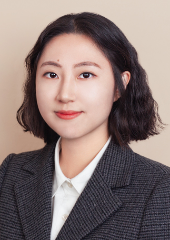
Takuji Matsumura, President and CEO of Pasona Tourism. (Photo courtesy of Pasona)
The Solution to Regional Decline Is “People”… Bringing Startups to Awaji
Takuji Matsumura, President and CEO of Pasona Tourism, explained that Pasona has been carrying out regional revitalization projects on Awaji Island since 2008, including the training of agricultural talent. At that time, Pasona created jobs that combined agriculture and the arts, fostering an environment where young people and professionals could work on the island. Since then, the company’s business scope has expanded to include tourism, culture and the arts, education, and wellness.
In 2020, Pasona announced that it would relocate some key functions from its Tokyo headquarters to Awaji Island. This was not merely a matter of moving offices. The company also worked to build a living environment to help its Tokyo employees settle on Awaji Island. For example, it converted underutilized facilities into office spaces and childcare centers and integrated housing with education, thereby expanding the infrastructure needed for employees and their families to live in the community. President Matsumura recalled that time, saying, “Our vision was to develop Awaji Island into a ‘regional revitalization model’ so that we could create new businesses and apply them to other regions as well.”
Pasona is currently focusing on four key initiatives on Awaji Island: △Wellness Life △International Hub △Art & Culture △Venture Island. By fostering diverse industries, the company aims to attract talent from various fields, creating a virtuous cycle in which these individuals, in turn, generate new business opportunities.
The development of “Venture Island” is being realized through the annual “Awaji Well-being Business Contest.” This year’s event, themed “Body, Mind, and Connection,” will take place on November 13. The contest covers a wide range of fields, including △healthcare △agriculture, fisheries, and food △entertainment △education △energy △artificial intelligence (AI) △robotics. The organizers are recruiting researchers, entrepreneurs, and startups in these fields. Final winners will be offered the opportunity to participate in an incubation program where business collaboration and scale-up with Pasona will be explored. Funding from a fund established by Pasona will also be considered.
Pasona plans to open this initiative beyond Japanese companies. “We aim to collaborate not only with Korean companies but also with companies from around the world that possess advanced technology and expertise,” he said. “In particular, we are very interested in Korea, where the content business, the entertainment industry, and related video technologies are highly developed.”
There are already actual examples of collaboration with Korean companies. In January of this year, Pasona established “PASONA VIV JAPAN” with VIV Technologies, a Korean immersive content production company. The two companies are commercializing AI- and extended reality (XR)-based content in Japan. They also plan to explore new business opportunities that combine wellness and entertainment.
A view of the PASONA office located in Awajishima. (Photo courtesy of PASONA)
It’s Not Enough to Just Attract Companies… Creating ‘Reasons to Stay’ Through Tourism and Wellness
Simply creating jobs is not enough to attract startups and talent to the region. There must be compelling reasons for people to leave the city and live on the island. Content is also needed to ensure that people and businesses from outside the region continue to visit the island. This is why Pasona has focused on developing tourism, lodging, cultural, and wellness facilities while simultaneously building a local venture ecosystem.
Wellness tourism is an area the company has been prioritizing recently. Last year, Pasona established a separate subsidiary with the goal of revitalizing the region through wellness tourism. In June of this year, it opened “THE PASONA natureverse retreat,” a long-term wellness facility on Awaji Island. This 57-room facility offers personalized programs centered on nutrition, exercise, and sleep.
Pasona is also working to link various businesses—including corporate training, business meetings, education, and wellness—with tourism. In line with this, Pasona Tourism aims to transform Awaji Island into an “island of gastronomy, culture, arts, and well-being.” The goal is to attract people from all over the world to Awaji Island. The company is also open to the possibility of tourism cooperation with South Korea. President Matsumura stated, “With the internationalization of Kobe Airport and the expansion of flight routes, we are discussing cooperation with organizations such as the Korea Tourism Organization to attract inbound tourists.”
The experiment that Panasonic is conducting on Awaji Island differs from the conventional formula that “attracting a single company will revitalize a region.” Instead, the approach involves bringing talent to the region, creating companies and startups where that talent can work, and jointly fostering a tourism, cultural, and educational environment where they can live and stay.
He said, “We have also set a goal to create a regional revitalization model capable of generating profits on Awaji Island and then expand it to other regions,” adding, “I believe the experiment underway on Awaji Island will serve as a reference case for South Korea, which faces similar challenges such as a low birth rate, an aging population, and population concentration in the Seoul metropolitan area.”
The three internet banks (KakaoBank Corp., Kbank, and Toss Bank) posted mixed results in the first half of this year. While KakaoBank Corp. and Toss Bank recorded their best results since their foundi…
DI DONGIL(001530)announced on the 31st that it will participate in the global textile exhibition “Première Vision Paris 2026,” to be held September 1–3 at Nord Villepinte in Paris, France. At this exh…
“I think we’ll be able to compete on nearly equal footing with China next year.”Kim Byung-soo, CEO of ROBOTIS(108490), expressed this confidence regarding the achievements of the humanoid robot develo…