[Market In] “Even if you design 10,000 drones, it’s all for nothing if you can’t build them… We must aim for defense industry supremacy through production”
Interview with Kwon Hyuk-hyun, CEO of F4GE
Capable of handling everything from small-batch, high-variety production to mass production
“We Must Export ‘How to Produce’ Itself, Not Just Finished Products”
[Edaily Marketin Soyoung Park Reporter] “Artificial intelligence (AI) models are spreading rapidly, and software is easily replicated. However, the same cannot be said for the manufacturing know-how, skilled workforce, quality systems, supply chains, and production capacity that have been built up over decades. The production system itself is a key technology.”
Kwon Hyuk-hyun, CEO of F4GE, cited “manufacturing” as South Korea’s greatest competitive advantage in the AI era during a recent interview with E-Daily. He explained that even if new AI models emerge in the U.S. or new drones are designed in Europe, deploying thousands of them in the real world ultimately requires the production capacity to turn them into actual products.
CEO Kwon served in the Republic of Korea Navy’s Special Warfare Command (UDT SEAL) and founded a defense tech startup in the United States. He later worked at the global venture capital firm 500 Global, where he was responsible for investments in dual-use and deep tech. During this time, he identified “production bottlenecks.” Consequently, he returned to the front lines by founding F4GE, an AI-based precision manufacturing company.
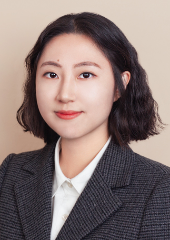
Kwon Hyuk-hyun, CEO of Forge, outlines the direction South Korea’s defense industry should take in the era of Physical AI. (Photo: E-Daily Reporter Kim Tae-hyung)
“Even with great technology, it’s useless if you can’t mass-produce it.”
Kwon Hyuk-hyun, CEO of Forge, described the Russia-Ukraine war as the first “Physical AI” battlefield. This is because AI- and software-based drones, unmanned systems, and autonomous systems were deployed on a massive scale. Another reason is that a cycle has emerged in which weapons systems are redesigned and deployed within weeks or months based on data gathered from the battlefield.
However, as actual demand increased, a new problem emerged: production. CEO Kwon stated, “Building a single high-quality drone or robot is a completely different challenge from producing thousands or tens of thousands of units of the same quality at a low price,” adding, “From engines and motors to machined parts, electronic equipment, materials, assembly, quality control, and the supply chain—ultimately, physical production capacity has become the factor determining the speed of technology diffusion.”
Forge was established to address this “production gap.” It brings together defense, aerospace, robotics, and mobility companies, along with various manufacturers, into a single production network. Forge then acts as the sole production partner.
Forge is currently collaborating with more than 25 manufacturing partners, primarily in Changwon, Sacheon, Masan, and Busan. Combined, these partners’ capabilities—including precision machining, CNC lathes, 5-axis machining, casting and forging, molds, and electronic and inspection equipment—connect to a production facility comprising approximately 400 machines. The company currently provides distributed manufacturing services that accommodate everything from high-mix, low-volume production to mass production. It orchestrates the equipment and processes of various manufacturers as if they were a single factory.
Forge deploys its proprietary software, “Cell OS,” to connect equipment and production data across these facilities. Specifically, it structures information regarding: △ what each piece of equipment can produce; △ the available production capacity; and △ how quality data is generated for each process. In the long term, the company aims to transform the “tacit knowledge” inherent in Korea’s manufacturing sector into software assets. This includes machining methods, equipment conditions, and optimal process combinations accumulated in the minds of skilled production engineers.
CEO Kwon stated, “We want to create a layer that enables Korea’s manufacturing know-how—which was previously tied to specific factories and individuals—to be transferred, replicated, and exported,” adding, “Ultimately, we aim to go beyond Manufacturing-as-a-Service to provide factory infrastructure as a service (Factory-as-a-Service) and, furthermore, to commercialize the factory operating system itself (Factory-as-a-Product).”
Forge recently completed a pre-seed funding round. Participants in this round included △K-Net Investment Partners △Naver D2SF △Saje Partners △500 Global △D.Camp △RFCore, among others. The funds raised will be used to deploy Cell OS in manufacturing facilities. The company also plans to invest in expanding its customer base in North America and Europe.
“Defense production infrastructure must be built during peacetime”
CEO Kwon viewed manufacturing competitiveness not merely as a corporate issue but as a matter of national security. He believes the industry should not wait for government policies to be implemented.
He pointed out that Europe failed to prepare for the possibility of being drawn into another large-scale war following the 2014 annexation of the Crimean Peninsula. As a result, after the war in Ukraine began in 2022, Europe attempted to rapidly increase production capacity for ammunition, drones, and various components, but the industrial infrastructure could not be established immediately.
He also mentioned that South Korea-U.S. defense cooperation should evolve beyond the export of finished products toward the two countries sharing a single industrial base. This opinion is based on the expert insights he has gained while serving as a non-resident fellow at the Stimson Center’s Korea Program, a U.S. think tank. His research focuses primarily on manufacturing, AI, defense, and supply chain issues.
“As seen in the case of Ukraine, it is nearly impossible to suddenly increase production capacity after a war breaks out,” said Kwon. “We must identify which factories can produce which components during peacetime and ensure compatibility in quality standards and certifications so that both countries can utilize each other’s production capabilities when needed.”
In particular, he believes that South Korea must not remain merely a country that is protected within the U.S. supply chain. Instead, his view is that the country must become part of a “trusted supply chain” that is difficult to replace.
“I believe South Korea can take a step further from being a manufacturing nation that excels at producing and exporting finished goods to becoming a nation that exports the solutions themselves—that is, how to produce,” he said, emphasizing, “Ultimately, the blueprint that Forge envisions is a production infrastructure akin to Amazon Web Services (AWS) in the era of Physical AI.”
“Artificial intelligence (AI) models are spreading rapidly, and software is easily replicated. However, the same cannot be said for the manufacturing know-how, skilled workforce, quality systems, supp…
Changxin Memory Technology (CXMT), China’s largest DRAM manufacturer, has expanded its research and development (R&D) workforce by more than 60% in just one year. CXMT’s R&D workforce has now closed t…
Kakao(035720)has effectively completed training its proprietary large language model (LLM), “Kanana,” which has 155 billion (155B) parameters. This is more than five times larger than the 30B model pr…