[Edaily Reporter Kim Seung-kwon ] #SkyLabs is taking the final steps toward entering the U.S. market.
Lee Byung-hwan, CEO of SkyLabs, met with E-Daily on the 7th and stated, “Since the cuffless continuous blood pressure monitor must go through the De Novo approval process, the clinical trials are challenging. We are aiming for approval from the U.S. Food and Drug Administration (FDA) next year,” adding, “We are in discussions with Otsuka Pharmaceutical as a partner for hospital-use products in the U.S.”
De Novo is an FDA approval pathway applied to new types of medical devices that do not yet exist. Since there are no comparable existing products, a significant amount of clinical evidence is required. SkyLabs has completed a pre-submission consultation (Q-Submission) with the FDA. It will soon begin the Institutional Review Board (IRB) review process and patient enrollment. The target completion date for the clinical trial is the first half of 2027.
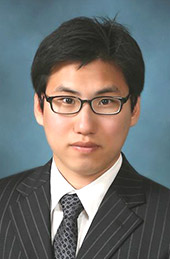
SkyLabs CEO Lee Byung-hwan being interviewed by PharmDaily (Photo: SkyLabs)
“Otsuka in Japan, Omron in China”… A Two-Track Approach in the U.S. as Well
SkyLabs’ overseas strategy is clear: it involves separating partners for hospital-use and home-use products. Japan serves as the model for this approach. In February of this year, the company signed an exclusive distribution agreement with Otsuka Pharmaceutical for “Cart BPI Pro” in Japan. Omron Healthcare handles the home-use segment; the two companies signed a distribution agreement for co-branded wellness products in Japan last March.
CEO Lee explained, “Omron Healthcare is the company that sells by far the most home blood pressure monitors,” adding, “They don’t actually do hospital sales very well.” He continued, “Companies that are good at selling to hospitals handle the hospital-use segment better,” and added, “That’s why we’re partnering with a pharmaceutical company.”
The company plans to apply the same structure in the U.S. Omron Healthcare is the leading candidate for the home-use segment, while Otsuka is being mentioned as a potential partner for the hospital-use segment. CEO Lee said, “Otsuka has a subsidiary in the U.S.,” explaining, “It has a subsidiary that performs renal denervation procedures to lower blood pressure in cases of arrhythmia and hypertension. It’s a company engaged in the hospital business.”
In addition to Otsuka, the company is receiving a steady stream of interest from local U.S. distributors. CEO Lee explained, “We’re already receiving inquiries from many companies,” adding, “As our technology has gained widespread recognition backed by solid evidence, we’re receiving active requests from the U.S. as well.”
In Europe, the company is adopting a structure of partnering with distributors on a country-by-country basis. Last month, it signed a contract with IEM, a German company specializing in ABPM, and is currently conducting separate negotiations with leading local players in other countries.
In China, the company is working to expand its business in partnership with Japan’s Omron. CEO Lee noted, “China is Omron’s second-largest market.” However, this process is taking time due to lengthy licensing procedures. The company is not considering establishing a local subsidiary. He explained, “If we were to become a Chinese company, there’s a high risk that our trade secrets and technical know-how could be compromised,” adding, “We’re approaching the Chinese market as a foreign company.”
Oura and Galaxy Ring Entering the Market? “Wellness Isn’t Our Domain”
The smart ring market is currently a battleground. Oura has begun full-scale marketing in Korea, and Samsung Electronics’ Galaxy Ring has also announced plans to expand its features. However, CEO Lee does not view this as a threat. On the contrary, he explained that it is actually a positive development. “The entry of wellness products is actually better for medical-grade products,” he said.
He cited the example of smartwatches. While smartwatches have expanded to include features such as ECG, it remains difficult for them to be adopted for hospital use. CEO Lee explained, “Although ECG features have been added to the Apple Watch and Galaxy Watch, they aren’t used for medical purposes.” He added, “Instead, public interest has grown, leading to an increase in the number of people seeking medical care. The market for diagnosing and treating arrhythmias has expanded as a whole.”
He explained that the same applies to form factor recognition. “The fact that people are becoming familiar with the ‘smart ring’ form factor is a positive development for us,” he said.
He also viewed Oura’s push for a Nasdaq listing in the U.S. as a sign of the market’s scale. Since the markets themselves are different, he suggested that Oura’s promotional efforts both domestically and internationally could actually be beneficial. CEO Lee emphasized, “Wellness is not our area of focus,” adding, “It’s a sector that requires significant marketing spending, whereas we are a medical device company.”
The reason he remains largely unshaken by the entry of Oura and Samsung Electronics is that SkyLabs has already established an overwhelming lead in product accuracy. “There’s so much that needs to be done to develop a ring as a medical device,” he said. “The most difficult challenge is the cuffless blood pressure monitor—everyone makes claims, but no company has proven it yet.”
In fact, SkyLabs spent more than six years on the project, from development through clinical trials. Securing clinical evidence alone took three to four years. CEO Lee shared, “We recently presented at a session of the European Society of Hypertension, and Professor George Stergiou of Greece, who chaired the session, remarked that we are ‘almost the only company that meets the validation criteria set by the society.’”
He explained that their partner, Omron, had also run into the same obstacle. “Omron Healthcare tried to develop one for a long time, but ultimately couldn’t achieve the required accuracy,” he said, adding, “A blood pressure monitor is only useful if it’s accurate.” Addressing concerns about technology imitation, he drew a clear line, stating, “It’s not a matter of embedding an algorithm inside the device; the structure isn’t such that someone could simply copy it just by having the device.”
“Technological capability does not automatically guarantee funding.” This is a common saying in the energy and climate tech ecosystem. This is because technology development takes a long time, and com…
The domestic department store industry is actively working to attract Gen Z customers (born in the mid-to-late 1990s through the early 2000s). They are attracting young people through pop-up stores fe…
ST Pharm Co., Ltd.(237690)continued to post year-over-year revenue growth in the third quarter of this year, driven by its oligonucleotide (oligo) commercialization project and expanded sales in its s…