[Edaily Reporter Kim Seung-kwon ] "I was impressed by South Korea's AI medical technology. If accurate, clear, and objective indicators are automatically provided, it could significantly reduce the burden on medical staff in the treatment of stroke. I believe it will play a valuable role in Japan."
Yuki Sakamoto, a professor of neurology at Nippon Medical School, summarized the role that medical imaging artificial intelligence (AI) will play in the treatment of acute strokes in this way. He is recognized as an authority on strokes in Japan and led a study that directly validated JLK, Inc.(322510)’s MRI analysis solution, “JLK-DWI,” using data from Japanese patients. PharmDaily conducted a written interview with a Japanese neurology expert to explore the practicality of medical AI in the field of stroke.
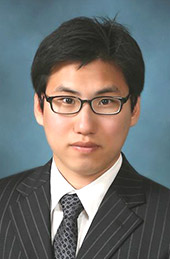
Yuki Sakamoto, Professor of Neurology, Nippon Medical School
“AI Measurements on Par with Specialists”… The Findings from 371 Patients and 677 Images
The most common hurdle Korean medical AI companies face overseas is “local data.” The reality is that discussions regarding adoption rarely make progress unless local medical professionals confirm that the technology delivers the same performance even in environments where ethnicity, equipment, and imaging protocols differ.
Against this backdrop, the research began with a long-standing challenge in clinical practice. The volume of cerebral infarction lesions identified on diffusion-weighted imaging (DWI) is a key indicator for determining whether to administer acute-phase treatment, but manual measurement requires significant time and effort. This is why quantifying lesions has always been a challenge in acute-phase care, where every second counts.
To determine whether AI could take over this task, Professor Sakamoto’s research team analyzed 677 DWI images from 371 acute stroke patients who had undergone thrombectomy using JLK-DWI. The results showed that the AI’s automated measurements demonstrated a high degree of agreement with manual measurements by stroke specialists. The AI’s performance in predicting patient prognosis was also found to be on par with that of specialists. The research findings were published in the international academic journal *Journal of Neuroscience*. Since this was a validation study conducted by researchers at a Japanese university hospital using domestic patient data—rather than an in-house test conducted by JLK, Inc.—it is interpreted as reflecting an assessment from within the local medical community.
Professor Sakamoto described his hands-on experience as “generally positive.” He noted, “JLK-DWI was intuitive and easy to operate, and the automated analysis results were presented in an easy-to-understand manner.”
The assessment suggests that the technology goes beyond simply aiding in interpretation and has the potential to alter patient pathways themselves. For stroke, the key is to transport patients to a hospital capable of performing appropriate procedures within the therapeutic time window. Since thrombolysis is a reperfusion therapy that restores blood flow to blocked vessels, the speed and accuracy with which the extent of damaged brain tissue is assessed are directly linked to the decision on whether to proceed with the procedure. This suggests that obtaining an objective measure—the lesion volume—early on reduces the time needed to decide whether to transfer a patient and to which destination.
In fact, he believed that quantified volume data could transform the entire clinical workflow, going beyond treatment decisions for individual patients. Professor Sakamoto explained, “When the quantified volume of a cerebral infarction is presented, it becomes easier and clearer to determine eligibility for acute-phase treatment,” adding, “This can optimize the treatment workflow—including intra-hospital multidisciplinary collaboration and inter-hospital patient transfers for reperfusion therapy—and lead to improved patient outcomes.”
Outlook for JLK, Inc.’s Sales Network in Japan (Photo: JLK, Inc.)
“Will Play a Major Role in Rural and Island Regions”… Remaining Hurdles Are Safety and Reimbursement Rates
Professor Sakamoto identified MRI infrastructure as a key factor in the Japanese market’s potential. He noted, “Japan has a very high number of MRI units installed, and many hospitals and clinics in regional medical institutions are equipped with MRI equipment,” adding, “MRI-based medical imaging AI could play a major role in stroke care in Japan.”
In fact, Japan ranks among the world’s top countries in terms of MRI penetration relative to its population. When acute stroke patients arrive at a hospital, many facilities routinely perform MRI DWI scans rather than computed tomography (CT) scans, resulting in a treatment structure that differs fundamentally from that of the U.S. and Europe, where CT is the standard. Given the domestic industry’s focus on CT-based solutions, this creates an opening for companies with MRI analysis capabilities to enter the market.
He also emphasized the potential for such technology in regional healthcare, which suffers from a shortage of specialists. Professor Sakamoto said, “With reliable medical imaging AI, even physicians who are not specialized in acute stroke care can receive support for diagnosis, determining treatment eligibility, and predicting prognosis,” adding, “This will be particularly useful in rural or island areas with limited medical resources.”
Japan is facing a growing burden of stroke management due to rapid aging, but there are not enough specialists capable of treating acute strokes. The emphasis is not on AI replacing specialists, but rather on filling the gaps in areas where specialists cannot reach. In the same vein, there is speculation that regional medical institutions—which have the equipment but lack personnel to interpret the images—could become the primary market for medical imaging AI.
However, he pointed out that there are hurdles to overcome before medical imaging AI can become firmly established in clinical practice. These include technical safety, local clinical validation, and reimbursement systems. Professor Sakamoto emphasized, “Since medical images contain sensitive medical information, safety must be ensured during server operation and integration with hospital systems,” adding, “We also need an environment where the consistency between AI analysis and specialist evaluations can be verified using Japanese patients, and where the value of the technology is recognized through reimbursement rates and other mechanisms.”
All three conditions are issues distinct from product performance. In particular, the reimbursement system is seen as the tipping point where medical AI transitions from a “technology worth trying” to a “technology hospitals have a reason to adopt.” The fact that, no matter how accurate the analysis results may be, hospitals have little incentive to adopt the technology if they are not reimbursed through medical fees is a structural constraint that the domestic industry has already experienced.
JLK, Inc. has been preparing to enter the Japanese market by fulfilling these conditions one by one. The company has secured approvals from Japan’s Pharmaceuticals and Medical Devices Agency (PMDA) for its stroke AI solutions, including “JLK-CTP,” “JLK-PWI,” “JLK-NCCT,” and “JLK-FLAIR.”
A JLK, Inc. official stated, “We are also accumulating local validation evidence based on Japanese patients, as demonstrated by this study,” adding, “Based on cooperation with local distribution partners, integration with hospital imaging systems, and reviews of insurance coverage, we plan to accelerate our expansion into the MRI-centric Japanese stroke market.”
SamsungElectronics is accelerating its push into the on-device artificial intelligence (AI) memory market by validating its low-power memory, LPDDR6, on Qualcomm’s “Snapdragon 8 Elite Extreme 6th Gene…
This Chuseok, rest stops are handing out gum, and car washes are offering non-alcoholic beverages. The food and beverage industry is expanding its reach to drivers embarking on long-distance trips for…
"I was impressed by South Korea's AI medical technology. If accurate, clear, and objective indicators are automatically provided, it could significantly reduce the burden on medical staff in the treat…