[Edaily Reporter Kim Seung-kwon ] A-Sleep is partnering with Hyundai Engineering & Construction, Samsung Electronics, and others to fully launch its “Sleep Orchestra” business, which automatically controls the bedroom environment. The system adjusts temperature, humidity, lighting, and music according to the user’s sleep stages while they are asleep, and will make its debut in new apartment complexes in the fourth quarter of this year.
Lee Dong-heon, CEO of A-Sleep, said at the BioStudy event recently held at KG Group’s Harmony Hall, “Our goal is to create a wallpad for the bedroom, just as there is one in the living room,” adding, “The bedroom is still an untapped market.”
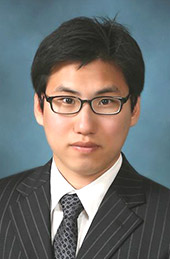
Lee Dong-heon, CEO of A-Sleep (Photo: A-Sleep)
“Raise the temperature for deep sleep; increase humidity if you snore”
A-Sleep is a sleep tech company that uses AI to analyze breathing sounds recorded via a smartphone microphone to identify sleep stages and sleep disorders. The company operates on two main pillars: medical devices prescribed by hospitals and bedroom environment solutions. CEO Lee cited the absence of sleep disorders and a favorable bedroom environment as the key conditions for good sleep. He pointed out, “Even if you don’t have any disorders, you can’t sleep well if the bedroom is too hot or too cold, or if the air quality is poor.”
A-Sleep’s flagship “Sleep Orchestra” product is the “Sleep Hub.” It uses breathing sounds to determine whether the user is awake, in light sleep, deep sleep, or REM sleep, and then simultaneously adjusts bedroom devices accordingly. CEO Lee explained, “The bedroom adjusts itself while the customer is asleep,” adding, “The key is to ensure the person remains in deep sleep without waking up.”
The first factor SleepHub targets is temperature. During deep sleep, a person’s body temperature drops by about 1–2 degrees, causing them to wake up from the cold, while during REM sleep—when body temperature rises—they are prone to waking up from the heat. SleepHub raises the room temperature when deep sleep is detected and adjusts the temperature during REM sleep to prevent waking from the heat, thereby reducing arousal.
Humidity is another key control factor. Snoring and sleep apnea can result not only from congenital factors but also from a dry bedroom environment. However, if the humidity is too high, it can actually make it difficult to fall asleep. For this reason, SleepHub increases humidity only when snoring is detected. In addition, the system controls air quality, lighting, sleep-inducing music, and even scent.
The scientific evidence varies depending on the control factor. CEO Lee stated, “Temperature is the area with the most established scientific evidence regarding sleep,” adding, “While scientific understanding of music and lighting is still developing, customers are experiencing their benefits firsthand, and these features are already selling well.” The company likens this concept to a seven-course meal and calls it “Fine Sleeping.” It allows customers to select and combine the control elements they desire. A-Sleep views the bedroom business as a five-year initiative and is currently gathering partners in each sector.
Measurement accuracy is a prerequisite for this business. iSleep trained its AI using breathing sound data recorded alongside approximately 10,000 polysomnography tests. In a comparative study conducted by the Stanford Sleep Center and others, the AI demonstrated a 94% level of agreement with polysomnography results. Regarding this, CEO Lee emphasized, “Most sleep trackers on the market merely display a user’s status, but since our device must intervene, the measurements cannot be inaccurate,” adding, “If the algorithm is triggered based on the assumption that a person who is awake is actually asleep, it will malfunction.”
A-Sleep being introduced as a real-time environmental control partner solution at the Samsung Electronics booth at CES 2026 (Photo courtesy of A-Sleep)
Hyundai Construction Makes Its Debut with ‘HeySleep’… “The Bedroom Isn’t Just About the Mattress”
Sleep Orchestra’s first project is a newly constructed apartment complex. Last May, A-Sleep announced the co-branded “HeySleep” initiative with Hyundai Construction. “HeySleep” will be offered as an optional feature in the DH Bangbae complex in the fourth quarter of this year and in the Banpo complex in July of next year. The system integrates the boiler, ventilation, music, motorized curtains, and central and indirect lighting all through a single Asleep tablet. CEO Lee revealed, “We’ve even received proposals to include it as a standard feature in some complexes.”
The company is also expanding its partnerships with home appliance manufacturers. He explained, “Since construction companies with their own properties are willing to pay for our system, home appliance manufacturers are proactively approaching us with collaboration proposals.” In January of this year, Samsung Electronics demonstrated the integration of the A-Sleep controller with its Bespoke air purifiers and air conditioners in the “Sleep Care” zone at its CES booth.
iSleep has joined as an official SmartThings partner. eSleep technology has also been integrated into Kyungdong Navien’s line of sleep-enhancing mattresses, and the company has formed a partnership with Ceragem to enable device integration. At a pop-up event held in March at the Hyundai Department Store in Pangyo, eight companies—including Kyungdong Navien, Samsung Electronics, Ceragem, Chong Kun Dang, and Kakao Healthcare—exhibited bedrooms based on eSleep technology.
The business model is based on device sales. Prices range from several hundred thousand won per unit to tens of millions of won for a full setup. Although installation fees and the cost of purchasing a Samsung Electronics tablet are incurred, the business model is structured to generate higher margins through software.
Regarding profitability, CEO Lee commented, “While the operating profit margin will be lower than that of medical device apps, it’s an attractive challenge in terms of price and volume since it doesn’t require going through medical professionals.” He added, “The more households there are, the greater the economies of scale, so we’re focusing on newly constructed complexes.” The company stated that cash flow began to materialize in the second half of this year, primarily from complexes that have adopted HeySleep.
There are challenges, however. Installation in existing homes remains difficult because the home appliance brands vary widely. As this is the company’s first attempt at deploying hardware as a software firm, it must also streamline installation processes and establish an after-sales service system. Hardware after-sales service is handled by the respective manufacturers, while A-Sleep provides remote software support. The company plans to launch a remodeling model in collaboration with interior design firms next year. It is also targeting existing households through integration with IoT platforms such as SmartThings.
The company also opened up about the trial and error it has experienced along the way. CEO Lee reflected, “Over the past five years, I’ve learned that it’s truly difficult to sell something as invisible as sleep in an invisible way.” He added, “I’m not sure yet if the tablet is the right answer, but construction companies are purchasing them, and there are customers who like seeing their sleep graphs displayed on a large screen, so actual sales conversions are happening.”
The foundation of the company’s investment is its medical device business. “M-Notrack,” a sleep apnea diagnostic aid co-marketed with Chong Kun Dang, was adopted by more than 400 hospitals and clinics within eight months of its launch. In September, the company launched “ChronoTrack,” a sleep rhythm disorder monitoring device, in partnership with Handok. CEO Lee expressed his aspirations, saying, “Just as Samsung started by selling rice and then moved into making clothes, medical devices are our ‘rice.’ When people think of sleep, they only talk about mattresses or pillows, but we will bring about a shift in perception to recognize that the bedroom environment is the most important factor.”
Construction on the Yongin National Industrial Complex for Advanced System Semiconductors, a project involving an investment of approximately 360 trillion won by SamsungElectronics, is set to begin th…
The KRX Health Care Index rose 4.53% from the previous session on Oct. 1, signaling a rare tailwind for South Korea’s pharmaceutical and biotech sector. Among the gainers, GIInnovation and G2GBio drew…
(Graphic: ChatGPT)
“While existing ex vivo chimeric antigen receptor T-cell (CAR-T) therapies are personalized treatments that require cell collection from each patient for manufacturing, the in v…