[Edaily Reporter Kim Jinsoo ] Kim Seong-yeon, a director at Genosco and the only son of former OSCOTEC Inc. founder Kim Jeong-geun as well as the largest shareholder of OSCOTEC Inc.(039200), is moving to restructure the board of directors to gain a stake in OSCOTEC Inc.’s management. Director Kim plans to appoint three new directors, including himself, through an extraordinary general meeting of shareholders and to abolish the supermajority voting system, which has prevented directors nominated by shareholders from joining the board.
The core of this board restructuring is the abolition of the “supermajority voting system.” Director Kim’s camp is taking issue with the fact that, even though a court ruled last year that the key supermajority voting clause was invalid, OSCOTEC Inc. has continued to appeal, and despite the largest shareholder’s official request for the board to discuss withdrawing the appeal, no substantive conclusion has been reached. Ultimately, they explain that they determined there were limits to simply demanding institutional reforms from outside the board, leading them to take direct action by convening an extraordinary general meeting and seeking seats on the board.
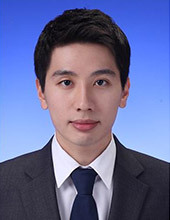
Kim Seong-yeon, Director of Genosco. (Photo courtesy of the individual) In a phone interview with E-Daily on the 28th, Director Kim said, “I intend to join the board of directors to properly discuss various pending issues and resolve the situation,” adding, “I will achieve stability and enhance shareholder value through responsible decision-making within the board.”
On the 17th, Director Kim filed a request to convene an extraordinary general meeting of shareholders to abolish the supermajority voting system and elect three new directors. OSCOTEC Inc. stated that the request was received on the 18th. However, when the board of directors failed to vote on a motion to withdraw the appeal during its meeting on the 21st, Director Kim concluded that a resolution at the company level was effectively impossible. Consequently, on the 22nd, he filed an application with the Seongnam Branch of the Suwon District Court requesting authorization to convene a shareholders’ meeting and the appointment of a separate chairperson.
Director Kim’s side turned to the court because they believed it would be difficult to leave the decision on whether to hold the extraordinary general meeting and how to handle the agenda items solely to the judgment of the current board of directors. The candidates proposed by Director Kim are Ko Jong-sung, CEO of Genosco, as an inside director; Director Kim himself as a non-executive director; and Professor Park Jong-cheol as an independent director.
Director Kim emphasized, “The core objectives of this extraordinary general meeting are to delete the articles of incorporation provisions related to the supermajority voting system and to bring new members onto the board of directors.”
Director Kim’s push to join the board is linked to the changes in corporate governance that followed the failure to reappoint then-CEO Kim Jeong-geun as an executive director at the annual general meeting last March. At that time, shareholders who opposed Genosco’s separate listing rallied together, leading former CEO Kim to step down from the board; since then, OSCOTEC Inc. has been operated primarily by professional managers such as Yoon Tae-young and Lee Sang-hyun.
Although Director Kim, who inherited shares following the passing of former CEO Kim, has become the largest shareholder, he is currently unable to participate in board resolutions. Consequently, as the largest shareholder, Director Kim is seeking to join the board to directly participate in key issues such as research and development (R&D) investment, fundraising, and attracting strategic investors.
Even though the court ruled it invalid… the board of directors remains silent
The supermajority voting system significantly restricts shareholders’ ability to hold the board of directors accountable. Articles 2–5 of Article 27 of OSCOTEC Inc.’s Articles of Incorporation require the approval of at least 80% of the total issued shares for the simultaneous removal of two or more directors, the appointment or removal of directors based on shareholder proposals, and the appointment or removal of directors in connection with hostile mergers and acquisitions (M&A).
Even for the same director appointment motion, if the board of directors recommends a candidate, a simple majority vote applies; however, if a shareholder proposes a candidate, an 80% approval rate is required. In fact, at last year’s annual general meeting, the motion to appoint Kwon Yong-je—a shareholder-nominated candidate for inside director—was rejected because, despite receiving a majority of votes, it failed to meet the supermajority requirement.
The court also put the brakes on this structure. On November 28 of last year, the Seongnam Branch of the Suwon District Court ruled in a lawsuit filed by 47 shareholders that the General Shareholders’ Meeting resolution regarding Article 27, Paragraph 3 of the Articles of Incorporation—which requires an 80% approval for the appointment or removal of directors proposed by shareholders—and the portion of Paragraph 5 that upholds this provision, was invalid. The court held that imposing different resolution requirements on proposals made by the board of directors and those made by shareholders violates the principle of shareholder equality and unduly restricts shareholders’ right to propose resolutions. OSCOTEC Inc. appealed the decision, and the case is currently pending in the appellate court.
The reason Director Kim’s side takes issue with the current board’s stance is that, even after the first-instance ruling, no substantive steps have been taken to abolish the supermajority voting requirement. Director Kim had been demanding its abolition since late 2024 and, following the first-instance ruling, even conveyed the opinion that the company should accept the ruling rather than appeal.
However, OSCOTEC Inc. chose to appeal. According to Director Kim’s side, even during discussions with management in July of this year regarding the appeal, they were told that if the company lost in the appellate court, it might proceed to the Supreme Court. This has heightened concerns that uncertainty surrounding the supermajority voting system could persist for an extended period if the lawsuit reaches the Supreme Court.
Consequently, on August 10, Director Kim’s side requested, through their representative, that the withdrawal of the appeal be formally placed on the board’s agenda for deliberation. On the 28th of the same month, OSCOTEC Inc. replied, stating that “whether to maintain or withdraw the lawsuit is a matter to be independently determined by the board based on the interests of OSCOTEC Inc. and all shareholders.”
However, according to Director Kim’s side, there was no specific answer regarding when the board would discuss the motion to withdraw the appeal or whether an actual vote would be held. Director Kim explained, “Even after sending a certified letter demanding that the decision to withdraw the appeal be put to a board vote, it was not carried out,” adding, “I also heard that while an outside director convened a board meeting to discuss the matter, no vote actually took place.”
Ultimately, as neither the demand to abolish the supermajority voting system nor the demand to withdraw the appeal led to a substantive conclusion, Director Kim’s side shifted course toward pushing for an extraordinary general meeting where shareholders could decide directly. This marks a gradual escalation in the level of response: “demand to abolish the supermajority voting system → demand to withdraw the appeal → request for an extraordinary general meeting → application to the court for permission to convene the meeting.”
“Agree to Abolition” While Maintaining the Appeal
OSCOTEC Inc. maintains that it does not oppose the abolition of the supermajority voting system. The company stated through the media, “The current board of directors also agrees to the abolition, and we are reviewing the procedures in accordance with the law and the articles of incorporation regarding the request to convene an extraordinary general meeting.”
However, Director Kim’s side questions whether this explanation is actually translating into concrete action. This is because, despite claiming to agree to the abolition, the company is maintaining its appeal against the court ruling that deemed the relevant clause invalid; furthermore, even though the largest shareholder requested that the board formally deliberate on whether to withdraw the appeal, the board has yet to reach a clear conclusion.
As long as the supermajority voting system remains in place, its most direct effect is the preservation of the current board composition. This is because a 80% approval rate—which is virtually impossible to achieve—is required for shareholders to nominate new directors to join the board or to replace existing directors. Given that the largest shareholder and major shareholders are demanding the abolition of the system and the court has ruled key provisions invalid, critics argue that if the appeal is continued, the current board must provide a more specific explanation of why it is necessary to maintain the system and continue the litigation.
Director Kim stated, “I don’t understand why the current board members are reluctant to abolish the supermajority voting system,” adding, “If they intend to maintain the supermajority voting system even as the largest shareholder and major shareholders are demanding its abolition, they must explain who this system is intended to benefit.”
Director Kim’s agreement to exercise voting rights jointly with the camp of Lee Ki-yoon, Chairman of JK Asset and the second-largest shareholder, is also a move aimed at changing this dynamic. Director Kim’s personal stake is 8.72%, rising to 12.45% when including related parties; combined with the shares held jointly with JK Asset, this totals 22.25%.
At this extraordinary general meeting, Director Kim’s side proposed a motion to first delete Article 27, Paragraph 5 of the Articles of Incorporation, followed by the removal of Paragraphs 2 through 4. Paragraph 5 acts as a kind of “lock-in” provision, requiring an 80% majority vote even for amendments to Paragraphs 2 through 4. Director Kim’s side is pursuing a strategy of first removing Paragraph 5—since it can be deleted via a special resolution under the Commercial Act—and then eliminating the remaining supermajority voting provisions.
The request to the court to appoint a separate chairperson for the shareholders’ meeting stems from the same rationale. They believed that if the current board of directors were to change the order of the agenda items or combine them, it could lead to another dispute over the resolution requirements.
The OSCOTEC Inc. Board of Directors currently consists of seven members. Rather than immediately dismissing the existing board members, Director Kim plans to add three new directors he has recommended, operating under a 10-member structure while cooperating with the existing board. Since key decisions cannot be driven solely by the candidates recommended by Director Kim’s side, cooperation with the existing board members is necessary.
Director Kim stated, “Through this extraordinary general meeting, we need to restore the positive functions of shares, such as participation in management,” adding, “We can enhance shareholder value only by improving corporate governance—starting with the supermajority voting system—and presenting a new image.”
LG Energy Solution surpassed 9 trillion won in revenue for the third quarter of this year, achieving its highest quarterly revenue to date. Operating profit also reached 756 billion won, marking two c…
Kim Seong-yeon, a director at Genosco and the only son of former OSCOTEC Inc. founder Kim Jeong-geun as well as the largest shareholder of OSCOTEC Inc.(039200), is moving to restructure the board of d…
Rendering of Peptron, Inc.’s new plant. (Photo courtesy of Peptron, Inc.)
Peptron ( Peptron, Inc.(087010)) issued a statement on the 8th regarding the conclusion of its platform technology evalua…