Even Robot Control via ‘Vibe Coding’… Rainbow Develops On-Site Operation Software
CTO Heo Jeong-woo Introduces the Manufacturing AX Strategy
Python and ROS Support… Easy Installation of AI Modules
Development of the RB-Y2 Industrial Dual-Arm Robot Gains Momentum
[E-Daily Reporter Shin Yeong-bin ] Rainbow Robotics(277810)is developing software that allows even users with limited robotics expertise to operate robots and easily implement artificial intelligence (AI). By supporting “Vibe Coding” and enabling the simple installation of AI modules, the company is lowering the barrier to adopting robots in manufacturing environments.
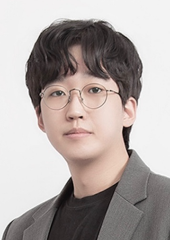
Heo Jeong-woo, Chief Technology Officer (CTO) and Head of the R&D Center at Rainbow Robotics, introduced this manufacturing artificial intelligence transformation (AX) strategy on the 4th at the “2026 International Robotics Business Conference” held at KINTEX in Goyang, Gyeonggi Province. Heo Jeong-woo, CTO and Head of the R&D Center at Rainbow Robotics, is presenting a full-stack robotics strategy for Manufacturing AI Transformation (AX) at the “2026 International Robotics Business Conference” held at KINTEX in Goyang, Gyeonggi Province, on the 4th. (Photo: ReporterShin Yeong-bin ) CTO Heo emphasized the importance of software in the development of industrial humanoids. He explained that robots must not only move with precision and safety but also be easy for multiple users to operate in order to expand their application scope in manufacturing environments.
To this end, the company is supporting Python-based programming and Vibe Coding, and is developing middleware capable of connecting the ROS (Robot Operating System) environment with AI modules. The plan is to make AI modules easily installable as plugins that add functionality.
“We must be able to adopt Python, a powerful scripting language, and enable Vibe Coding using it,” said CTO Heo. “We are developing middleware that allows the ROS environment and AI modules to be easily installed as plugins.”
On the hardware side, the company is preparing the “RB-Y2,” a mobile dual-arm robot designed for industrial applications. The goal is to extend the arms beyond those of the existing “RB-Y1” and increase the payload capacity from approximately 3 kg to over 6 kg. The robot will feature adjustable working heights to accommodate tasks such as shelf work, and its mobility unit will incorporate a steerable structure.
The development process incorporates lessons learned from field demonstrations using existing robots. CTO Heo explained that he experienced firsthand the challenges of field operation while attempting to apply humanoid robots at KOREA AEROSPACE INDUSTRIES (KAI) through a demonstration project by the Korea Institute for Robot Industry Promotion.
He said, “It is quite difficult to create rule-based movements or perform motion planning with a simple humanoid robot, and incorporating VLA into this is even more challenging.”
VLA is an AI model that connects vision, language, and behavior. Rainbow Robotics is equipping the RB-Y1 with VLA to verify the feasibility of tasks that were difficult to solve with conventional rule-based control.
He cited full-body control—which utilizes the arms, torso, and locomotion system in unison—as a key strength of humanoid robots. He explained that in tasks such as moving while opening doors or carrying and stacking objects, it is advantageous for multiple parts of the robot to move together.
Quadruped robots are addressing military needs as well as security and inspection requirements in industrial settings. The company stated that it has improved walking performance using reinforcement learning and is currently supplying these robots to partner companies in a “Robots-as-a-Service” (RaaS) model. It is also developing models capable of carrying heavier loads, wheeled models, and work arms for mounting on the upper body.
Cumulative sales of the company’s existing collaborative robot business have exceeded 3,500 units. Most of these units have been deployed in the domestic market. CTO Heo highlighted the company’s competitive edge in its ability to continuously improve and maintain products by in-house developing core components such as motors, encoders, brakes, and controllers. A reduction gear is currently under development.
CTO Heo stated, “We are putting a great deal of effort into the software side to ensure that even people unfamiliar with robotics can easily use our robots and apply AI.”
During his visit to South Korea, Turkish President Recep Tayyip Erdoğan met successively with executives from major domestic companies—including HyundaiMotor Group Chairman Euisun Chung, CEO and Head …
Human resources (HR) platform company Saramin(143240)announced on the 4th that it will acquire a 12.9% stake in JoongAng Ilbo.Saramin will acquire 14,287,991 shares of JoongAng Ilbo. The acquisition a…
A panoramic view of SAMSUNG BIOLOGICS Plant 2. (Photo courtesy of SAMSUNG BIOLOGICS.)
The SAMSUNG BIOLOGICS(207940) labor union will launch a second strike involving approximately 400 members on t…