Hong Kong RWA Firm DigiFT: "We Will Distribute High-Quality Korean Assets Overseas, Similar to Our Collaboration with Japan’s SBI" [Interview]
Exclusive Interview with Henry Jang, CEO of Hong Kong-based RWA firm DGT
Following SBI’s Strategic Investment, Joint Venture Established… Global Distribution of Japanese Assets
"We Want to Expand the Tokenization Business Model Established in Japan to Korea"
"Asset Tokenization Is Just Phase 1"... Emphasis on 'RWA 2.0' Utilizing Collateral and Loans
"Securing Liquidity Using MMFs and Gold Tokens as Collateral"... Attention on Financial Product Portfolios
[Hong Kong = E-Daily Reporter Suh Min-ji ] “Our top priority is to tokenize high-quality Korean financial assets so that global investors can invest in them. To this end, we are actively seeking Korean partners to collaborate with.”
Henry Zhang, founder and Group CEO of DigiFT, a Hong Kong-based real-world asset (RWA) tokenization platform, said in an exclusive interview with E-Daily held recently at the Grand Hyatt Hotel in Wan Chai, Hong Kong, "We are open to various forms of collaboration with Korean financial institutions, such as equity investments or joint ventures," he said, adding, "We want to build a business model that can be widely utilized in the actual financial market, rather than simply putting Korean assets on the blockchain."
DGT is a platform that supports the tokenization, issuance, and distribution of financial assets based on the regulatory frameworks of the Monetary Authority of Singapore (MAS) and the Hong Kong Securities and Futures Commission (SFC). It tokenizes a wide range of assets, including U.S. Treasury bonds and money market funds (MMFs), as well as products related to Japanese and Taiwanese stocks, gold, and carbon credits. As of October of this year, the company announced 42 token issuances and cumulative subscription settlements totaling over $435 million.
The SBI Group of Japan is playing a pivotal role in DigiFT’s expansion into Asia. Following its leadership of DigiFT’s strategic investment round last year, SBI Holdings established the joint venture “SBI Onchain.” The two companies are pursuing a business strategy that involves tokenizing Japanese financial products for overseas investors while also connecting overseas financial assets to Japanese investors.
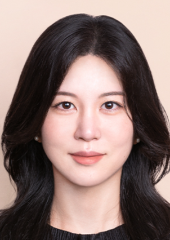
Henry Zhang, founder and Group CEO of DigiFT, a Hong Kong-based real-world asset (RWA) tokenization platform, is seen here during a recent interview with Edaily at the Grand Hyatt Hotel in Wan Chai, Hong Kong. (Photo: ReporterSuh Min-ji )
CEO Zhang explained, “SBI Onchain’s core objective is to distribute Japanese financial assets to global markets and, conversely, to bring overseas assets into the Japanese market,” adding, “We are building an on-chain financial ecosystem involving various financial institutions, such as stablecoin operators, market makers, and banks.”
DGT is also considering ways to expand its Japanese business model to South Korea. CEO Jang emphasized, “Just as we are working with SBI to supply Japanese assets to global investors, we want to conduct the same business in South Korea.”
He noted, “There are many high-quality assets in South Korea, but it is not easy for foreign investors to invest in them,” adding, “Global investors want to diversify their investment portfolios. Connecting high-quality assets in Asia—such as those in Japan and South Korea—to overseas investors is our key role.”
DGT signed a strategic business agreement with Arco last August and designated Korea as a key overseas expansion market. CEO Jang revealed plans to focus not only on the overseas distribution of Korean assets through partnerships with domestic financial institutions but also on developing new use cases for tokenized financial products.
“Our first priority is to make it easy for global investors to invest in high-quality Korean financial assets,” he explained. “The second is to develop use cases for tokenized assets in collaboration with Korean financial institutions.”
He went on to emphasize, “Tokenized finance should not end with simply placing assets on the blockchain,” adding, “Tokenized assets must be usable in various financial services, such as collateral, loans, and liquidity provision.”
CEO Jang defined the current tokenization market as the “RWA 1.0” stage—a stage where it has been confirmed that assets can be tokenized and that there is actual investment demand for them. He explained that moving forward, the market must advance to the “RWA 2.0” stage, where tokenized assets are linked to other financial services to create tangible utility.
He said, “Since traditional MMFs already exist, there must be a reason for investors to specifically purchase tokenized MMFs,” adding, “We need features that differentiate them from existing financial products, such as the ability to use tokenized MMFs as collateral or to secure liquidity even on weekends.”
He added, “If one can raise funds by providing gold tokens as collateral without actually selling the gold, new financial value is created,” noting that “composability—the ability to connect various tokenized financial products like Lego blocks—is crucial.”
The expansion of the stablecoin market is also viewed as a key growth opportunity for DGT. DGT is focusing less on stablecoin-based payments themselves and more on enabling users to invest funds held in stablecoins into various financial assets.
CEO Jang said, “While many companies focus on how to make payments with stablecoins, we focus on how to invest that money,” adding, “Our strategy is to build a regulatory-compliant investment infrastructure for stablecoin liquidity.”
He explained, “It would be inconvenient for investors holding stablecoins to have to convert them into fiat currency every time they want to invest in financial products such as money market funds (MMFs) or gold,” adding, “It is important to enable on-chain funds to be invested directly into on-chain financial assets.”
He predicted that this business model could be gradually expanded in the Korean market as well, following the establishment of relevant regulatory frameworks. CEO Jang remarked, “While Korea is still in the early stages of developing relevant regulations, every market must start from the very beginning,” and added, “As the regulatory environment evolves, various business opportunities will emerge—ranging from the overseas distribution of Korean assets to stablecoin payments and investments.”
He emphasized, “While the current global RWA market is centered on the U.S. dollar and U.S. assets, Asia also has many globally significant financial markets and high-quality assets,” adding, “As an Asia-based platform, we will expand our cooperation with regional financial institutions, including those in South Korea and Japan.”
“Our top priority is to tokenize high-quality Korean financial assets so that global investors can invest in them. To this end, we are actively seeking Korean partners to collaborate with.”Henry Zhang…
As temperatures plummet, making it increasingly important to manage sleep environments during the winter, COWAY(021240)has unveiled a mattress that features a heated massage function to help relax mus…
It has been revealed that Baidu, China’s largest search engine company, has excluded South Korea, the European Union (EU), and the United Kingdom from the list of authorized users after releasing the …