COWAY and Kolmar CEOs Begin Buying Back Company Shares… Making Every Effort to Defend Management Control
Yoon Sang-hyun, Vice Chairman of Kolmar, Purchased 49,000 Shares of Company Stock in July
COWAY Chairman Bang Jun-hyuk Invests 10 Billion Won in Share Buyback
Preparing for the Threat of Private Equity Funds Behind the Scenes of Responsible Management
Increased Investment of Personal Assets as Share Buybacks Become Mandatory
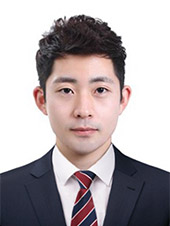
[Edaily Reporter KIM EUNG-TAE ] The heads of major domestic companies, including KOLMAR HOLDINGS(024720) and COWAY(021240), have recently been purchasing their own company’s shares worth hundreds of millions of won using their personal funds. While they cite strengthening responsible management and enhancing shareholder value as their stated reasons, industry observers analyze this as a move to counter threats to management control from activist private equity funds (PEFs). Some also suggest that this is largely due to the implementation of an amendment to the Commercial Act—which mandates the cancellation of treasury stock—making it more difficult for companies to acquire treasury stock, a tactic previously used as a means of defending management control. Yoon Sang-hyun, Vice Chairman and CEO of KOLMAR HOLDINGS (left), and Bang Jun-hyuk, Chairman of COWAY. (Photo courtesy of respective companies) According to the Financial Supervisory Service on the 22nd, Yoon Sang-hyun, Vice Chairman of KOLMAR HOLDINGS, purchased a total of 49,321 common shares of KOLMAR HOLDINGS on the open market in four separate transactions between the 8th and 15th of this month. The total purchase amount was approximately 400 million won. As a result of this buyback, Vice Chairman Yoon’s holdings in KOLMAR HOLDINGS increased from 10,890,316 shares to 10,939,637 shares. His ownership stake rose by 2.28 percentage points from the previous level to 31.9%, breaking through the 30% mark. Chairman Bang Jun-hyuk, who leads COWAY’s board of directors, also began purchasing company shares. Over the course of about one month, from May 13 to June 5, he bought 107,942 shares of COWAY common stock on the open market, bringing his total holdings to over 100,000 shares. The amount invested in the share buyback was approximately 10 billion won. Chairman Bang’s ownership stake was recorded at 0.15%. While the heads of major domestic companies cite the implementation of responsible management as the surface-level rationale for large-scale share buybacks, it is interpreted that the underlying intention is to counter threats to management control. In fact, Dalton Investment, a U.S.-based activist fund, has secured a 5.69% stake in KOLMAR HOLDINGS and is now actively intervening in its management. Dalton Investment also appointed Lim Seong-yun, CEO of Dalton Korea, as a non-executive director on the KOLMAR HOLDINGS board. Director Lim’s term runs until March 31, 2027. Dalton Investment had previously emerged as a key player in the management control dispute between Vice Chairman Yoon and his father, Kolmar Group Chairman Yoon Dong-han. Chairman Bang is currently embroiled in a conflict over management control with Align Partners, a domestic activist private equity fund. Align Partners proposed an open Seohan to COWAY shareholders earlier this year, calling for Chairman Bang to voluntarily step down. Align Partners argues that Netmarble Corporation(251270), COWAY’s largest shareholder, has neglected shareholder returns while focusing on business expansion since acquiring COWAY in 2020, and that it is using COWAY—with its strong cash generation capabilities—to mitigate risks associated with Netmarble Corporation’s gaming business. Consequently, they have stated that Chairman Bang, who concurrently serves as chairman of both Netmarble Corporation and COWAY, should be removed from his position as COWAY chairman and replaced with an independent director. Align Partners has steadily purchased COWAY shares this year, increasing its stake to 6.21%. Analysts in the corporate sector note that, following the implementation of an amendment to the Commercial Act mandating the cancellation of treasury stock, there is a noticeable trend among corporate executives to purchase their own company’s shares. Starting in March of this year, the government mandated that companies must cancel treasury shares within one year of acquisition and that shares held prior to the law’s implementation must also be canceled within a grace period. As it has become more difficult for companies to hold treasury shares—which were previously used as a means of defending management control—a clear trend is emerging where executives are responding by purchasing shares on an individual basis. Experts note that while the cancellation of treasury stock contributes to enhancing shareholder value, it can also serve as an obstacle to long-term corporate growth, including the defense of management control. Kim Dae-jong, a professor in the Department of Business Administration at Sejong University, said, “Although the cancellation of treasury stock has the effect of increasing earnings per share (EPS), from the company’s perspective, it reduces the options available to respond to hostile mergers and acquisitions (M&A) or the involvement of activist funds in management.” He continued, “If a private equity fund acquires a stake in a company and then demands share buybacks or increased dividends, this could have a positive short-term impact on the stock price,” but added, “Such demands could also have the side effect of depleting funds that would otherwise be used for the company’s long-term research and development (R&D), capital expenditures, and investments in new businesses.”
As SamsungElectronics and LGELECTRONICS have identified robots as their next-generation growth engine, Samsung Display and LG Display are also turning their attention to humanoid robots as a new sourc…
Shin Dong-bin, Chairman of Lotte Group, has decided to sell a portion of his stake in LOTTE SHOPPING CO., LTD. valued at 42 billion won. LOTTE SHOPPING CO., LTD.(023530) In a transaction plan report f…
Samsung Bioepis and #IntoCell, Inc. are partnering to jointly develop new antibody-drug conjugate (ADC) drugs. On the 22nd, the two companies announced that they had signed a definitive agreement for …