[Jiwan Kim, Edaily Reporter] Investor sentiment across South Korea’s pharmaceutical and life sciences sectors remained weak on July 22 following the Phase 3 setback for Kolon TissueGene’s osteoarthritis candidate TG-C.
Kolon TissueGene hit the daily lower limit for the second consecutive session, while its affiliate, Kolon Life Science, plunged 17%. The life sciences sector fell 3.48%, marking the steepest decline among all industry groups.
The pharmaceutical sector closed 0.56% lower. Of its 160 listed companies, only 44 advanced, while 98 declined and 18 finished unchanged. In the life sciences sector, 36 of 91 stocks rose, 47 fell, and eight ended flat.
NanoEnTek Hits Daily Upper Limit on Additional FDA Approval
NanoEnTek surged to the daily
upper
limit after securing additional approval from the U.S. Food and Drug Administration for its hematopoietic stem cell counter.
According to KG Zeroin’s MP Doctor, NanoEnTek closed at 4,540 won, up 1,045 won, or 29.90%, from the previous session.
The company said its ADAM II-CD34 system received FDA clearance for use with cryopreserved hematopoietic progenitor cell-apheresis products, known as cryopreserved HPC-A.
NanoEnTek website. (Screenshot by Jiwan Kim)
The device had already been cleared for testing peripheral blood and cord blood. This additional indication allows major specimens used in hematopoietic stem cell transplantation to be analyzed using a single instrument.
With this latest approval, NanoEnTek now has a total of 13 FDA 510(k)-cleared in-vitro diagnostic products—the highest number among South Korean immunodiagnostic companies, according to the company.
Cryopreserved HPC-A is used in autologous stem cell transplantation for patients with blood cancer. Stem cells are collected and frozen prior to high-dose chemotherapy, then tested for cell count and viability before being reinfused into the patient.
The company stated that the expanded indication allows ADAM II-CD34 to be used during a critical quality-control stage of the autologous transplantation process.
NanoEnTek also expects its recurring consumables business to benefit from a larger installed equipment base. Consumables for its in-vitro diagnostics and life sciences businesses accounted for 77.8% of total sales last year.
Its high-throughput cell analysis platform, the EVE-HT series, is currently used by more than 30 global pharmaceutical and biotechnology companies. NanoEnTek estimates that cumulative consumables revenue can reach a level comparable to the equipment sales price within about three years of installation.
A company official stated, “The FDA clearance has expanded the clinical application of ADAM II-CD34 and established it as a core quality-control instrument in the autologous hematopoietic stem cell transplantation process for blood cancer patients.”
The official added, “We will expand the presence of the ADAM series not only at blood cancer transplant centers in North America and Europe, but also in the Middle East, where demand for the treatment of hereditary blood disorders is high.”
NGeneBio Rises on Expansion of Blood Cancer Diagnostic Network
NGeneBio also hit the daily upper limit as investors welcomed the expansion of its precision diagnostic panel business for blood cancers.
The stock closed at 2,370 won, up 545 won, or 29.86%, from the previous session.
The rally followed news that NGeneBio had begun supplying its HEMAccuTest blood cancer panel to Seoul National University Bundang Hospital.
The company currently supplies the panel to about 20 major tertiary hospitals in South Korea, including Seoul St. Mary’s Hospital and Seoul National University Hospital. Overseas, it has expanded into Singapore, Vietnam, Colombia, Germany, and Romania.
NGeneBio’s blood cancer panel business has posted a compound annual growth rate of 36% over the past five years. In the first quarter, domestic sales rose 38% from a year earlier, while overseas sales increased 102%.
NGeneBio logo. (Courtesy of NGeneBio)
HEMAccuTest analyzes major genetic mutations at the initial diagnosis stage. After treatment, the company’s MRDaccuPanel AML FLT3 is used to monitor measurable residual disease and detect possible recurrence.
The panel is designed to identify FLT3 mutations—a major biomarker in acute myeloid leukemia—at levels as low as 0.001%. The company stated that this sensitivity meets the ultra-high-sensitivity assessment requirements recommended by the European LeukemiaNet.
NGeneBio is also seeking to utilize its blood cancer panels as companion diagnostic and biomarker platforms in drug development. Potential applications include selecting patients for FLT3-targeted therapies, evaluating treatment response, and monitoring recurrence.
Song Myung-jun, head of NGeneBio’s diagnostics business, said, “The supply agreement with Seoul National University Bundang Hospital will further strengthen the clinical credibility and practical applicability of NGeneBio’s blood cancer panels.”
He added, “We will expand our position in the precision blood cancer diagnostics market by increasing supplies to major domestic hospitals and securing additional global references.”
Kangstem Extends Rally on Major Pharma Organoid Deal
Kangstem Biotech continued to rise after signing a material transfer and evaluation agreement (MTEA) with a top-five global pharmaceutical company. Kang Kyung-sun, founder of Kangstem Biotech and professor at Seoul National University. (Photo courtesy of Kangstem Biotech) The stock gained 145 won, or 6.89%, to close at 2,250 won.
Under the agreement, the partner will apply its drug candidates to Kangstem Biotech’s hair follicle organoid platform to evaluate efficacy. The goal is to obtain data that may predict clinical outcomes more accurately than conventional animal testing.
The company described the contract as the first stage of a strategic partnership that could potentially expand into joint research, research service agreements, or licensing deals.
Kangstem Biotech’s organoid platform uses human-derived tissue to mimic the structure and function of actual organs. It is designed to assess complex cellular responses that are difficult to reproduce using conventional artificial skin models.
The company also sees potential applications in transplantable products for treating hair loss and skin diseases.
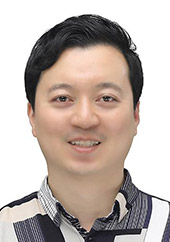
Kangstem Biotech founder Kang Kyung-sun, a professor at Seoul National University. (Courtesy of Kangstem Biotech)
Leading Investment & Securities stated that the agreement demonstrates the global commercial potential of Kangstem Biotech’s Real Skin Organoid technology.
The brokerage noted that the pharmaceutical partner will test drug candidates using the hair follicle organoid platform, potentially generating data with greater clinical predictability than animal studies.
It added that positive evaluation results could lead to shorter development timelines, improved clinical success rates, and follow-on collaboration, including licensing or joint development.
Kang Kyung-sun, founder of Kangstem Biotech and a professor at Seoul National University, said six research and business development executives from the multinational pharmaceutical company visited Kangstem Biotech’s research facility in May.
“It was highly unusual for them to review not only our core organoid technology but also our production capabilities at a level comparable to technical due diligence,” Kang said.
“This agreement is just the beginning, and we expect cooperation between the two companies to advance to a much higher level following the evaluation.”
“Via Inkino,” a furniture and lifestyle startup backed by Musinsa Partners, has filed for simplified reorganization with the court. This comes about a year after the company began expanding its busine…
#Harim Industries, a wholly-owned subsidiary of Harim Holdings Co., Ltd., is moving forward with a spin-off to separate its real estate development and food business divisions. This move is seen as a …
SLSBio(Specialty Lab Solution Bio) Co., Ltd(246250)has filed a motion with the court for a provisional injunction to suspend the Korea Exchange’s delisting decision. As a result, the delisting procedu…